
North Carolina Genealogy Records
North Carolina holds centuries of genealogy records that help people trace their family roots. Birth and death records, marriage bonds, land grants, and church documents are kept at state and county offices across North Carolina. You can search these genealogy records through the state vital records office, the State Archives, county courthouses, and public libraries. Many of these genealogy collections are now available for online research. This guide shows where and how to find the records you need to build your family tree.
North Carolina Genealogy Quick Facts
Where to Find North Carolina Genealogy Records
North Carolina stores genealogy records in several places. The main sources are the state vital records office, the State Archives, county courthouses, and public libraries. Each holds a different set of records. Knowing which office has what you need saves time and effort in your North Carolina genealogy research.
The NC Vital Records office is part of the NC Department of Health and Human Services, Division of Public Health. It sits within the NC State Center for Health Statistics in Raleigh. This office keeps birth and death certificates that are key to genealogy work in North Carolina. Statewide registration for births and deaths started in 1913, with general compliance reached by 1920. Records before that date exist at the county level in many parts of North Carolina. Vital records are not free, searchable public records under state law. You cannot browse certificates on the public website. Instead, you must place an order for the specific record you need.
The NC Vital Records research page explains how to look up records for genealogy purposes in North Carolina.
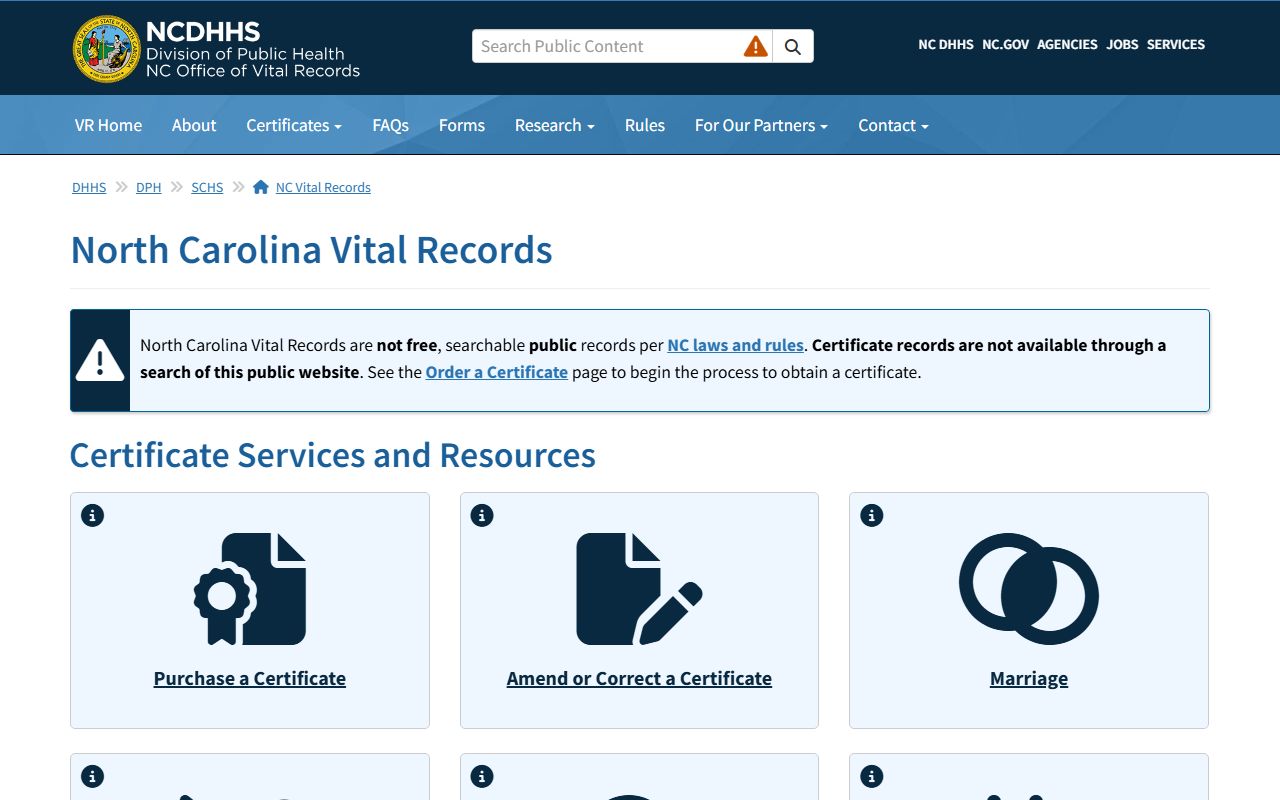
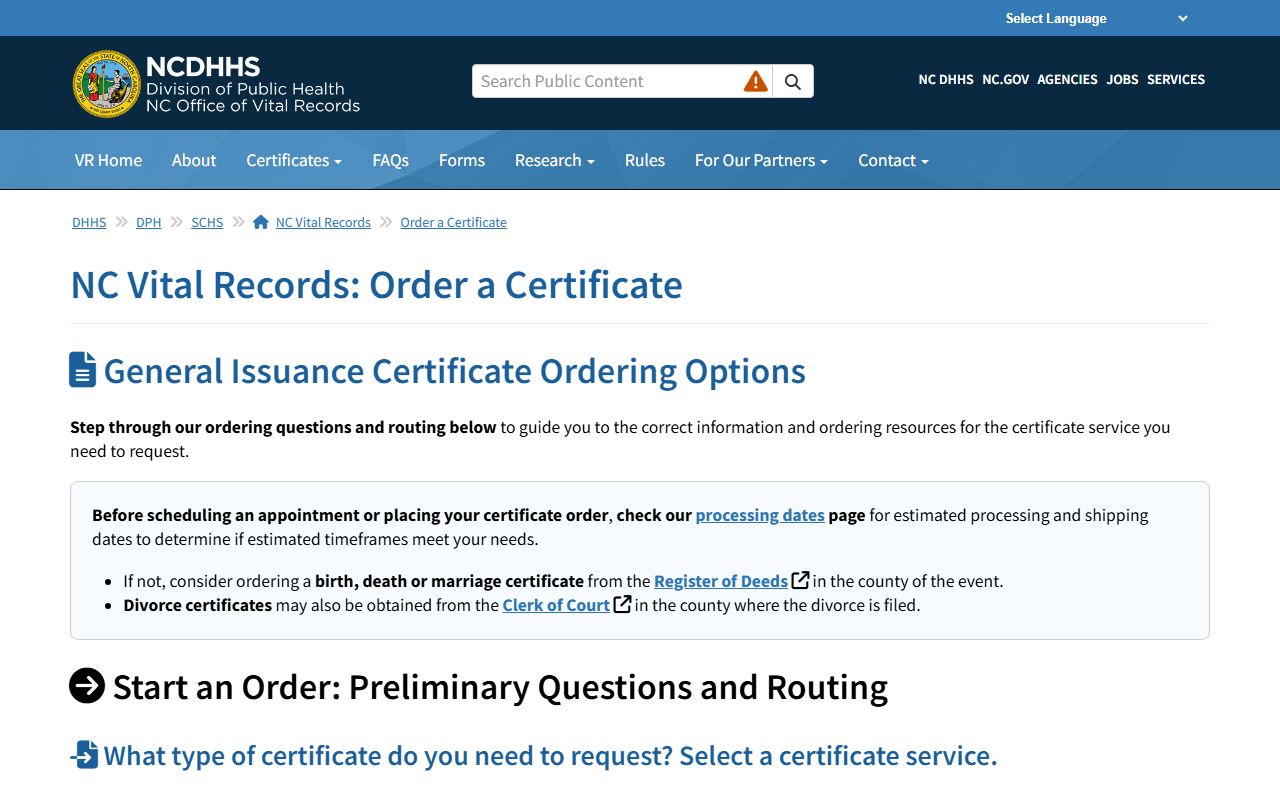
Demand for vital records has grown due to REAL ID requirements. As of 2025, certificate orders take 110 to 115 business days to process. Plan ahead if you need North Carolina birth or death records for your genealogy project.
Note: County registers of deeds hold older birth and death records that predate the 1913 statewide system in North Carolina.
Types of North Carolina Genealogy Records
North Carolina genealogy research draws on many record types. Each one tells a part of your family story. Birth records show names, dates, and parents. Death records list the cause, age, and place of burial. Marriage records prove family ties. These core vital records form the backbone of most North Carolina genealogy searches.
Beyond vital records, North Carolina holds land grants, probate files, census returns, military records, and church documents. Land records go back to the colonial era. Probate records include wills, estate inventories, and guardian bonds. Census records list household members by name starting in 1790. Military records cover service from the colonial period through modern wars. Church records often fill gaps where civil records do not exist in North Carolina. All of these genealogy sources help you piece together your family line across generations.
The vital records research page provides details on how to obtain copies of genealogy records from the state office in North Carolina.
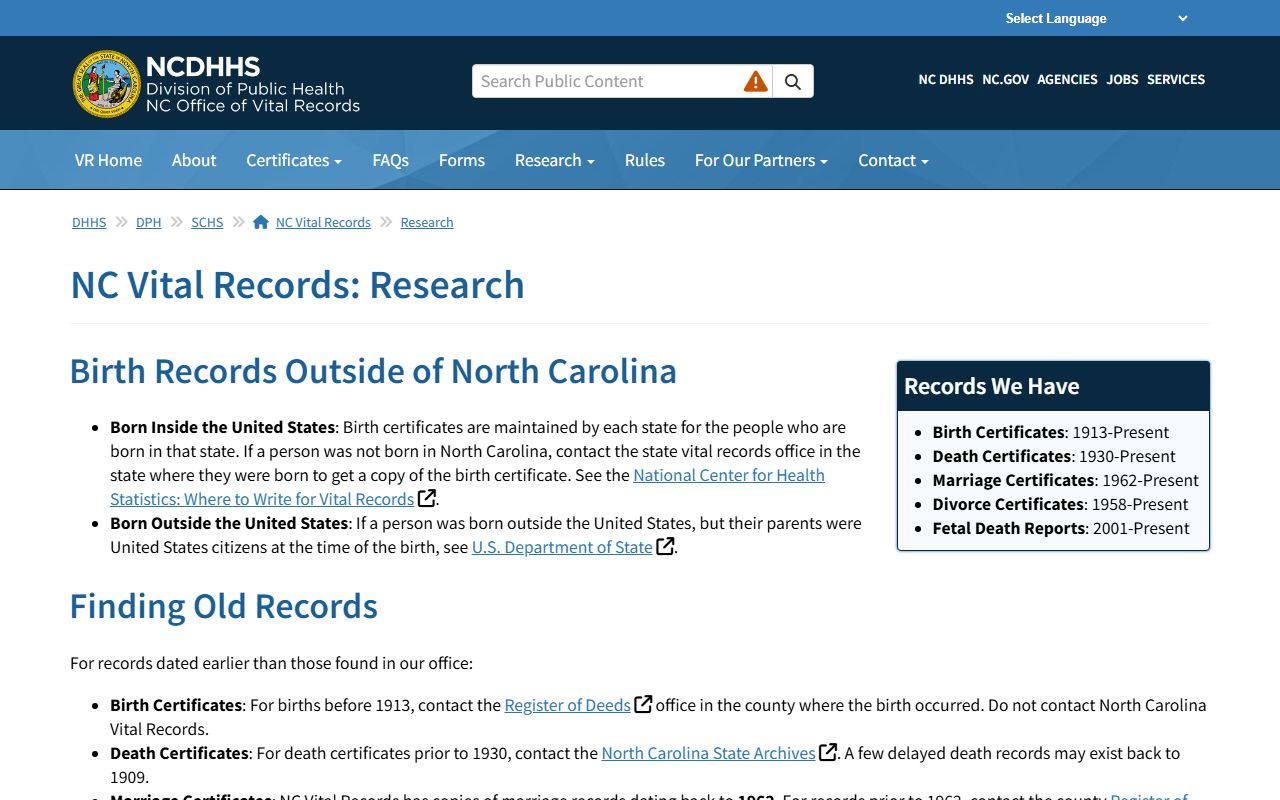
Each record type has its own time range and location. Check multiple sources to get the full picture of your ancestors in the state.
North Carolina Vital Records for Genealogy
Vital records are the first stop for most genealogy searches. In North Carolina, the vital records office holds birth and death certificates from 1913 onward. Marriage records go back even further at the county level. These documents give you names, dates, and places that connect generations in your family tree.
To order vital records for genealogy in North Carolina, you submit a request through the state office. You need the full name of the person, the approximate date, and the county where the event took place. The office then searches its files and sends you a copy if a match is found.
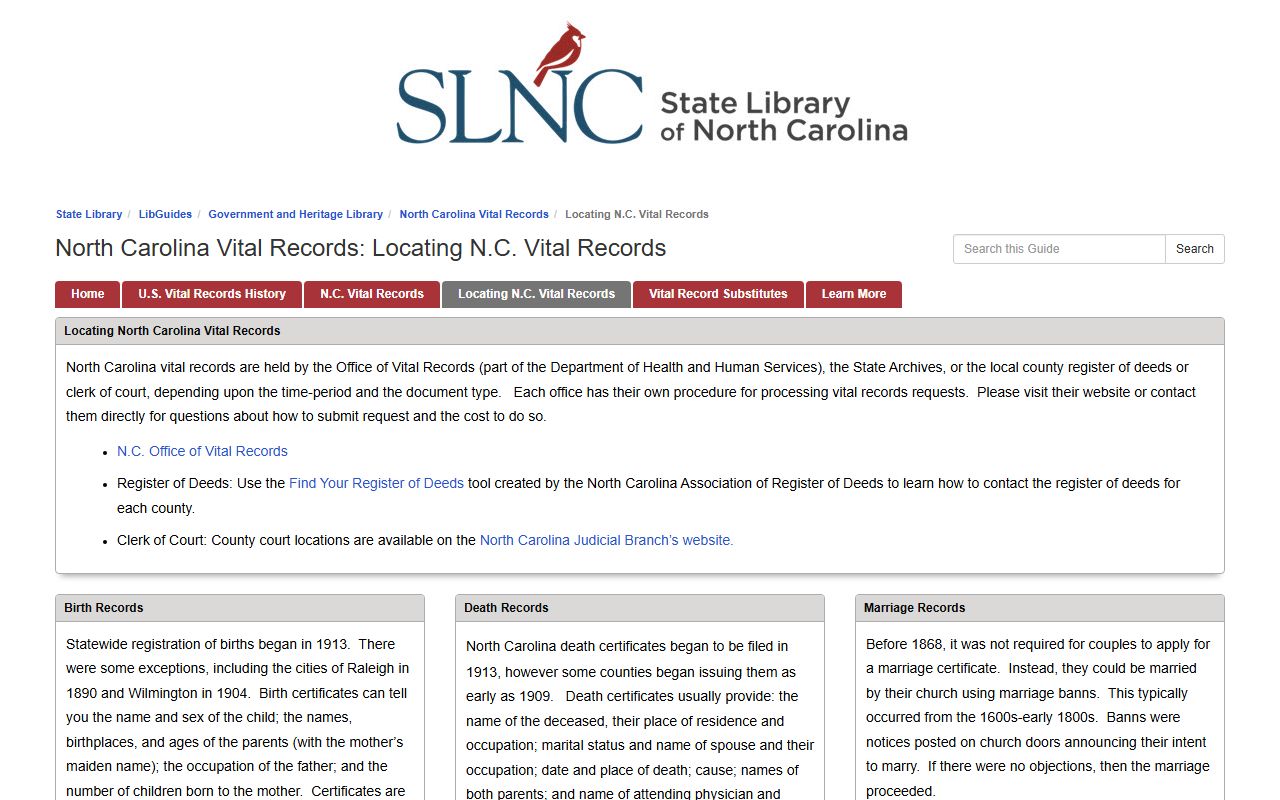
Older genealogy records require a trip to the county register of deeds in North Carolina. Many counties kept their own birth and death books before the state took over in 1913. Some of these early county records have been microfilmed and placed at the State Archives. Others remain only at the local courthouse. The State Library vital records guide helps you figure out where to look based on the date and county.
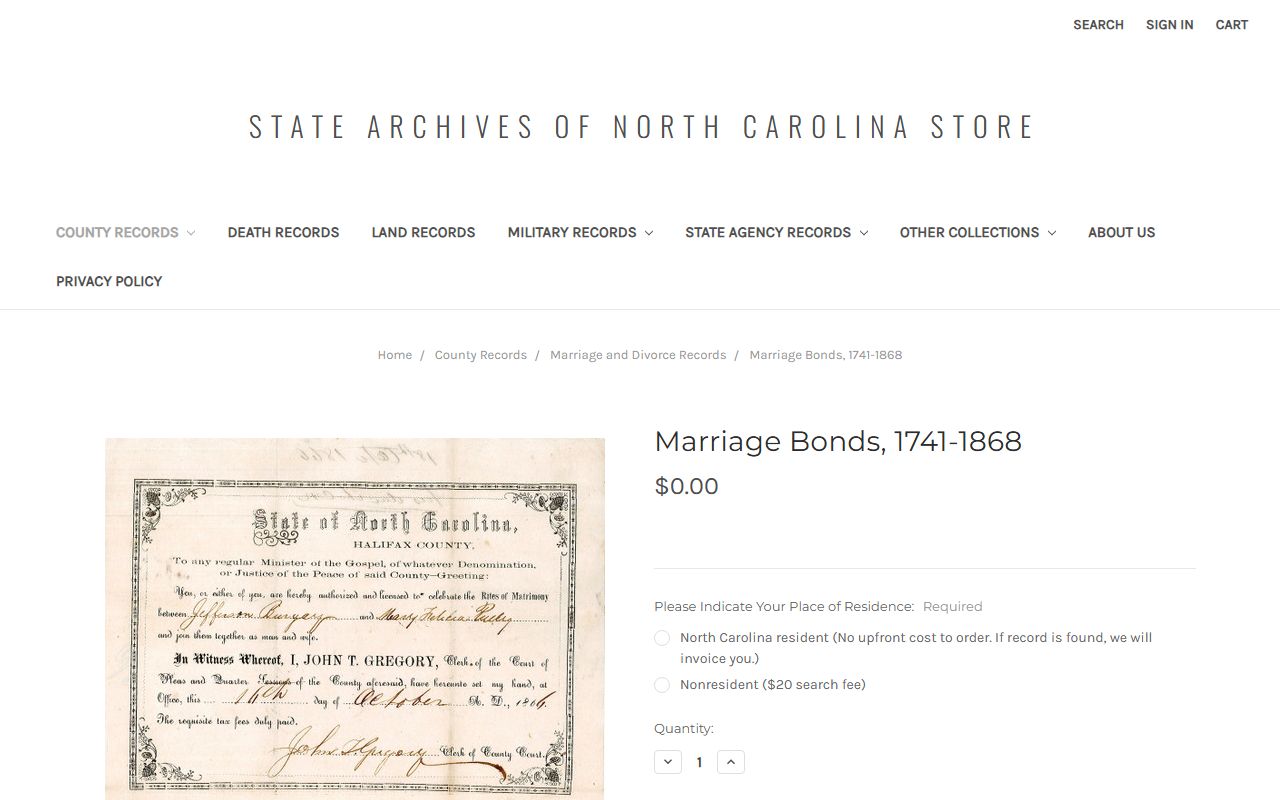
Marriage bonds from 1741 to 1868 are a rich source for North Carolina genealogy.
Note: The vital records office in North Carolina does not offer free online searches of its certificate database.
State Archives Genealogy Resources
The State Archives of North Carolina collects, preserves, and makes available historical records from across the state. Its holdings include official records of state, county, and local government units. For genealogy researchers, the archives hold county court records, deeds, tax lists, militia rolls, and much more. You can visit the search room in Raleigh or request copies by mail. Access to the archives is free for all visitors doing North Carolina genealogy research.
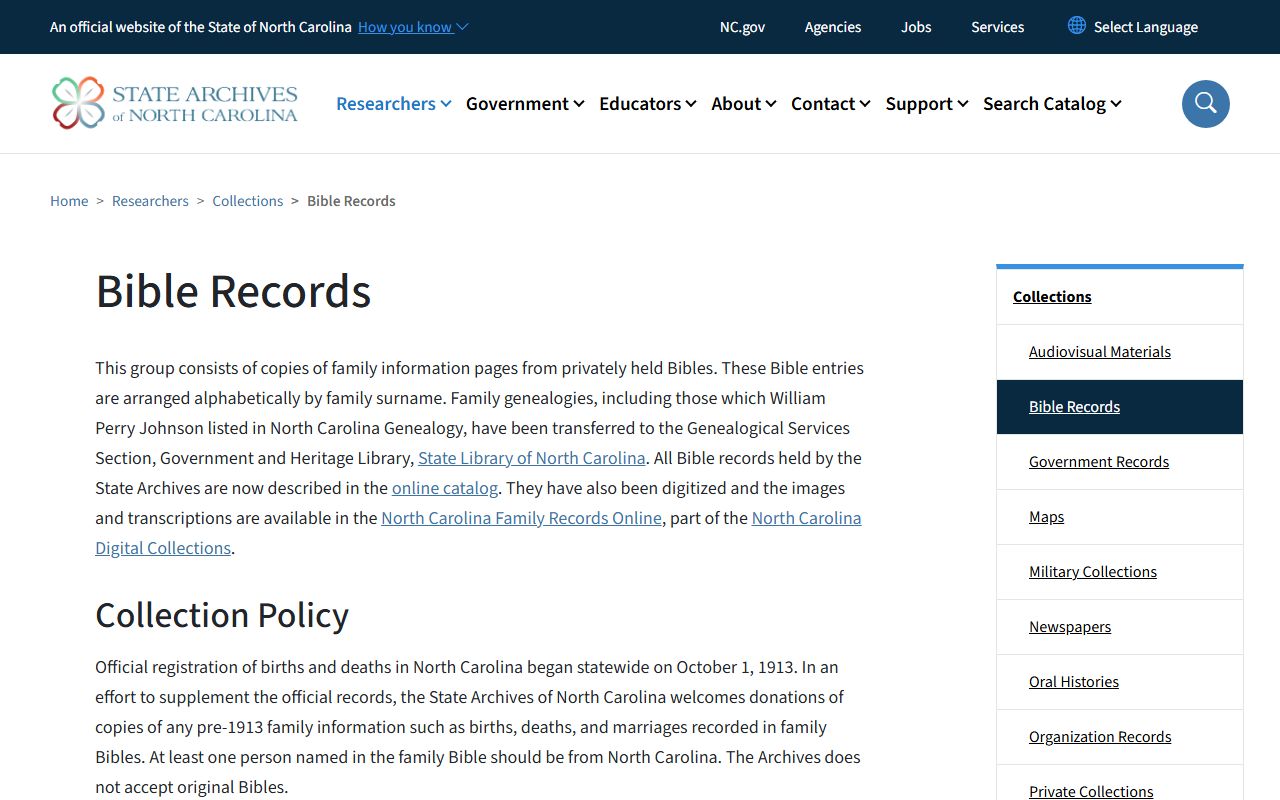
One standout collection is the Bible records held at the State Archives. Family Bible records are important genealogy sources. They contain names, birth dates, death dates, and marriage dates written by family members at the time events happened. These records often cover periods and places where no civil records exist. Researchers have donated Bible record pages to the archives for decades, and the collection keeps growing.
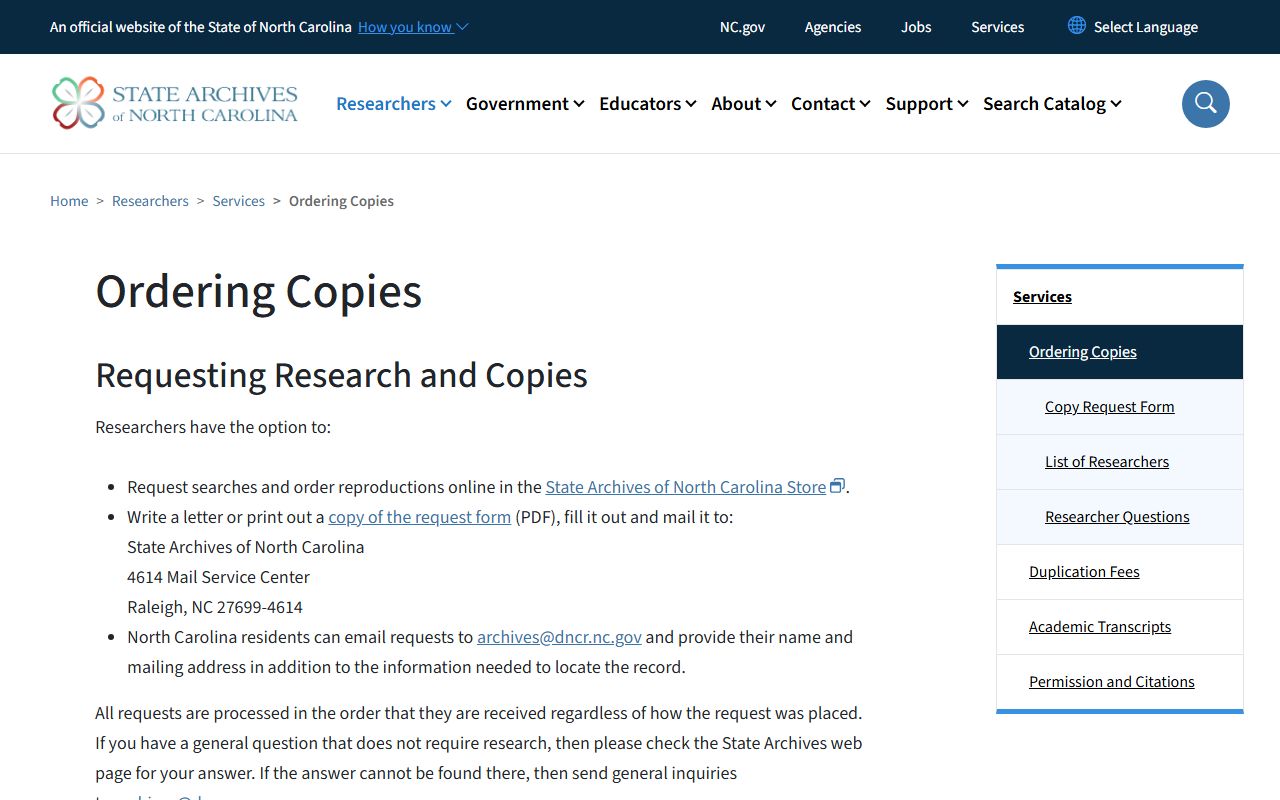
The archives staff can search for specific genealogy records on your behalf. You can order copies of documents by mail or through their website.
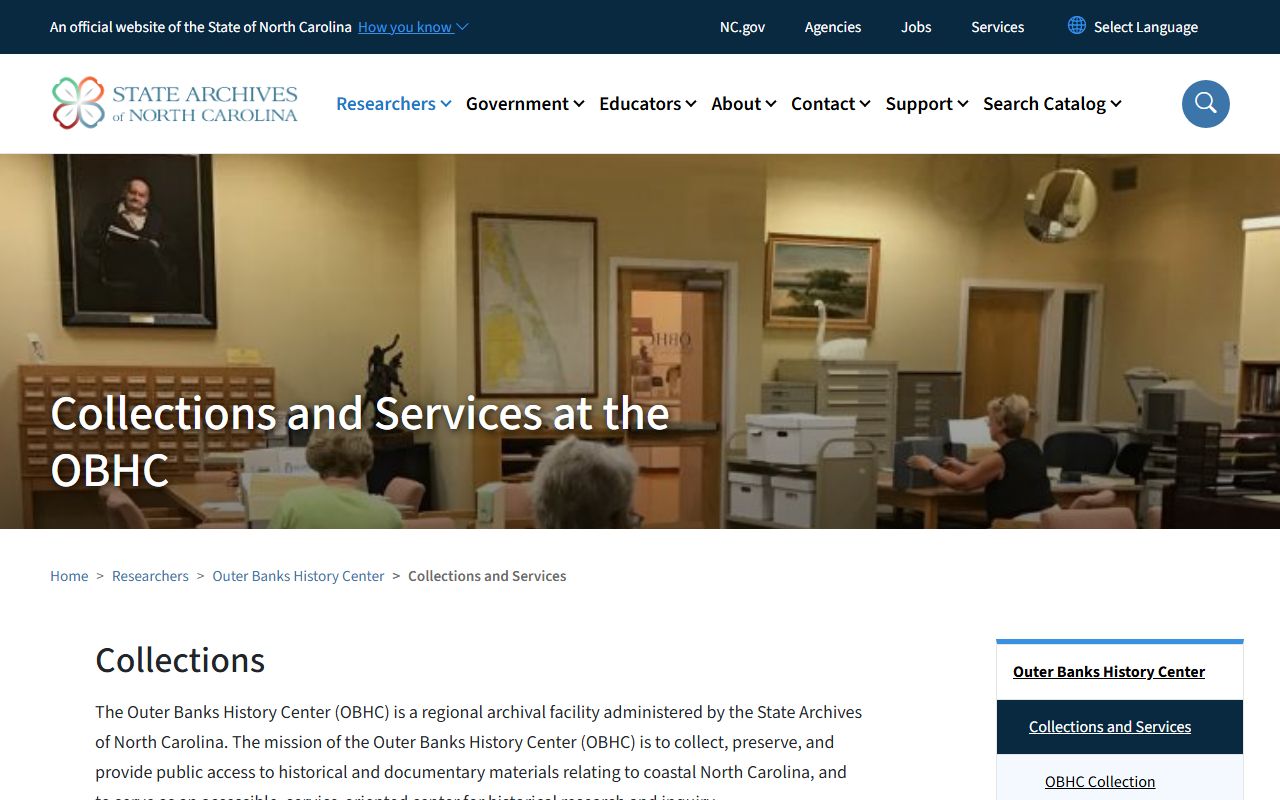
The Outer Banks History Center is a branch of the State Archives. It collects materials related to the history of coastal North Carolina. If your ancestors lived on the coast, this center holds unique genealogy sources not found elsewhere.
Note: The State Archives reading room in Raleigh is open to the public at no cost for North Carolina genealogy research.
North Carolina Library Genealogy Guides
The State Library of North Carolina provides some of the best free genealogy guides in the state. Their online research guides walk you through each step of tracing your roots. The State Library genealogy page is a good place to start. It links to databases, indexes, and finding aids for records held across North Carolina.
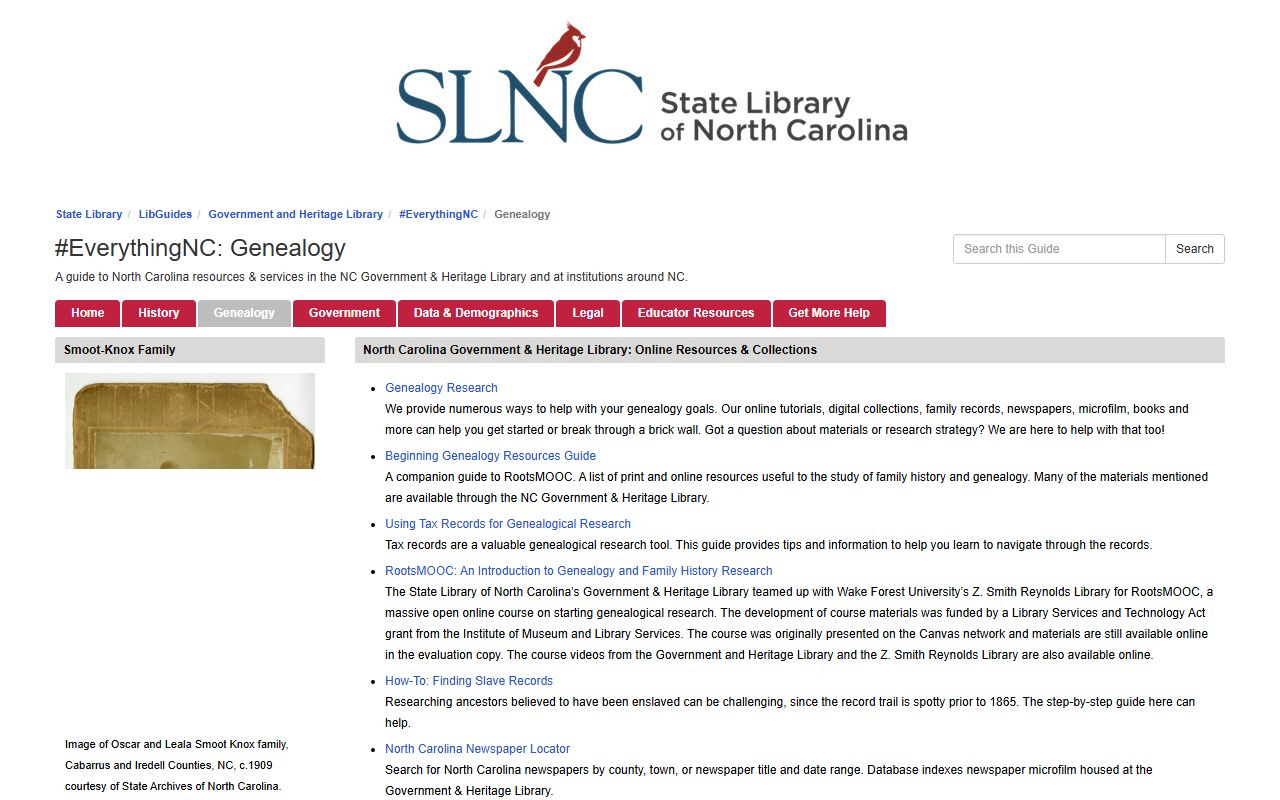
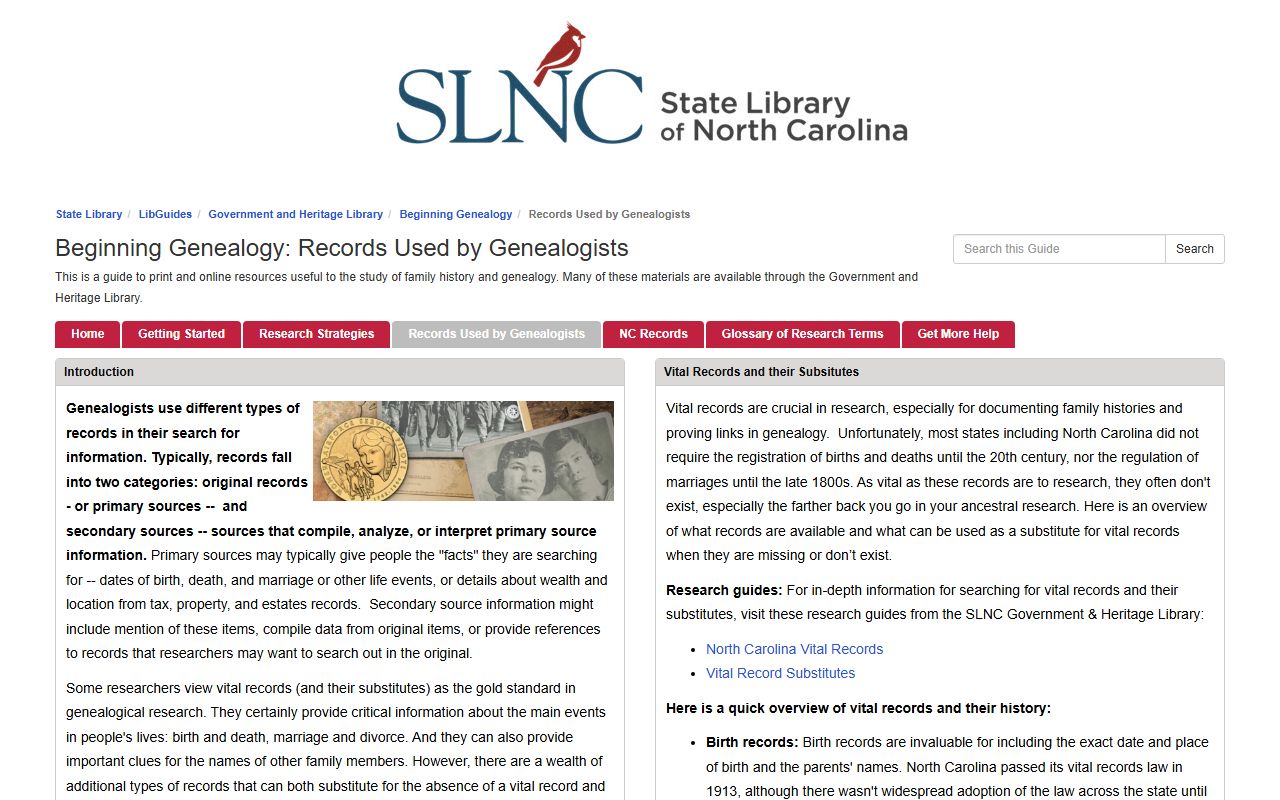
New researchers should visit the beginning genealogy guide from the State Library. It teaches how to start your search, what records to look for first, and how to organize what you find. The guide covers North Carolina genealogy sources step by step. It is written for people who have never done family history research before.
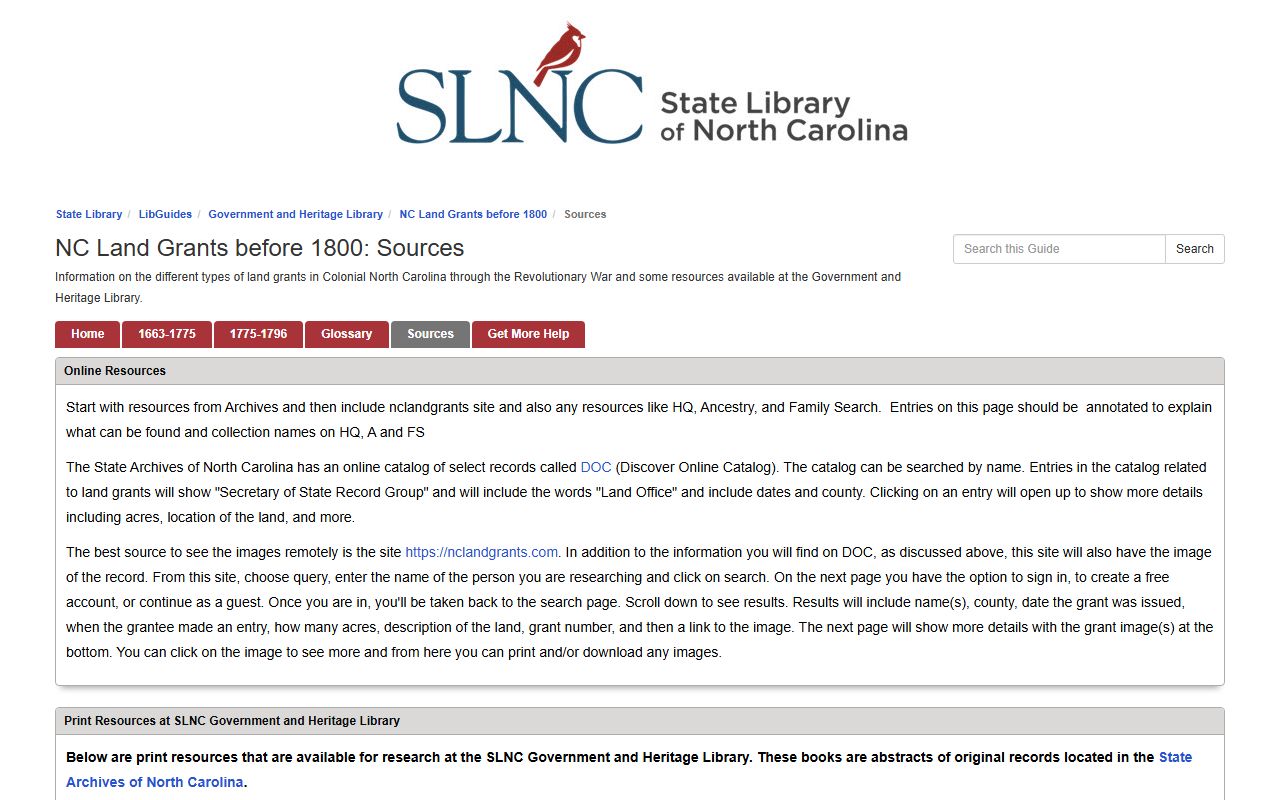
The State Library also hosts a guide on land record sources for North Carolina genealogy. Land records often name family members, neighbors, and witnesses. They show where your ancestors lived and how much land they owned. These records fill in details that vital records alone cannot provide.
Local public libraries across North Carolina also hold genealogy collections. Many have local history rooms with county records, family files, and microfilm. Check with the library in the county where your ancestors lived.
North Carolina Land and Marriage Records
Land and marriage records are two of the oldest genealogy sources in North Carolina. Both go back to the colonial era. They often exist for time periods when birth and death records were not kept. These records help you push your family tree back further than vital records alone allow.
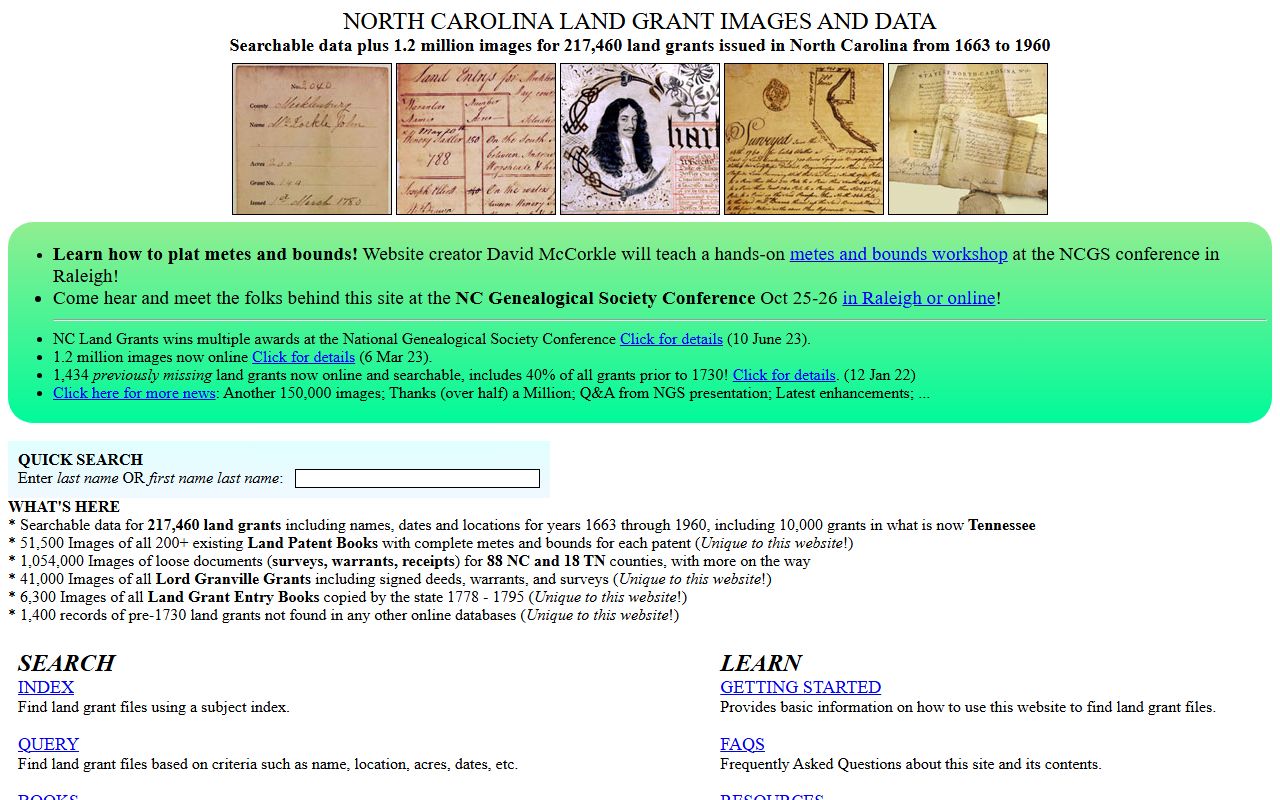
The NC Land Grant database provides images and data for colonial and state land grants in North Carolina. A land grant was the first transfer of land from the government to a private person. These grants name the grantee, describe the land, and give the date. They are among the earliest North Carolina genealogy records available. The database is free to search and use.
After the original grant, land changed hands through deeds recorded at the county level. The register of deeds in each North Carolina county holds deed books going back to the county's founding. These records show sales, gifts, and divisions of land among family members. They are a valuable genealogy resource for tracing property and kinship ties in North Carolina.
Marriage bonds from 1741 to 1868 are available through the NC Archives Store. A marriage bond was a financial pledge that the marriage would take place. It names the groom, the bride, and a bondsman who was often a relative. These bonds are among the oldest civil genealogy records in the state. They cover a span of over 125 years.
Marriage registers from the late 1800s and early 1900s are held at county offices. These records list both parties, their ages, and sometimes their parents. They are useful for North Carolina genealogy research in that period.
County Genealogy Records in North Carolina
North Carolina has 100 counties. Each one holds its own set of genealogy records. County records include deeds, wills, court minutes, tax lists, and estate files. Many of these records predate the state vital records system. For genealogy research before 1913, county offices are often the only source.
The register of deeds in each North Carolina county keeps land records, marriage licenses, and older birth and death records. The clerk of superior court holds wills, estate records, and civil court files. Tax records show who lived in a county and what they owned. Court minutes record the daily business of county courts, including apprenticeships, road orders, and disputes among neighbors. All of these records support North Carolina genealogy research.
Many North Carolina county records have been microfilmed by the State Archives. Some are available on loan through local libraries. Others must be viewed at the archives in Raleigh or at the county courthouse. A growing number have been digitized and put online. Check the State Archives website to see what is available for the county you need.
When you search county genealogy records in North Carolina, keep these tips in mind:
- Know the county your ancestor lived in and when it was formed
- Check the parent county if your target county was created later
- Look at neighboring county records for cross-border families
- Ask the local register of deeds what records they hold on site
- Search the State Archives for microfilmed copies of older county records
Note: County boundaries changed many times in North Carolina history, so an ancestor's records may be in a different county than you expect.
Tips for North Carolina Genealogy Research
Good genealogy research takes patience and method. Start with what you know and work backward one generation at a time. Write down every source you use. This keeps your North Carolina genealogy work organized and makes it easy to verify facts later.
Use multiple record types for each ancestor. A birth record gives you parents. A marriage record ties two families together. A death record may name the birthplace and parents of the deceased. Land records show where someone lived. Census records list all household members. By combining these sources, you build a more complete picture of your family history.
Online databases speed up genealogy research, but they do not hold everything. Many North Carolina records exist only on paper or microfilm. Plan a visit to the State Archives or the county courthouse if your online search hits a wall. Staff at these offices know their collections well and can point you to records you might miss on your own.
Spelling varied widely in older records. Names were often written as they sounded. Try different spellings when you search North Carolina genealogy records. A name like "Smith" might appear as "Smyth" or "Smithe" in colonial-era documents. Flexible spelling searches return results that exact matches miss.
Browse North Carolina Genealogy by County
Each county in North Carolina holds its own genealogy records at the courthouse and register of deeds office. Pick a county below to find local resources for your family history search.
Genealogy Records in North Carolina Cities
Major cities in North Carolina sit within counties that hold large genealogy collections. Pick a city below to find family history resources near you.