
Fayetteville Genealogy and Heritage
Fayetteville is the county seat of Cumberland County and has a population of roughly 210,000. The city was named for the Marquis de Lafayette in honor of his service during the American Revolution. Cumberland County was created in 1754 from Bladen County and is one of the oldest counties in North Carolina. Genealogy records for Fayetteville families are kept at the Cumberland County Register of Deeds and the county courthouse. The city does not maintain its own vital or land records. Land records for the county begin in 1752, and marriage records date to 1800. Cumberland County has experienced no major courthouse disasters, so its records are intact.
Fayetteville Quick Facts
Fayetteville Records at Cumberland Register of Deeds
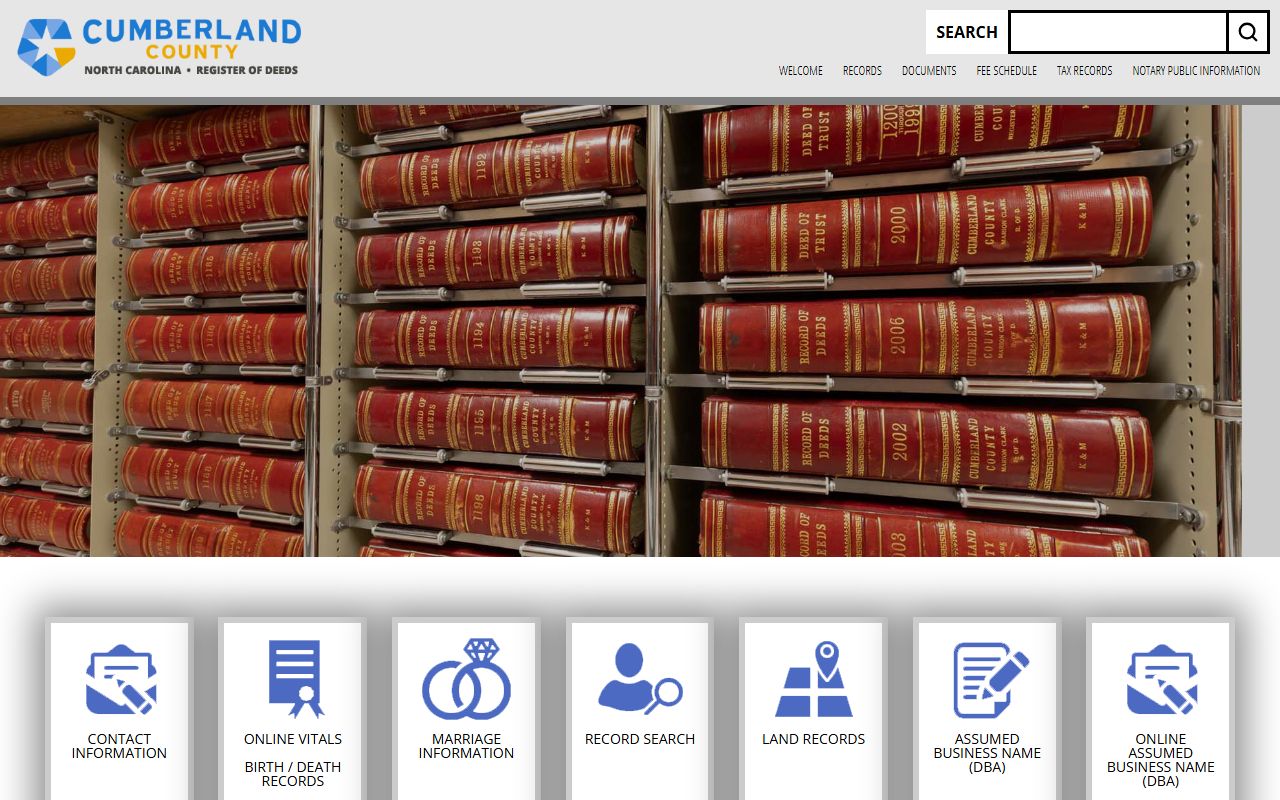
The Cumberland County Register of Deeds is the official keeper of vital records, property documents, and marriage licenses for all Fayetteville residents. The office is located at 117 Dick Street, Fayetteville, NC 28301. The phone number is 910-678-2900. Birth and death records begin in 1913. Marriage records date to 1800. Land records reach back even further, to 1752, making them some of the oldest property documents in the state.
| Office |
Cumberland County Register of Deeds 117 Dick Street Fayetteville, NC 28301 Phone: (910) 678-2900 |
|---|---|
| Birth Records | 1913 to present |
| Death Records | 1913 to present |
| Marriage Records | 1800 to present |
| Land Records | 1752 to present |
| Website | cumberlandcountync.gov/rod |
Cumberland County has not suffered any major courthouse fires or disasters. This means that records are continuous from the earliest dates. For genealogists, this is a tremendous advantage. Many North Carolina counties lost decades of records to fires during the Civil War or earlier periods. The intact records in Cumberland County allow researchers to build unbroken family histories stretching back to the mid-1700s in the Fayetteville area.
Fayetteville Marriage Records
Marriage records for the Fayetteville area begin in 1800 at the Cumberland County Register of Deeds. Early records include marriage bonds that name the groom and a bondsman. The bondsman was often a relative of the bride, making these documents useful for identifying family ties. After 1868, marriage licenses replaced bonds and typically contain more information, including ages, residences, and parents' names.
For Fayetteville families, marriage records can connect generations when other documents are missing. A marriage bond from 1810 that names a father as bondsman links the bride to her parent. Marriage registers compiled by the county summarize key details and are easier to search than individual bonds. The NC State Archives holds microfilm copies of Cumberland County marriage records, and some have been indexed on FamilySearch.org.
The NC Vital Records office can provide marriage verification for more recent dates. Researchers who cannot visit Fayetteville in person can request copies by mail from the Cumberland County Register of Deeds.
Fayetteville Land and Property Records
Land records at the Cumberland County Register of Deeds date to 1752, two years before the county was formally created. These early documents include colonial land grants and deeds that record the original settlement of the Fayetteville area. Grants name the recipient, the acreage, and describe the property using natural landmarks like creeks, ridges, and trees. They are the starting point for tracing the earliest families in Cumberland County.
Deed books cover every property transaction in the county from 1752 forward. Deeds name buyers and sellers and often identify witnesses and neighboring landowners. For genealogy, deeds provide evidence of family relationships. A father selling land to a son, a widow deeding property to her children, or siblings dividing an inheritance all appear in the deed books. Tax records supplement deeds by showing annual property ownership.
The Cumberland County Register of Deeds has indexed many of its records for easier searching. Indexes are organized by grantor and grantee. Checking both indexes is important because the same person may appear as a buyer in one record and a seller in another. Chain of title research, tracing a property through all its owners, can uncover family connections spanning generations.
Fayetteville Military Heritage
Fayetteville has a long and deep connection to the American military. The city was home to the Fayetteville Arsenal, one of only a few federal armories in the South. During the Civil War, Confederate forces seized the arsenal and used it to manufacture weapons. Today, Fort Liberty (formerly Fort Bragg) is located near Fayetteville and is one of the largest military installations in the world. This military presence has brought families from across the country to the Fayetteville area for generations.
Military records are an important genealogical source for Fayetteville families. Service records, pension files, draft registrations, and discharge papers can contain detailed personal information. The National Archives holds federal military records from the Revolutionary War through the 20th century. The NC State Archives has state militia records, Confederate service records, and pension applications for North Carolina veterans and their widows.
For families who came to Fayetteville because of military service, base records, chapel records, and post newspapers can help document their time in the area. Many military families settled permanently in Fayetteville after their service ended, and their descendants are part of the community today. Tracing these families often requires combining military records with Cumberland County civil records.
Fayetteville Birth and Death Records
Birth and death certificates for Fayetteville begin in 1913 at the Cumberland County Register of Deeds. Before statewide registration, there is no systematic record of births and deaths. Church registers, cemetery inscriptions, family Bibles, and newspaper obituaries serve as substitute sources for vital events before 1913.
Death certificates from 1913 forward are rich in detail. They typically list the date and place of death, the cause, the decedent's age, birthplace, occupation, and parents' names. The parents' names can bridge generations, connecting a person to an earlier family unit. The accuracy of the information depends on the informant, who was usually a spouse, child, or other relative.
The NC Vital Records office in Raleigh also provides certified copies of birth and death certificates. Access is restricted for recent records. Birth certificates less than 100 years old and death certificates less than 25 years old are available only to authorized requestors.
Note: Cemetery records for the Fayetteville area can be found through local genealogical societies and on websites like FindAGrave.com and BillionGraves.com.
Scottish Heritage in Fayetteville
The Cape Fear region around Fayetteville was a major destination for Scottish Highland immigrants in the 18th century. Thousands of Scots settled along the Cape Fear River and its tributaries in the decades before the American Revolution. Many of these families are documented in ship passenger lists, church records, and colonial court records. The Scottish influence on Fayetteville and Cumberland County shaped the culture, economy, and social structure of the region.
For genealogists tracing Scottish roots in Fayetteville, several sources are available. Published works on Scottish immigration to the Cape Fear list passenger names and their places of origin in Scotland. Presbyterian church records document families who attended the area's many Scottish congregations. Land grants and deeds in Cumberland County name the earliest Scottish settlers and show how they acquired and developed their holdings.
The NC State Archives holds colonial court records that include naturalization documents, land petitions, and legal disputes involving Scottish immigrants. These records can establish when a family arrived, where they settled, and how they became part of the community. Combining North Carolina records with Scottish parish registers can sometimes trace a family line across the Atlantic.
Online Resources for Fayetteville Genealogy
Several online tools support genealogy research in the Fayetteville area. The Cumberland County Register of Deeds website provides access to property record indexes. The City of Fayetteville website offers general city information. FamilySearch.org has free indexes and images of many Cumberland County records.
- Cumberland County Register of Deeds online indexes
- FamilySearch.org free records and indexes
- NC State Archives online catalog
- Ancestry.com and HeritageQuest at local libraries
- FindAGrave.com for cemetery records
The NC State Archives has digitized portions of its Cumberland County holdings and provides an online catalog for planning research visits. For researchers unable to travel to Fayetteville, combining online searches with mail requests to the Register of Deeds is an effective approach. Many records can be obtained without visiting in person, though some research tasks are easier at the courthouse.
Cumberland County Genealogy Records
Fayetteville is the county seat of Cumberland County. All genealogy records for Fayetteville families are maintained at the county level through the Cumberland County Register of Deeds and the county courthouse. For a complete guide to Cumberland County records, research strategies, and additional resources, visit the county page.