
Forsyth County Genealogy and Moravian Heritage
Forsyth County was created in 1849 from Stokes County. It was named for Colonel Benjamin Forsyth, who was killed during the War of 1812. The county seat is Winston-Salem, a city shaped by Moravian settlers who arrived in the mid-1700s. Moravian church records are among the most detailed in the American South and are a key resource for genealogy in this area. The county holds land records from 1849, marriage records from 1771, and probate files from 1849. Researchers here benefit from strong local archives, a dedicated genealogical society, and growing digital access to historical documents.
Forsyth County Quick Facts
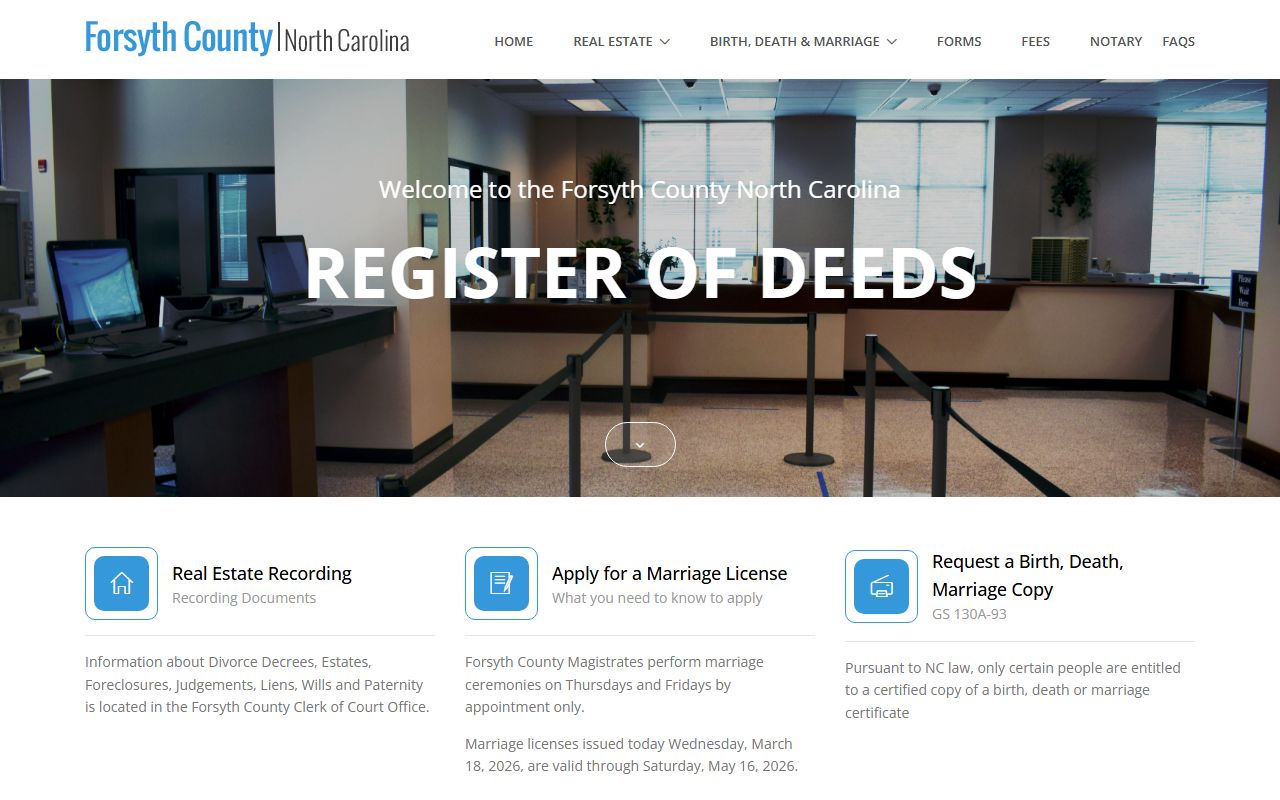
Forsyth County Register of Deeds
The Forsyth County Register of Deeds handles land records, marriage licenses, and vital records. The office is in the county government center in Winston-Salem. Land records begin in 1849, the year the county was formed. Marriage records go back to 1771. This early date reflects records carried over from Stokes County and the Moravian congregations that kept their own registers.
Deeds from 1849 to 1965 are available online. You can search by grantor, grantee, or date range. The Forsyth County Register of Deeds website provides access to these records. For deeds after 1965, contact the office directly or visit in person.
| Office |
Forsyth County Register of Deeds Winston-Salem, NC Phone: See county website for current number |
|---|---|
| Hours | Monday through Friday, 8:00 AM to 5:00 PM |
| Website | co.forsyth.nc.us/ROD |
Moravian Church Records in Forsyth County
The Moravian settlement in what is now Forsyth County began in 1753. The Moravians kept meticulous records. Their church books include births, baptisms, marriages, deaths, and detailed biographical sketches called lebenslaufe. These life stories were written for each church member and read at their funeral. They often span an entire life, from birth through childhood, marriage, children, and death. No other religious group in the colonial South kept records of this depth.
The Records of the Moravians in North Carolina have been published in multiple volumes. These books translate the original German records into English and cover the period from the 1750s through the early 1800s. They are available at major research libraries and at the Forsyth County Public Library. The Moravian Archives in Winston-Salem holds the original documents and additional unpublished materials.
Note: If your ancestors were Moravian, church records may be more complete and more detailed than any government record. Start with the published volumes, then check the Moravian Archives for original documents.
Salem, now part of Winston-Salem, was the center of Moravian life. The congregations at Bethabara, Bethania, and Salem each kept separate records. If you know which congregation your ancestor belonged to, start with that set of records. If you do not, search all three.
Forsyth County Land and Deed Records
Land records in Forsyth County begin in 1849. Before that date, land transactions in this area were recorded in Stokes County. The Moravians also kept their own land records within the Wachovia tract, a large parcel they purchased from Lord Granville in 1753. These church-held land records predate the county by nearly a century.
Deeds from 1849 to 1965 are searchable online through the Register of Deeds. The digital collection includes images of the original deed book pages. Researchers can view the handwritten entries, which often include details not found in the index alone. Look for witnesses, dower releases, and references to earlier deeds.
For records before 1849, check Stokes County. Stokes was the parent county, and all land transactions in the Forsyth area were recorded there. The State Archives holds Stokes County deed books on microfilm. The State Archives Forsyth County guide provides a full list of available records.
Forsyth County Probate and Will Records
Probate records in Forsyth County begin in 1849. Will books from 1842 to 1969 are held at the North Carolina State Archives. The start date of 1842 predates the county. These early wills were likely carried over from Stokes County when Forsyth was formed.
Wills are a cornerstone of genealogy. They name heirs and describe how property was to be divided. In Forsyth County, wills from the 1800s often mention specific items of personal property. A man might leave his wife the use of the farm during her life, then direct that it pass to his eldest son. He might name each child and assign them a portion of his estate. These details create a snapshot of the family at a single point in time.
The State Archives also holds a Trial Minute Docket from 1849 to 1868. This record covers the early years of the county court and can reveal disputes, guardianships, and other matters. Petitions to Change Names from 1891 to 1949 are another unusual record set. Name changes can reflect marriages, adoptions, or other family events.
Note: For probate records before 1849, check Stokes County. The parent county holds wills and estate files for the area that became Forsyth.
Forsyth County Library and Society Resources
The Forsyth County Public Library has a genealogy collection at its main branch in Winston-Salem. The collection includes local histories, family files, and published genealogies. The library also holds newspapers on microfilm from the 19th century. These papers contain obituaries, marriage notices, and legal ads that are useful for family research. The library provides access to Ancestry Library Edition and HeritageQuest, two major online genealogy databases. Visit forsyth.cc/library/services/genealogy.aspx for details on the collection and hours.
The Forsyth County Genealogical Society is an active group that supports local research. The society meets regularly and publishes newsletters with transcribed records, family histories, and research tips. Their website at ncfgs.org has information about meetings, publications, and how to join. Members can help you navigate local records and may have already researched the families you are looking for.
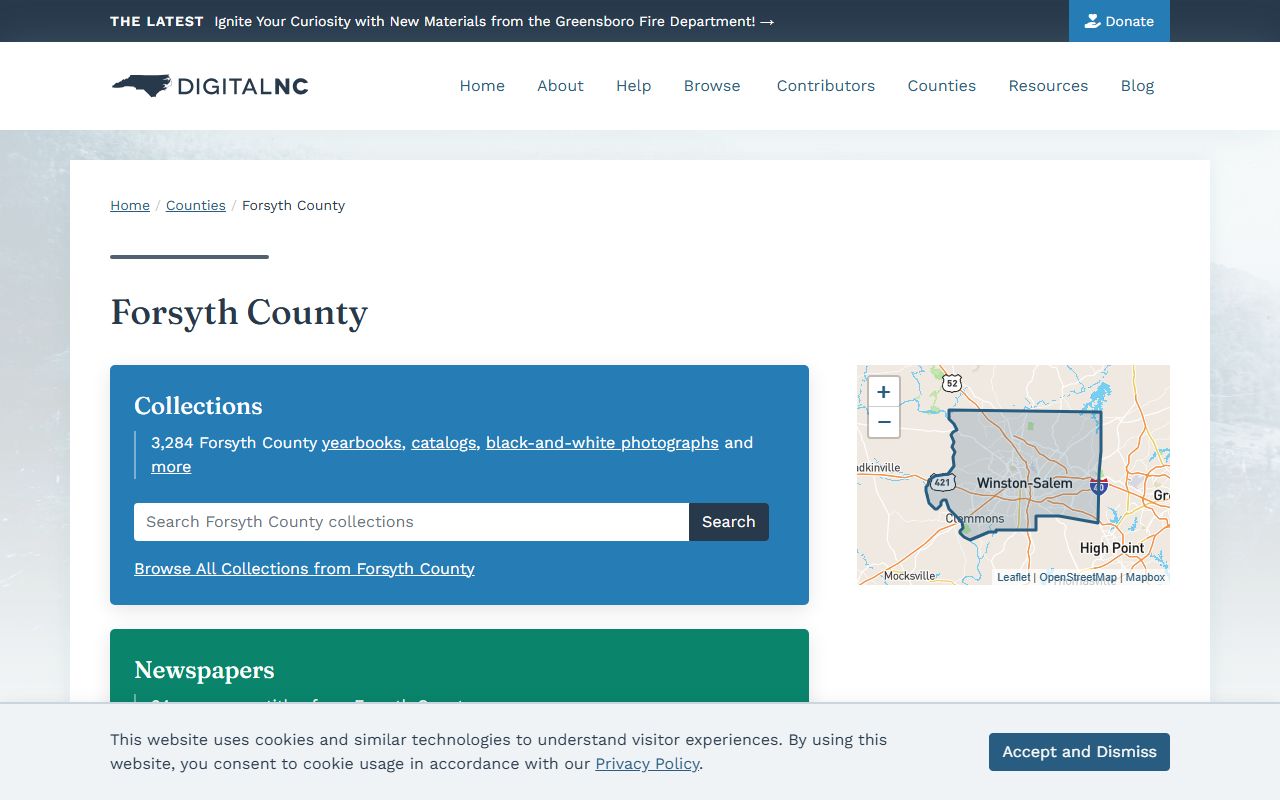
DigitalNC hosts digitized newspapers, yearbooks, and other materials from Forsyth County. These items are free to search and view online. The newspaper collection is especially useful for obituaries and community news from the early 1900s through the mid-century.
Forsyth County Vital Records
Birth and death records in Forsyth County begin in 1913. Marriage records go back to 1771. The Register of Deeds can issue certified copies for records in its custody. For records before 1913, church records are the best source. The Moravian congregations kept birth, baptism, and burial records that predate the state system by more than 150 years.
Statewide vital records can be ordered from the North Carolina Office of Vital Records at vitalrecords.nc.gov. The state holds birth and death records from 1913 and marriage records from 1962 for all counties. The fee structure and ordering process are listed on the website.
- Birth records: 1913 to present at Register of Deeds
- Death records: 1913 to present at Register of Deeds
- Marriage records: 1771 to present at Register of Deeds
- Moravian church records: 1750s to present at Moravian Archives
Cemetery records are another useful source. Forsyth County has many old cemeteries, including the Moravian God's Acre burying grounds. These cemeteries have flat stones with uniform inscriptions, but the church books hold the detailed life stories behind each name. Volunteer projects have transcribed many cemetery records in the county.
Strategies for Forsyth County Research
Forsyth County research depends on whether your ancestors were Moravian. If they were, the church records are your first and best source. The lebenslaufe alone can provide more family detail than all government records combined. Start with the published Records of the Moravians in North Carolina, then move to the Moravian Archives for unpublished materials.
If your ancestors were not Moravian, start with the county records. Deeds from 1849 to 1965 are online. Search for all known family surnames in both the grantor and grantee indexes. Look for patterns. A man who bought land in 1860 and sold it in 1890 was likely living there for those 30 years. His neighbors in the deed descriptions may be relatives.
Probate records are the next step. Will books from 1842 to 1969 are at the State Archives. These name heirs and describe property divisions. Estate inventories list personal items and can reveal an ancestor's occupation and standard of living.
For records before 1849, go to Stokes County. All government records for the Forsyth area were kept there before the county was formed. The State Archives holds Stokes County records on microfilm. The Forsyth County Public Library may also have copies of key Stokes County records.
Do not forget newspapers. The Forsyth County Public Library has papers on microfilm from the 1800s. DigitalNC has additional issues online. Obituaries are the most obvious source, but legal notices, land sale ads, and social columns can all name individuals and reveal connections.
Nearby Counties
These counties border Forsyth County. For ancestors who lived near the county line, records may exist in a neighboring county. Check Stokes County for any records before 1849, as it is the parent county of Forsyth.