
Charlotte Genealogy and Family Records
Charlotte is the largest city in North Carolina and the county seat of Mecklenburg County. It was incorporated in 1768 and has grown into a major metropolitan area with roughly 900,000 residents. Genealogy records for Charlotte are held at the Mecklenburg County Register of Deeds and the county courthouse, since the city itself does not maintain vital or land records. The Robinson-Spangler Carolina Room at the Charlotte Mecklenburg Library offers one of the strongest local history collections in the state. Researchers tracing family roots in Charlotte will find marriage bonds reaching back to 1779 and land grants from 1763.
Charlotte Quick Facts
Charlotte Records at Mecklenburg Register of Deeds
All vital records, land documents, and marriage licenses for Charlotte residents are filed at the Mecklenburg County Register of Deeds. The office is located at 720 E. 4th Street, Suite 100, Charlotte, NC 28202. You can reach staff by phone at 704-336-2443. This is the primary office for obtaining certified copies of birth certificates, death certificates, marriage licenses, and property deeds for genealogy research tied to the Charlotte area.
Birth and death records at the Mecklenburg Register of Deeds begin in 1913, when North Carolina started mandatory statewide registration. Marriage records go much further back. Marriage bonds in Mecklenburg County date to 1779, and marriage records of various kinds begin in 1763. These early marriage documents are especially valuable for tracing colonial-era families who settled in and around Charlotte before the American Revolution. Land records also date to 1763, covering the full span of the county's existence.
| Office |
Mecklenburg County Register of Deeds 720 E. 4th Street, Suite 100 Charlotte, NC 28202 Phone: (704) 336-2443 |
|---|---|
| Birth Records | 1913 to present |
| Death Records | 1913 to present |
| Marriage Records | 1763 (bonds from 1779) |
| Land Records | 1763 to present |
| Website | rod.mecknc.gov |
Will records for Mecklenburg County span from 1763 to 1978 and are housed at the North Carolina State Archives. Wills name heirs, guardians, and executors. They often reveal family connections that other documents miss. For Charlotte researchers, wills from the 18th and 19th centuries can fill gaps left by missing census or church records.
Robinson-Spangler Carolina Room
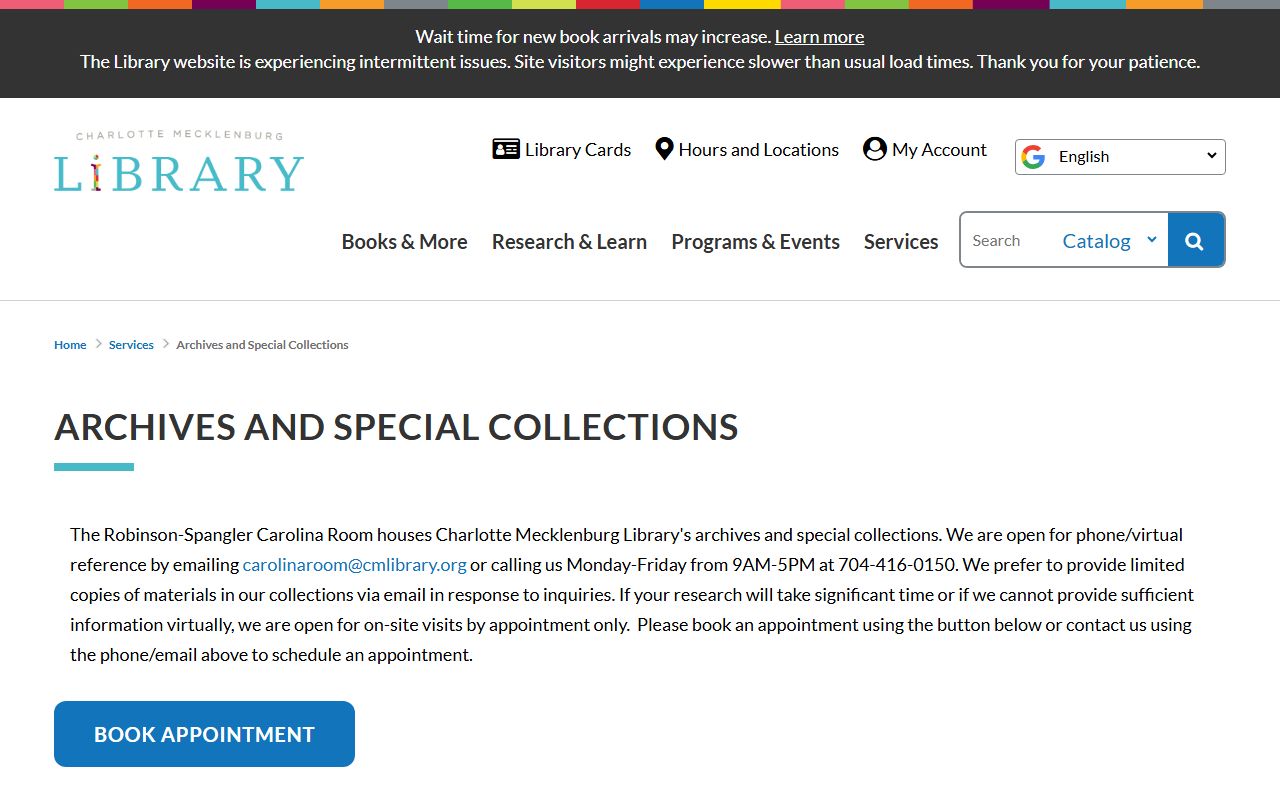
The Robinson-Spangler Carolina Room at the Charlotte Mecklenburg Library is a major genealogy research center. It holds more than 10,000 family histories, along with census records, city directories from 1893, and the Charlotte Observer newspaper on microfilm from 1892. The collection is free and open to the public. Staff members can assist visitors with genealogy questions and help locate specific records.
Several digital databases are available at no cost through the library. Ancestry Library Edition provides access to census records, military files, immigration documents, and billions of other genealogy records. HeritageQuest offers a more focused set of records with emphasis on census data and local histories. Fold3 specializes in military records. The library also provides African American Heritage databases that are particularly useful for tracing Black families in Charlotte and Mecklenburg County.
The Charlotte Mecklenburg Library has digitized thousands of historic photographs and documents. These digital collections are available online and include images of neighborhoods, churches, schools, and community events throughout Charlotte's history. Photographs can place ancestors in a specific time and location. City directories list residents by name and address, making them useful for tracking family movements between census years.
Note: Ancestry Library Edition and Fold3 must be accessed from inside the library building. HeritageQuest can often be used remotely with a valid library card.
Charlotte Marriage Records
Marriage records are among the oldest genealogy documents available for Charlotte families. The Mecklenburg County Register of Deeds holds marriage records from 1763. Marriage bonds, which date to 1779, are formal pledges that were required before a couple could wed. They typically name the groom, the bride, and a bondsman who guaranteed the marriage would take place. The bondsman was often a relative of the bride, which makes these records useful for identifying family ties.
Marriage licenses replaced bonds in 1868. Licenses include the names of both parties, their ages, residences, and sometimes the names of parents. For Charlotte families, marriage records can connect generations when birth records are missing. Many early Mecklenburg marriages were performed by ministers, and the original records note the officiant and the denomination. This can point researchers toward specific church records for further study.
The North Carolina State Archives also holds microfilmed copies of early Mecklenburg County marriage records. These can be accessed in person at the archives in Raleigh or through interlibrary loan in some cases. The NC Vital Records office can provide marriage verification for more recent records.
Charlotte Land and Property Records
Land records at the Mecklenburg County Register of Deeds date to 1763 and are a cornerstone of Charlotte genealogy research. Deeds record the transfer of property from one party to another and often include details about family relationships. A father selling land to a son, for instance, is clear evidence of kinship. Deeds also identify neighbors, which can help place families in a specific community within the Charlotte area.
Mecklenburg County land records include deeds, mortgages, plat maps, and liens. Early grants document the original distribution of land by the colonial government. These grants are especially important for tracing the first European settlers in what would become Charlotte. Many of the original land grants predate the incorporation of the city in 1768. The deed books at the Register of Deeds office cover the full span of Mecklenburg County's history and are indexed by grantor and grantee.
Tax records can supplement land records. Property tax lists show who owned land in a given year, even when no deed was recorded. For Charlotte genealogists, tax records help establish a timeline of property ownership and can confirm when a family arrived in or left the area.
Charlotte Museum of History
The Charlotte Museum of History preserves the story of the Charlotte region from its earliest days. The museum is built around the 1774 Hezekiah Alexander Homesite, one of the oldest surviving structures in Mecklenburg County. Hezekiah Alexander was a signer of the Mecklenburg Declaration and a prominent early citizen. The homesite offers a direct connection to colonial Charlotte and the people who shaped the community.
The museum holds artifacts, documents, and exhibits related to Charlotte's past. While it is not a records repository like the Register of Deeds or the Carolina Room, it provides historical context that enriches genealogy research. Knowing what daily life was like for early Charlotte families helps researchers understand the records they find. The museum also hosts programs and events focused on local history and heritage.
Charlotte Birth and Death Records
Birth and death certificates for Charlotte are available from 1913 onward at the Mecklenburg County Register of Deeds. Before 1913, North Carolina did not require statewide registration of births and deaths. Researchers looking for pre-1913 vital events in Charlotte must turn to other sources. Church records, cemetery records, and newspaper obituaries can substitute for missing vital records. Family Bibles sometimes contain birth and death dates as well.
The North Carolina Vital Records office in Raleigh is another source for certified copies of birth and death certificates. Ordering from the state office may be more convenient for researchers who do not live near Charlotte. Processing times vary, so plan ahead if you need records for a specific deadline.
Death records are often more detailed than birth records for genealogy purposes. A death certificate typically lists the date and place of death, the cause, the decedent's age, birthplace, parents' names, and the informant. The parents' names on a death certificate can bridge generations. However, the accuracy depends on what the informant knew at the time.
Note: Statewide birth records less than 100 years old and death records less than 25 years old have access restrictions in North Carolina.
African American Genealogy in Charlotte
Charlotte has a rich African American history, and tracing Black family roots in the city requires a distinct research approach. Enslaved people were not named in most public records before 1865. After emancipation, Freedmen's Bureau records, marriage registers, and church records become the primary sources for identifying Black families. The Robinson-Spangler Carolina Room holds African American Heritage databases that are free to use in the library.
The Charlotte Observer, available on microfilm from 1892, published community news that included African American births, marriages, deaths, and church events. City directories from 1893 forward list Black residents and their occupations. These records help establish where Black families lived and worked in Charlotte during the late 19th and early 20th centuries.
Mecklenburg County deed records can also be useful. After the Civil War, many formerly enslaved people acquired property. Land purchases appear in the deed books and establish economic ties to the community. The Charlotte Mecklenburg Library's digital collections include historic photographs that document African American neighborhoods, schools, and institutions throughout the city's history.
Online Resources for Charlotte Genealogy
Several online platforms provide access to Charlotte and Mecklenburg County genealogy records. The Mecklenburg County Register of Deeds website offers an online search tool for property records. The Robinson-Spangler Carolina Room maintains digital collections of photographs, documents, and finding aids. The City of Charlotte website provides general city information and links to public services.
- Mecklenburg County Register of Deeds online property search
- Robinson-Spangler Carolina Room digital collections
- Ancestry Library Edition at Charlotte Mecklenburg Library
- FamilySearch.org free records and indexes
- NC State Archives online catalog and digital collections
FamilySearch.org hosts free indexes and images of many Mecklenburg County records, including marriage records and some deed books. The NC State Archives has digitized portions of its holdings and provides an online catalog for planning research visits. For researchers unable to travel to Charlotte, combining these online tools with mail requests to the Register of Deeds can be an effective strategy.
Mecklenburg County Genealogy Records
Charlotte is the county seat of Mecklenburg County. All genealogy records for Charlotte residents are maintained at the county level through the Register of Deeds and the county courthouse. For a complete overview of Mecklenburg County records, research tips, and additional resources, visit the full county page.