
Columbus County Family Genealogy
Columbus County genealogy records reach back to 1809 when the county was formed from parts of Bladen and Brunswick Counties. Named for Christopher Columbus, the county seat is Whiteville. Columbus County sits in the coastal plain of southeastern North Carolina. The area was settled by farmers who worked the flat, sandy soil. Marriage and court records start in 1809, giving genealogy researchers more than two centuries of documented family history. The Register of Deeds in Whiteville holds the core records for Columbus County genealogy work.
Columbus County Quick Facts
Columbus County Register of Deeds
The Columbus County Register of Deeds in Whiteville holds marriage licenses, land deeds, birth certificates, and death certificates. This office is the starting point for most Columbus County genealogy research. Staff can help you search records and make copies.
Columbus County marriage records begin in 1809. Land records also start in 1809. Court records and probate files date from the same year. Birth and death records begin in 1913 with statewide registration. The long span of Columbus County records makes it possible to trace families from the early 1800s through the present day. Many families lived in Columbus County for five or six generations. Their names appear again and again in deed books, marriage registers, and court minutes.
Contact the Columbus County Register of Deeds for hours and directions to the office in Whiteville.
| Office |
Columbus County Register of Deeds 110 Washington Street Whiteville, NC 28472 Phone: (910) 640-6600 |
|---|---|
| Records | Marriage 1809, Land 1809, Court 1809, Probate 1809, Birth 1913, Death 1913 |
Columbus County Settlement Patterns
Columbus County was carved from Bladen and Brunswick Counties in 1808. The land is flat and low. Rivers and swamps shaped where people could settle. The Waccamaw River runs through the county. Families built farms on higher ground along waterways. These settlement patterns are important for Columbus County genealogy because they explain why certain families cluster together in records.
Early settlers in Columbus County came from older coastal counties and from South Carolina. Some had roots in the colonial settlements along the Cape Fear River. Others moved inland from Brunswick County. By the mid-1800s, Columbus County had a mix of small farms and larger plantations. The Green Swamp covered a large area and limited settlement in parts of the county. Families who lived near the swamp appear in fewer records, which can make Columbus County genealogy more difficult in those areas.
Agriculture drove the economy for most of Columbus County's history. Tobacco, corn, and cotton were the main crops. Later, Columbus County became known for blueberry farms. These agricultural roots are visible in land records, tax lists, and census returns used for genealogy research.
Note: For records before 1808, check Bladen County and Brunswick County. Those parent counties hold the earlier records for the area that became Columbus County.
Columbus County Land Records
Land records in Columbus County start in 1809. The Register of Deeds holds deed books, grantor and grantee indexes, and plat maps. These records are public and can be searched at the courthouse in Whiteville.
In a farming county like Columbus, land records are the backbone of genealogy research. Deeds show who owned land, who they bought it from, and who they sold it to. Many Columbus County deeds name wives who had to sign off on sales. This is helpful for genealogy because it confirms marriages. Deeds that divide land among heirs after a death list all the children and their spouses. These division deeds are especially valuable for Columbus County genealogy work.
State land grants for the Columbus County area may predate the county's formation. These grants are held at the State Archives in Raleigh. The image below shows a resource page for North Carolina land grants used in genealogy research.
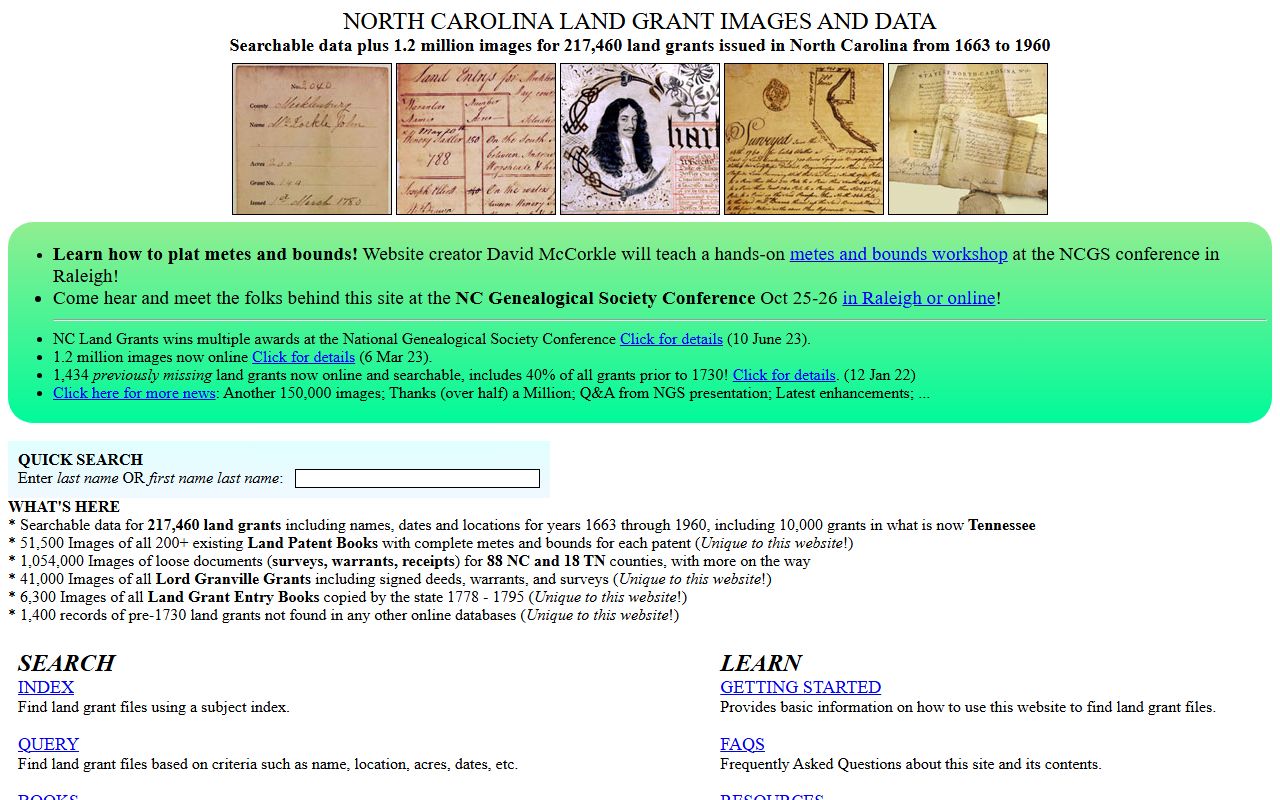
State land grants can help trace Columbus County families back before 1808.
Columbus County Marriage Records
Marriage records in Columbus County begin in 1809. Early records include marriage bonds. Each bond names the groom and a bondsman, who was often the bride's father or brother. This makes marriage bonds a strong tool for genealogy in Columbus County because they identify family members beyond the couple.
Later marriage licenses in Columbus County provide more details. They list ages, birthplaces, parents' names, and occupations. These licenses help genealogy researchers build complete family groups. Columbus County marriage records also show connections between families who lived near each other. Neighbors married neighbors. Cousins married cousins. Tracking these patterns reveals the social fabric of Columbus County communities.
The state marriage index and the DigitalNC Columbus County page may have additional resources for finding marriage records and related materials.
Columbus County Birth and Death Records
Birth and death records for Columbus County begin in 1913. Before that year, there are no official vital records at the county level. The Register of Deeds in Whiteville can provide copies of certificates from 1913 onward. You can also order copies from the state.
The NC Vital Records office handles statewide requests for birth and death certificates. Death certificates are a top resource for Columbus County genealogy. They list the person's name, date and place of death, cause of death, occupation, birthplace, and parents' full names. A single death certificate can open a new branch of Columbus County family research.
The image below shows the North Carolina state archives marriage records page, which covers resources available for Columbus County and other counties.
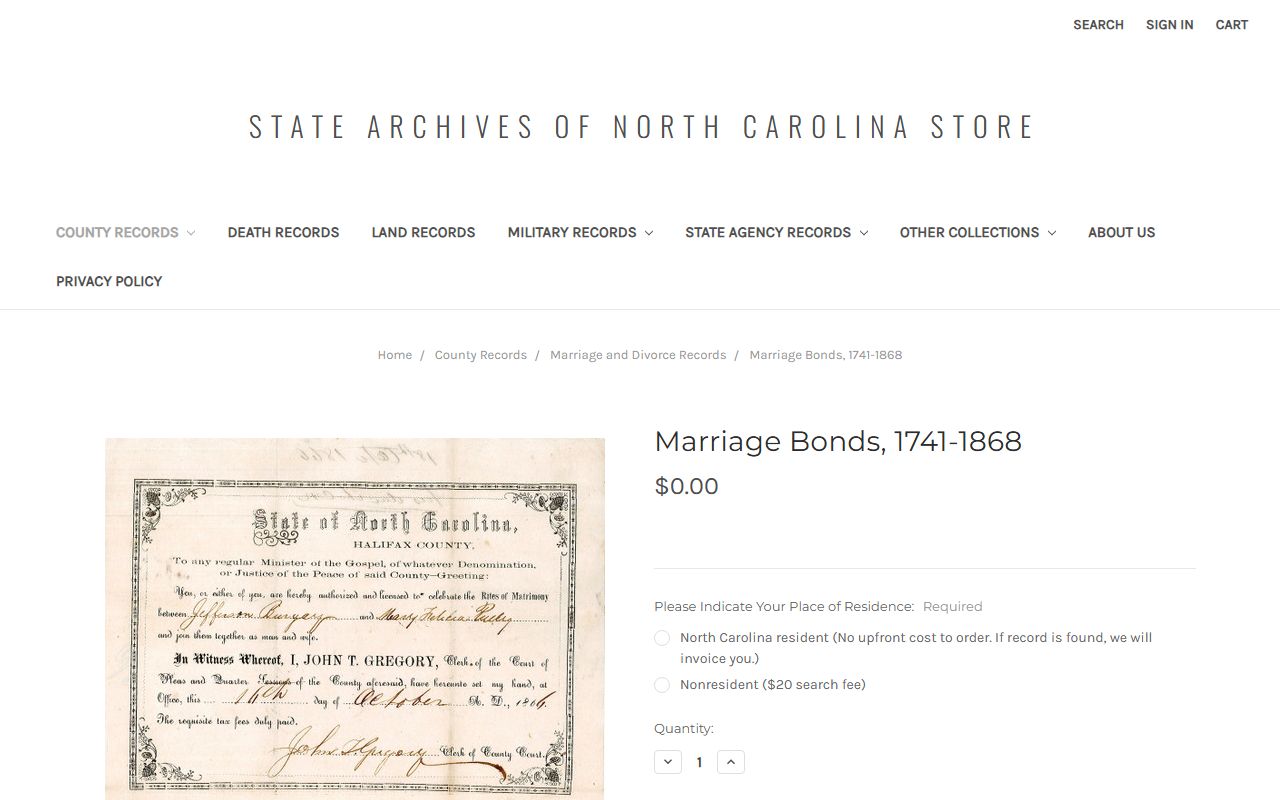
The State Archives holds additional Columbus County marriage and vital record resources.
Note: Before 1913, Columbus County genealogy researchers should look for birth and death information in family Bibles, church records, newspaper obituaries, and cemetery headstones.
Columbus County Probate Records
Probate records in Columbus County date from 1809. The Clerk of Superior Court in Whiteville holds wills, estate inventories, guardianship files, and administrator bonds. These records are open to the public.
Wills filed in Columbus County name the writer, their family, and often their property in detail. A Columbus County will from the 1830s might list specific parcels of land, livestock, farming equipment, and household items. Each item tells something about the family's life. Estate sales records show who bought what, revealing neighbors and relatives who attended the sale. For genealogy purposes, Columbus County probate records are among the most detailed sources available.
Guardianship records in Columbus County name orphaned children and the adults who cared for them. These records establish ages, relationships, and sometimes property holdings. Apprenticeship bonds also appear in Columbus County court records and show young people placed with tradesmen or farmers.
- Wills and codicils from 1809
- Estate inventories and sale records
- Guardianship bonds naming orphans
- Letters of administration
- Division of land among heirs
- Apprenticeship bonds for minors
Columbus County Census Records
Federal census records for Columbus County exist from 1810 onward. The 1810 census is a population count by household but does not list names beyond the head of household. Starting in 1850, every person in Columbus County is listed by name with age, sex, birthplace, and occupation. Census records are a foundation for Columbus County genealogy because they show entire families at a point in time.
The 1860 and 1870 census records for Columbus County show the impact of the Civil War. Farms changed hands. Some families left. Others arrived. Comparing the two census years can reveal what happened to Columbus County families during and after the war. Slave schedules from 1850 and 1860 are also available and list enslaved people by age, sex, and color under each slaveholder in Columbus County.
Census records for Columbus County are available through the National Archives and through public libraries with database subscriptions. Many genealogy websites also offer free access to indexed census data for Columbus County.
Nearby Counties
These counties border Columbus County. Families in southeastern North Carolina often had ties across county lines. Check parent and neighboring counties if your Columbus County genealogy search hits a dead end.