
Brunswick County Coastal Genealogy
Brunswick County lies along the southern coast of North Carolina, where the Cape Fear River meets the Atlantic Ocean. Formed in 1764 from New Hanover and Bladen counties, it takes its name from the colonial Town of Brunswick, which honored King George I as Duke of Brunswick. The British burned the town in 1776. The county seat is Bolivia, which replaced Southport in 1975. Three courthouse fires have shaped the genealogy record base, but records from 1808 onward are well preserved.
Brunswick County Quick Facts
Brunswick County Register of Deeds
The Brunswick County Register of Deeds is located at 228 N. Main Street in Bolivia. The office manages marriage licenses, land deeds, vital records, and other public documents. You can contact them at 910-253-7000 for information about records and fees.
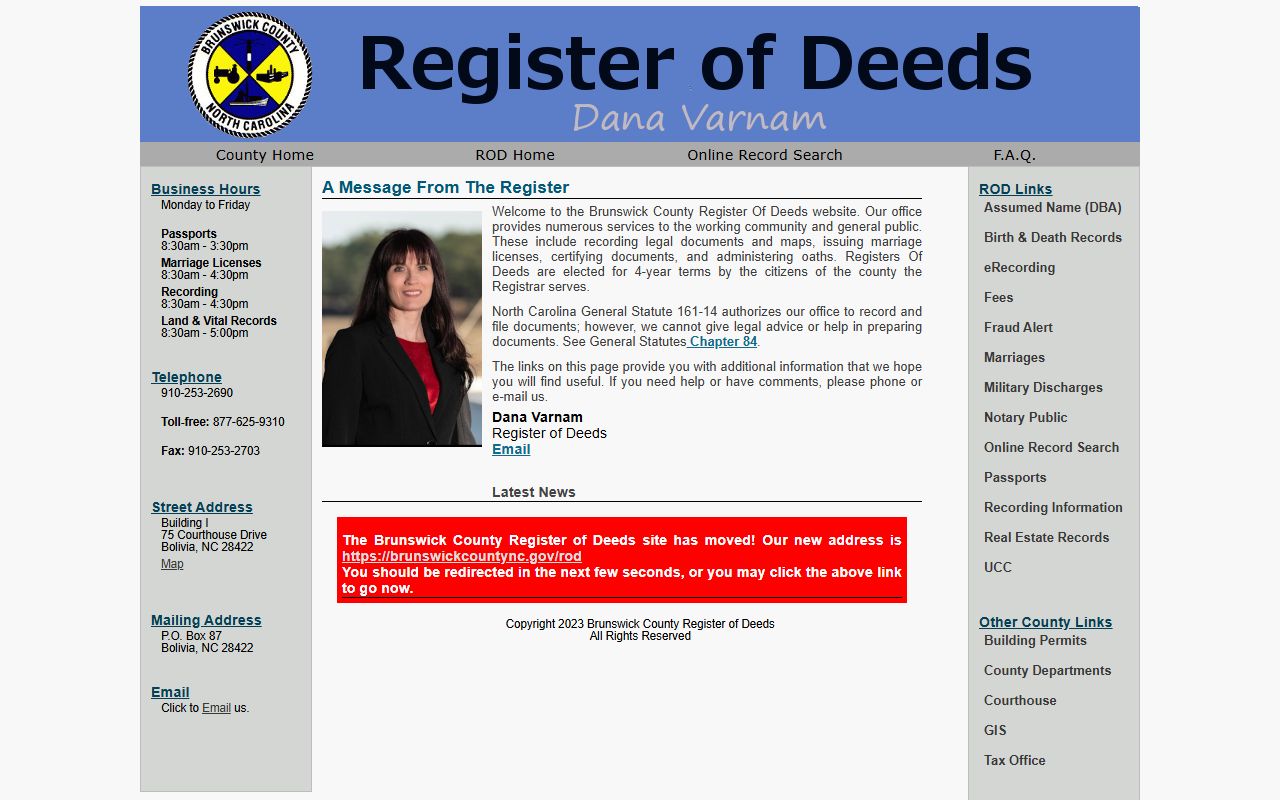
The image below shows the Brunswick County Register of Deeds website, which provides details on available records and online search tools.
Most Brunswick County records begin in 1808. Marriage, court, land, and probate records all start from that year. Earlier records were destroyed in courthouse fires in 1844 and 1889, with a third fire in 1917 causing more damage. For records before 1808, researchers must turn to state-level sources and the parent counties of New Hanover and Bladen.
Visit the Brunswick County Register of Deeds for current office hours and information about searching records online.
| Office |
Brunswick County Register of Deeds 228 N. Main Street Bolivia, NC 28422 Phone: (910) 253-7000 |
|---|---|
| Hours | Monday through Friday, 8:00 AM to 5:00 PM |
| Website | brunswickcountync.gov/register-of-deeds |
Brunswick County Genealogy History
The Town of Brunswick was once a thriving colonial port. Founded in 1726, it served as a center of commerce and government for the lower Cape Fear region. The town's ruins are now a State Historic Site and offer a tangible link to the colonial families who shaped this area. Researchers with roots in Brunswick County before the Revolution should explore the records associated with the old town.
The county experienced slow growth through much of its history. Farming, fishing, and timber drove the local economy. Families tended to stay in the area for generations, which means genealogy researchers can often trace lines through several centuries of Brunswick County records. The port town of Southport, formerly Smithville, served as the county seat until 1975 and was a center of maritime activity.
In recent decades, Brunswick County has seen rapid population growth. The county grew from about 73,000 people in 2000 to over 107,000 by 2010. This growth brought new residents but also increased interest in the county's history and genealogy. Local historical societies have become more active in preserving records and making them available to researchers.
Note: The historic Town of Brunswick ruins are managed by the NC Division of Historic Sites and can provide context for colonial-era genealogy research in Brunswick County.
Brunswick County Vital Genealogy Records
Birth and death records in Brunswick County start in 1913, matching the statewide registration date. Marriage records go back to 1808. For copies of birth and death certificates, contact the North Carolina Vital Records office.
Marriage bonds and licenses from 1808 forward are held by the Register of Deeds. These records name the groom, bride, and a bondsman. Before 1808, check the records of New Hanover County and Bladen County, as Brunswick was carved from those two.
Church records supplement the official vital records. Coastal churches, including Methodist, Baptist, and Episcopal congregations, kept registers of baptisms, marriages, and burials. Some of these registers predate the surviving county records and can fill gaps caused by the courthouse fires. A few have been microfilmed and are available through the NC State Archives.
Land Records in Brunswick County
Brunswick County land records begin in 1808. Deeds, mortgages, and plats document property transfers along the coast, the Cape Fear River, and inland areas. Coastal property records are especially interesting because they track the development of beach communities that later became major towns.
For land records before 1808, the NC State Archives holds colonial land grants for Brunswick County. These grants were issued by the colonial government and predate the county's own deed books. They name the grantee, the acreage, and the general location. The Secretary of State's land grant office also has records searchable by county.
Court records also start in 1808. Early court minutes cover a range of business including road maintenance, tavern licenses, orphan appointments, and civil disputes. Probate records from the same period include wills, estate inventories, and guardian accounts. These are critical for genealogy because they name family members and describe property distributions.
- Deed books from 1808 record property sales and gifts
- Colonial land grants predate county records at the State Archives
- Court minutes include orphan and guardian appointments
- Wills and estate records name heirs and family connections
- Plat maps show property boundaries and neighbor names
Note: For Brunswick County land before 1764, search in New Hanover and Bladen county deed books, as those were the parent counties.
Searching Brunswick County Genealogy
Start with the known facts. Gather names, approximate dates, and any family stories before you begin searching. This helps narrow the records you need to check and saves time at the courthouse or online.
The DigitalNC website hosts digitized newspapers and other publications from Brunswick County. Old newspapers carry obituaries, marriage notices, and local news items that name family members and describe community events. These can add details that official records do not provide.
Census records for Brunswick County begin with the 1790 federal census. The early censuses name only the head of household, while the 1850 census and later list every person. Tax lists from the 1800s can fill years between censuses. Military records from the Revolutionary War, Civil War, and later conflicts also cover Brunswick County men and sometimes include family information in pension files.
Cemetery records are another strong source. Brunswick County has many old burial grounds along the coast and inland. The Southport area has several well-maintained historic cemeteries. Headstones provide dates, family relationships, and sometimes birthplaces that appear in no other record. Local genealogy groups have surveyed many of these cemeteries and published their findings.
Brunswick County Maritime Genealogy
Southport, originally called Smithville, was a center of maritime activity for Brunswick County. The town sits at the mouth of the Cape Fear River and served as a pilot station, a fishing port, and a military post. Families in Southport often had connections to the sea. Ship logs, port records, and customs documents at the National Archives can supplement local genealogy records for these maritime families.
Fort Caswell and Fort Johnston, both located in Brunswick County, generated military records that may include local residents. Soldiers stationed at these forts sometimes married local women and settled in the area. Checking military post records can uncover these connections.
Nearby Counties
These counties border Brunswick County. Families along the Cape Fear River and the southern coast often had ties to neighboring counties. Checking records across county lines can reveal additional genealogy connections.