
Pender County Genealogy Records
Pender County was established in 1875 from New Hanover County and named for William Dorsey Pender, a Confederate general mortally wounded at Gettysburg. The county seat is Burgaw, a small town along the rail line connecting Wilmington to points north. Formed during the Reconstruction era, its records begin at a time of significant social and economic change in southeastern North Carolina. Marriage, land, court, and probate records all date from 1875 and capture the transition from the post-war period into the modern age. Researchers will find a compact but detailed collection reflecting the agricultural and maritime communities along the coast.
Pender County Quick Facts
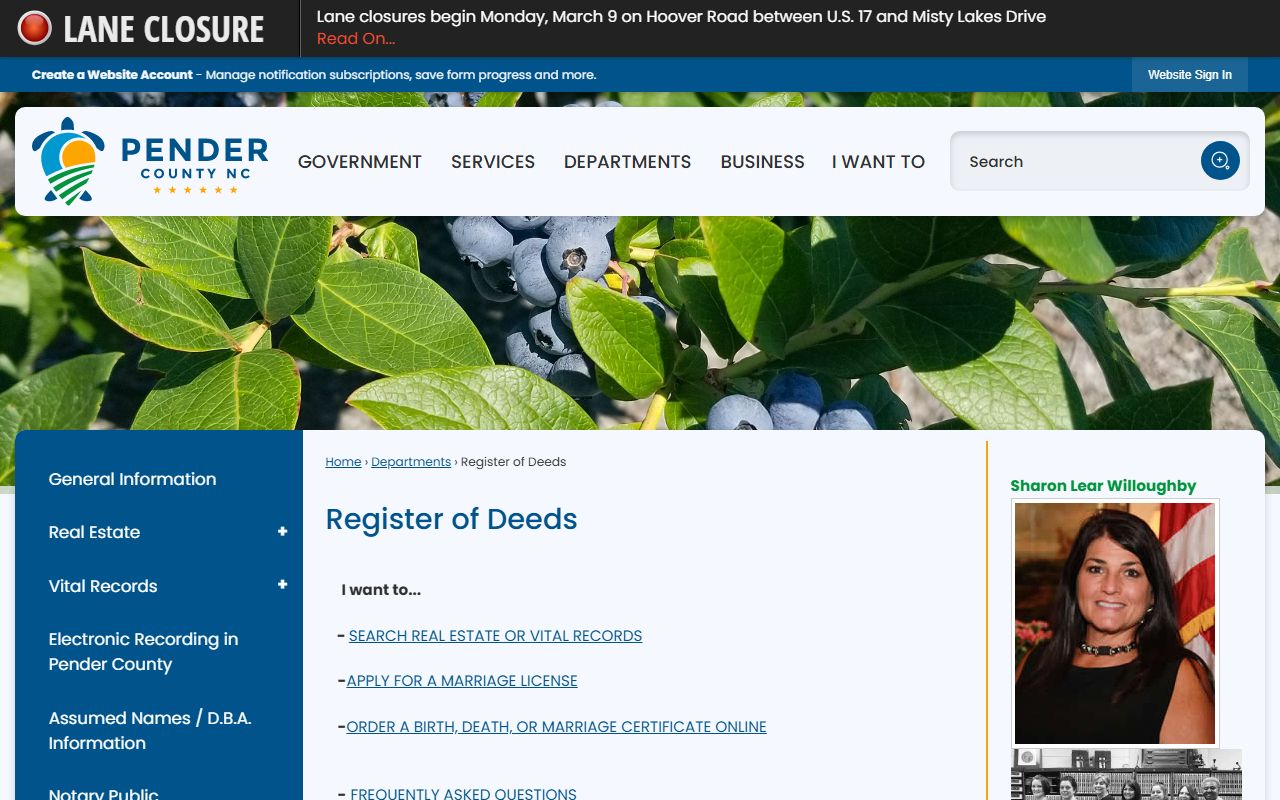
Pender County Register of Deeds
The Pender County Register of Deeds office in Burgaw is the primary repository for vital records and property documents within the county. Marriage licenses begin in 1875, the year of the county's formation. Land deeds also start that year. Birth and death certificates are available from 1913 forward, consistent with the statewide registration system that North Carolina implemented in that year. Wills recorded at this office span from 1875 through 1968.
The courthouse is located on East Fremont Street in downtown Burgaw. Researchers can visit in person to search indexes and request copies of recorded documents. The staff can assist with locating specific records, though it is helpful to have names, approximate dates, and other identifying details ready before your visit. Certified copies carry a fee that varies by document type.
| Office |
Pender County Register of Deeds 300 E Fremont Street Burgaw, NC 28425 Phone: (910) 259-1200 |
|---|---|
| Register | Phone: (910) 259-1225 |
| Hours | Monday through Friday, 8:00 AM to 5:00 PM |
| Website | pendercountync.gov/rod |
Reconstruction Era Origins
Pender County came into existence during the final years of Reconstruction, a period that reshaped the social and political landscape of the American South. The county's earliest records reflect this transformation. Marriage licenses from the mid-1870s include unions between formerly enslaved individuals who could now legally marry. Land deeds from the same period show African American families purchasing property for the first time, as well as white landowners selling off portions of former plantations.
Court records from Pender County's first decade provide insight into how communities navigated the post-war legal system. Civil disputes over property boundaries, debts, and contracts appear frequently. Criminal cases document the social tensions of the era. For genealogy researchers, these court minutes often name individuals who left few other records, including laborers, sharecroppers, and small farmers who did not own land but appeared as witnesses or parties in legal proceedings.
Because Pender County was carved from New Hanover County, researchers tracing families before 1875 must consult New Hanover County records. The New Hanover County Register of Deeds in Wilmington holds all marriage, land, and probate records for the Pender County area prior to the split. Colonial and antebellum records for this region are extensive and well-preserved at the New Hanover courthouse and the North Carolina State Archives.
Pender County Marriage Records
Marriage records in Pender County begin in 1875 with the license system rather than the older bond system used in colonial-era counties. Each license application includes the names of both parties, their ages, places of residence, and the names of their parents. The officiant signed the return portion of the license after performing the ceremony. These details make Pender County marriage records highly useful for establishing family connections across generations.
African American marriage records from the 1870s and 1880s are especially significant for genealogy research. Many of these licenses formalized unions that had existed for years or even decades without legal recognition. Some entries include notes about previous relationships or the names of children already born to the couple. The Freedmen's Bureau records, held at the National Archives, can supplement these local records with additional documentation of marriages among formerly enslaved people in southeastern North Carolina.
- Marriage licenses from 1875 to the present
- Minister and magistrate returns confirming ceremonies
- Applications listing ages, birthplaces, and parents
- Pre-1875 marriages recorded in New Hanover County
Land and Property Records
Land deeds in Pender County date from 1875 and record every sale, gift, mortgage, and transfer of real property within the county. The terrain of Pender County ranges from coastal barrier islands along Topsail Island to flat agricultural land and pine forests inland. Property descriptions in early deeds reference creeks, swamps, railroad lines, and neighboring landowners as boundary markers.
The post-Civil War land market in what became Pender County was active. Former plantation lands were subdivided and sold in smaller parcels. Timber companies acquired large tracts for turpentine and lumber operations. These transactions generated detailed records that name buyers, sellers, and the prices paid. For genealogy purposes, land records can reveal when a family arrived in or departed from the county, and deed chains can show how property passed from parents to children over time.
Researchers should also consult the original New Hanover County deed books for land transactions in the Pender County area before 1875. Colonial-era grants for this part of southeastern North Carolina are held at the State Archives and document the earliest European claims to land along the Cape Fear River and its tributaries.
Pender County Probate and Will Records
Wills and estate records in Pender County begin in 1875 and continue through 1968 at the Register of Deeds, with more recent probate files held by the Clerk of Superior Court. These records name heirs, describe property, and often reveal family relationships that do not appear in any other source. Estate inventories list household goods, farm equipment, livestock, and other personal property, providing a snapshot of how families lived.
Estate sales were common when a property owner died. The administrator would sell personal property at auction, and the sale record lists every buyer and the amount paid. Relatives and neighbors frequently purchased items, creating a network of names connected to the deceased. Guardian bonds for orphaned children name the appointed guardian, the minor children, and the sureties who guaranteed responsible management of the children's inherited property.
Intestate estates, where the deceased left no will, generate their own set of records. The court appointed an administrator, divided the property among heirs according to North Carolina law, and recorded the proceedings. These records can be especially valuable because they list all legal heirs by name, sometimes revealing children or spouses not mentioned in other documents.
Topsail Island and Maritime Heritage
Pender County's coastline includes a portion of Topsail Island, a barrier island with a maritime heritage that stretches back centuries. Fishing, oystering, and boat building were central to the economy of coastal Pender County families. While these occupations do not always generate government records, they appear in census returns, tax lists, and occasional court documents that mention boats, nets, and fishing grounds.
The Pender County Museum in Burgaw preserves artifacts and documents related to the county's history, including its maritime communities. Photographs, oral history recordings, and donated family papers supplement the official records at the courthouse. The museum is a worthwhile stop for researchers seeking context about the daily lives of Pender County families beyond what the public records alone can reveal.
Maritime heritage also connects Pender County to broader trade networks. The port of Wilmington in neighboring New Hanover County was a major shipping hub, and many Pender County residents worked in related industries. Ship manifests, customs records, and port documents at the National Archives can provide additional information about individuals who lived in Pender County but earned their livelihood on the water.
Researching Pender County Families
Pender County's relatively recent formation in 1875 means that researchers must split their work between two counties. For the period before 1875, all records are in New Hanover County. After 1875, records are in Pender County. Knowing the exact location of a family's home is critical for determining which county's records to search. Families living near the boundary may appear in both sets of records during the transition period.
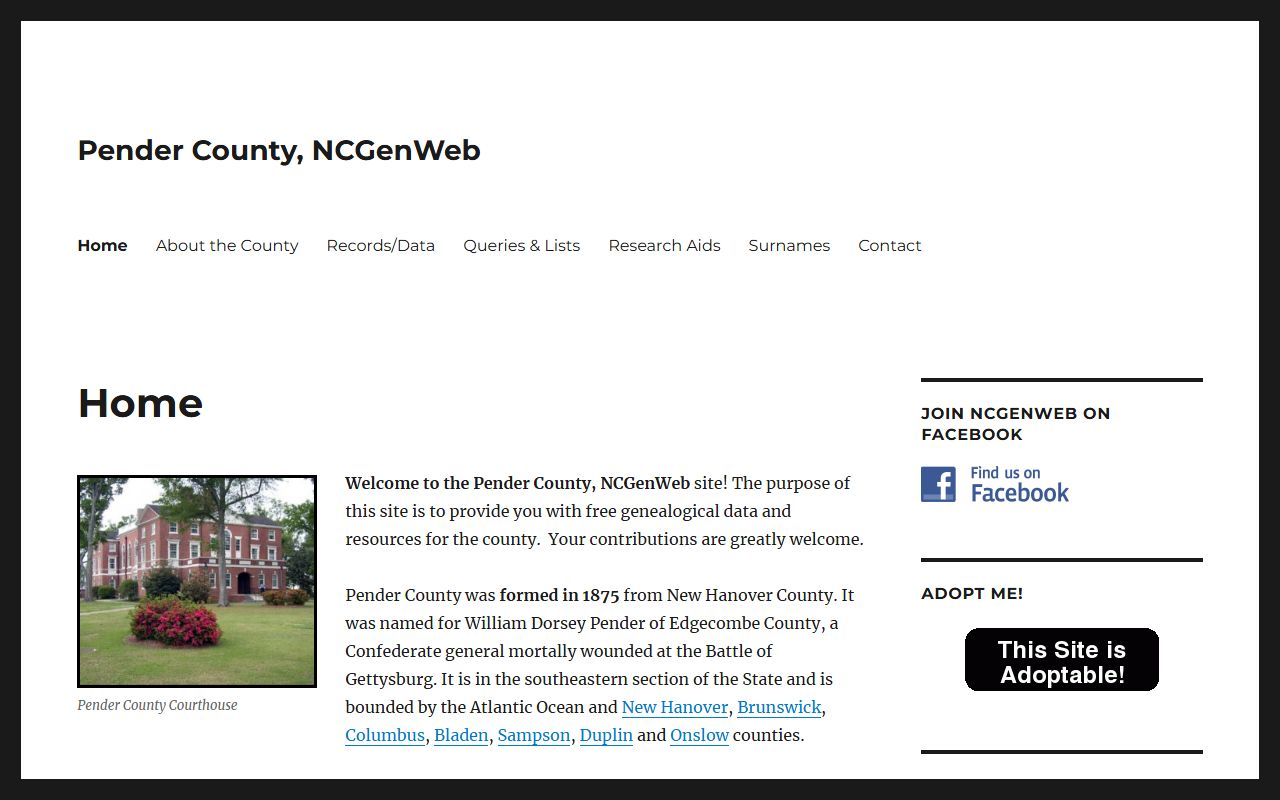
Federal census records for the Pender County area appear under New Hanover County through 1870. The 1880 census is the first to list Pender County separately. Each census year provides household composition, ages, occupations, birthplaces, and other details. The NCGenWeb Pender County page offers free transcriptions and research guides that can help locate families in the census and other records.
Church records from Baptist, Methodist, and Presbyterian congregations in Pender County include baptisms, marriages, deaths, and membership rolls. Some congregations kept detailed minutes of their meetings that name families and describe community events. African American churches organized after the Civil War are particularly important sources for the post-1865 period. Vital records from 1913 onward, including birth and death certificates, are available through North Carolina Vital Records.
Nearby Counties
Pender County borders several southeastern North Carolina counties. Families often moved between Pender and its neighbors, particularly New Hanover County where Wilmington offered economic opportunities. Check records in adjacent counties when a family cannot be found in Pender County documentation.