
Sampson County Genealogy Records
Sampson County sits in the heart of North Carolina's Coastal Plain, a region shaped by agriculture and the families who worked the land for generations. Formed in 1784 from Duplin County, Sampson County has maintained public records for over 240 years without a courthouse disaster. The county seat of Clinton serves as the center for record keeping, and the Register of Deeds office holds marriage, land, and vital records essential for tracing family lines through southeastern North Carolina. This guide explains the record types available and how to access them for your genealogical research.
Sampson County Quick Facts
Sampson County Formation and Settlement History
The North Carolina General Assembly formed Sampson County in 1784 from the eastern portion of Duplin County. The county was named for John Sampson, a colonial-era political figure who opposed the policies of the Royal Governor. Sampson served in the colonial assembly and was known for his resistance to crown authority before the Revolution. His name was chosen to honor the patriot spirit that defined the county's founding generation.
The county seat of Clinton was named for Richard Clinton, a Revolutionary War officer from the area. Clinton grew as a market town serving the surrounding agricultural community. The Coastal Plain geography shaped the county's economy and settlement patterns. Rich soils supported tobacco, cotton, and later, a diverse mix of crops that made Sampson one of the most productive agricultural counties in the state. Family farms passed through generations, and land records in Sampson County frequently document these transfers across decades.
Early settlers came from older eastern counties and from the British Isles. Scots, English, and Scots-Irish families formed the backbone of the early population. By the early 1800s, Sampson County had a well-established community with churches, mills, and a functioning court system that generated the records genealogists use today.
Sampson County Register of Deeds Office
The Sampson County Register of Deeds maintains the official record books for marriages, land transfers, and vital events. Marriage records begin in 1784, the year of the county's formation. Land deeds also date to 1784 and document every recorded property transaction since that time. Birth and death records begin in 1913, when North Carolina enacted statewide vital records registration.
The office is located at 126 East Elizabeth Street in Clinton. Staff can assist with searches for specific records and provide certified or uncertified copies. The office serves both in-person visitors and mail requests. For complicated research spanning many years, visiting in person allows you to browse index books and identify documents you might otherwise miss.
| Office |
Sampson County Register of Deeds 126 E. Elizabeth Street Clinton, NC 28328 Phone: (910) 592-5191 |
|---|---|
| Hours | Monday through Friday, 8:00 AM to 5:00 PM |
| Website | sampsonnc.com - Register of Deeds |
Sampson County Marriage Bonds and Licenses
Marriage records are a primary tool for connecting generations in Sampson County genealogy. The earliest records are marriage bonds, which were required before a license could be issued. A bond named the groom and a surety, who was often a relative of the bride. The bond guaranteed that no legal impediment to the marriage existed. These bonds survive from 1784 onward and are indexed by groom's name in the Register of Deeds office.
North Carolina transitioned to a marriage license system in 1868. Licenses from Sampson County after that date typically include the full names of both parties, their ages, birthplaces, and the names of their parents. The officiant's name and denomination are also recorded. These details make post-1868 marriage records especially valuable for establishing parentage and family connections.
No fire or flood has damaged the Sampson County courthouse records. The complete run of marriage documents from 1784 to the present is intact. Researchers can access indexes at the NCGenWeb Sampson County page, where volunteers have compiled partial indexes and transcriptions of early bonds.
Sampson County Land and Deed Records
Land records in Sampson County date to 1784 and form a continuous record of property ownership. Deeds are recorded in the Register of Deeds office and are indexed by both grantor and grantee. Early deeds describe property using natural landmarks such as creeks, trees, and neighboring owners. These descriptions can help place a family in a specific part of the county and identify their neighbors.
Deeds of gift are particularly useful for genealogists. A parent transferring land to a child typically named the relationship in the deed. When a landowner died, the division of property among heirs was often recorded in the deed books or in the court records as a partition proceeding. These documents can identify all children of a deceased landowner, even daughters who married and took new surnames.
Agricultural land dominated the Sampson County economy. Tax records from the eighteenth and nineteenth centuries list landowners, the acreage they held, and the assessed value. These lists can establish when a family arrived in or departed from the county.
Sampson County Court and Probate Records
The Sampson County court system has generated records since 1784. The Court of Pleas and Quarter Sessions handled civil disputes, criminal cases, road orders, and estate matters during the county's early decades. Minutes from these sessions document a wide range of community activity. Estate files, including wills, inventories, and accounts of sale, provide some of the most detailed information available about families in the eighteenth and nineteenth centuries.
A will can name a spouse, children, grandchildren, and other relatives. It may also specify bequests of land, personal property, and financial assets. Inventories list the deceased person's possessions at the time of death and can include everything from farming equipment to books. Accounts of sale record the prices paid by buyers, who were often family members or neighbors. The Sampson County Clerk of Superior Court maintains these records in Clinton.
Guardianship records are another valuable court source. When a parent died leaving minor children, the court appointed a guardian to manage the children's inheritance. These appointments name the children and the guardian, and annual accounts show how the estate funds were spent on the children's behalf.
Sampson County Birth and Death Certificates
Birth and death registration in Sampson County began in 1913. Certificates from that year forward are available through the Register of Deeds in Clinton and through the North Carolina Vital Records office. Birth certificates older than 100 years are public records. More recent certificates require proof of relationship or a direct legal interest to obtain.
For births and deaths before 1913, researchers should consult church registers, cemetery records, newspaper notices, and family papers. Many Sampson County churches kept baptism and burial registers that serve as de facto vital records. The Sampson County Historical Society has compiled cemetery transcriptions and other genealogical data that can fill gaps in the official record.
Sampson County Historical Society Resources
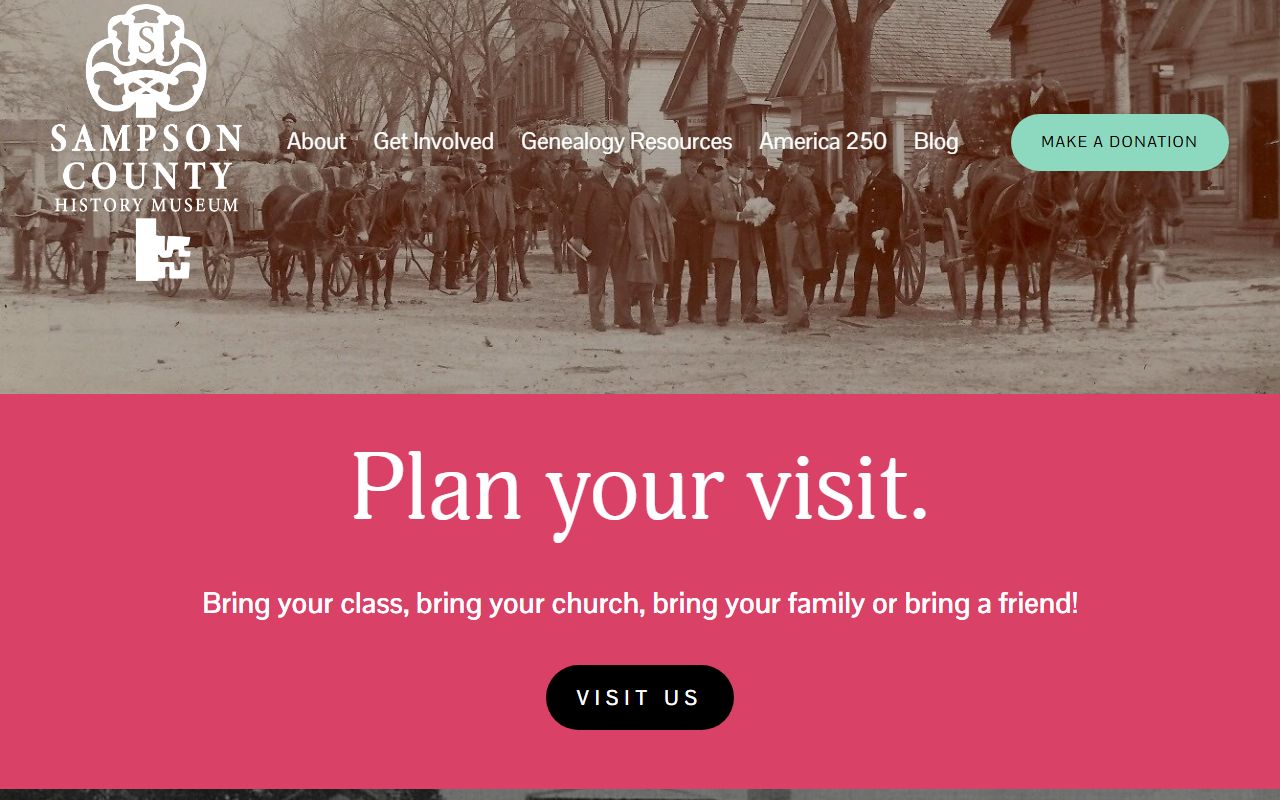
The Sampson County Historical Society is a key resource for family history researchers. Located in Clinton, the society maintains collections of family files, photographs, maps, and published histories related to Sampson County. Their website at sampsonhistory.org provides information about their holdings and how to request research assistance. The society has published several volumes of local history and genealogical compilations over the years.
Volunteers at the historical society can help with specific queries and may have access to materials not available elsewhere. Their collections include Bible records, unpublished family histories, and local newspapers that contain marriage announcements, obituaries, and legal notices. These sources are often the only way to document family events that occurred before official record keeping began in Sampson County.
Sampson County Census and Federal Records
Federal census records for Sampson County begin with the 1790 enumeration. The earliest censuses list only the head of household with tick marks for other household members by age and sex. Beginning in 1850, all household members are listed by name, age, birthplace, and occupation. The agricultural schedules from 1850 through 1880 document farms in detail, including acreage, crops, and livestock. These schedules are available through FamilySearch and other major genealogy platforms.
Military records also document Sampson County residents. Muster rolls, pension files, and service records exist for the Revolutionary War, War of 1812, Civil War, and later conflicts. Confederate service records for Sampson County soldiers are held at the National Archives and have been digitized. Pension applications often contain family information submitted decades after the war, making them useful for connecting generations.
Getting Started with Sampson County Genealogy
Begin your research by gathering what you already know and identifying the earliest ancestor you can place in Sampson County. Check census records to confirm their presence in the county and narrow the date range for other record searches. Then look for marriage, land, and court records in the Register of Deeds and Clerk of Superior Court offices in Clinton.
The NCGenWeb project for Sampson County offers free online resources including lookups, transcriptions, and county information. The North Carolina State Archives in Raleigh holds microfilm copies of many Sampson County records. These can be accessed in person or through interlibrary loan at participating libraries. For twentieth-century research, vital records from the Register of Deeds and the state Vital Records office will be your primary sources.
Nearby Counties
These counties border Sampson County. Families in the Coastal Plain frequently crossed county lines for trade, marriage, and church attendance. Checking neighboring county records can uncover connections missed in Sampson County alone.