
Rowan County Genealogy Records
Rowan County was established in 1753 from Anson County and holds a remarkable distinction in North Carolina history. At its creation, Rowan was the largest county in the colony, stretching to the Mississippi River, and 26 other counties were later carved from its territory. Named for acting Governor Matthew Rowan, the county seat of Salisbury has been the center of government since the 1750s. Waves of German, Scots-Irish, and English immigrants traveling the Great Wagon Road settled here, and the German Lutheran and Reformed congregations kept detailed records of baptisms, marriages, and burials invaluable for genealogical research.
Rowan County Quick Facts
Rowan County Register of Deeds in Salisbury
The Rowan County Register of Deeds maintains one of the oldest and most extensive record collections in North Carolina. Birth and death records begin in 1913 when the state mandated vital event registration. Marriage records stretch back to 1753, the year the county was formed, giving genealogists access to over 270 years of continuous marriage documentation. This makes Rowan County's marriage collection one of the longest in the entire state and a critical resource for anyone researching colonial-era families in the Piedmont.
Land records at the Register of Deeds office also date to 1753 and encompass colonial land grants, property deeds, and related documents that span the full history of the county. Because Rowan County once covered such a vast area, its early land records may document property transactions in territory that later became part of other counties. Researchers working on families anywhere in western North Carolina should consider consulting Rowan County's early land records as part of their research. The Register of Deeds office is located at 130 W. Innes Street in Salisbury and is open to the public during standard business hours.
| Office |
Rowan County Register of Deeds 130 W. Innes Street Salisbury, NC 28144 Phone: (704) 797-3001 |
|---|---|
| Courthouse |
Rowan County Courthouse 130 W. Innes Street Salisbury, NC 28144 Phone: (704) 797-3001 |
| Website | rowancountync.gov/departments/register-of-deeds |
Rowan County Marriage Records from 1753
Marriage records in Rowan County begin in 1753 and constitute one of the longest continuous marriage record collections in North Carolina. The earliest documents are marriage bonds, posted before a wedding could take place, and they often name the groom, a bondsman (frequently a relative of the bride), and sometimes the bride herself. These colonial-era bonds are among the most valuable genealogical documents in the state because they predate most other record types and can establish family connections in the earliest years of European settlement in the Piedmont.
Because Rowan County originally encompassed such a vast territory, its early marriage bonds may document unions that took place in areas now belonging to other counties. Researchers working on families who lived anywhere in what was once western Rowan County should check the Salisbury records for marriage bonds that predate the formation of their ancestor's home county. A bond recorded in Rowan County in the 1760s might involve a couple who lived in territory that later became Mecklenburg, Iredell, or Surry County.
Later marriage licenses from the 1800s and 1900s include progressively more detail, such as the ages and birthplaces of both parties and the names of their parents. Certified copies can be obtained from the Register of Deeds office in Salisbury. The North Carolina Vital Records office maintains a statewide marriage index from 1962 forward. The NCGenWeb Rowan County page hosts volunteer-transcribed marriage bonds and indexes that can accelerate early research.
Court Records and Wills in Rowan County
Court records in Rowan County begin in 1753 and form one of the most substantial collections of colonial-era legal records in North Carolina. As the administrative center for the entire western frontier, the Salisbury courthouse processed cases involving residents from a territory that extended hundreds of miles. These early court minutes, civil actions, and criminal proceedings document the lives of settlers, merchants, soldiers, and tradesmen who populated the Carolina backcountry during the colonial and Revolutionary War periods.
Will records in Rowan County are an especially rich resource for genealogists. Wills from the colonial period name family members, describe property, and sometimes reveal migration origins by referencing land or relatives in other colonies. Estate inventories taken after death provide detailed snapshots of a person's material possessions. Sale records from estate auctions name the purchasers, who were frequently neighbors and family members. The Clerk of Superior Court in Salisbury maintains these records and can assist researchers with locating specific documents.
The Edith M. Clark History Room at the Rowan Public Library holds indexes and transcriptions of many early court and will records. The Rowan Museum also provides access to research materials related to the county's extensive legal history. Microfilm copies of Rowan County court and will records are available at the North Carolina State Archives in Raleigh.
Birth and Death Records in Rowan County
Official birth and death registration in Rowan County began in 1913 when the state of North Carolina mandated the recording of vital events. For the 160 years before that date, researchers must rely on alternative sources for birth and death information. The German Lutheran and Reformed churches in Rowan County kept some of the most detailed congregational records in the state, including registers of baptisms and burials that date well back into the colonial period. These church records are an indispensable resource for anyone researching early Rowan County families.
Family Bibles, cemetery headstone inscriptions, and newspaper obituaries also provide birth and death information for periods before 1913. The cemeteries in and around Salisbury, including the historic Chestnut Hill Cemetery, contain graves dating to the 1700s. Delayed birth certificates filed in the 1930s and 1940s can be found at the Register of Deeds office and may contain affidavits from family members that include genealogical details. For certified copies of birth and death certificates from 1913 onward, contact the North Carolina Vital Records office. Birth records are restricted for 100 years, and death records are restricted for 25 years.
Rowan County Land and Property Records
Land records in Rowan County date to 1753 and represent one of the most important genealogical resources in the state. The earliest records include colonial land grants issued by the Crown to settlers who claimed tracts in the vast western frontier. Because Rowan County originally extended to the Mississippi River, its early land grants cover territory that would eventually belong to dozens of other counties. A land grant recorded in Rowan County in the 1750s or 1760s might describe property in what is now Mecklenburg, Iredell, Surry, or any number of western counties.
Deed records track property transfers across generations and are essential for establishing family relationships. Deeds of gift between parents and children confirm direct lineage. Partition deeds among heirs name siblings and their spouses. Rowan County's grantor and grantee indexes, maintained by the Register of Deeds office, allow researchers to search by surname across the full span of the county's history. The sheer volume of colonial-era land records in Rowan County makes Salisbury a destination for genealogists studying families throughout western North Carolina.
The Edith M. Clark History Room at the Rowan Public Library and the Rowan Museum both hold materials related to early land ownership in the county. The North Carolina State Archives in Raleigh maintains microfilm copies of Rowan County deed books and colonial land grant records. FamilySearch.org has digitized some of these records and made them available for free online research.
Rowan County Historical Background for Genealogy Research
Understanding Rowan County's history is critical for genealogists because the county served as the administrative hub for the entire western portion of colonial North Carolina. When Rowan was created from Anson County in 1753, it was the largest and most populous county in the colony. Over the next century, 26 counties were carved from its territory. Researchers whose ancestors lived anywhere in western North Carolina during the colonial period should begin their search in Rowan County, because the earliest records for their family may have been filed at the Salisbury courthouse.
The Great Wagon Road brought thousands of German and Scots-Irish immigrants through the Shenandoah Valley of Virginia and into the Carolina Piedmont during the mid-1700s. Many of these families settled in Rowan County, establishing communities such as Organ Church, St. John's Lutheran, and Thyatira Presbyterian that still exist today. The church records from these congregations are among the oldest and most complete in the state, documenting families from the 1740s onward. Salisbury itself grew into one of the most important towns in colonial North Carolina, serving as a center of government, commerce, and military activity during the French and Indian War and the American Revolution.
During the Civil War, Salisbury was the site of a Confederate prison that held thousands of Union soldiers. Records related to the prison, as well as service records for Rowan County men who served in Confederate units, can be found at the North Carolina State Archives and the National Archives. After the war, the county's economy transitioned toward textile manufacturing and railroad commerce, bringing new families to the region whose records appear in the courthouse documents from the late 1800s onward.
Rowan County Genealogy Research Resources
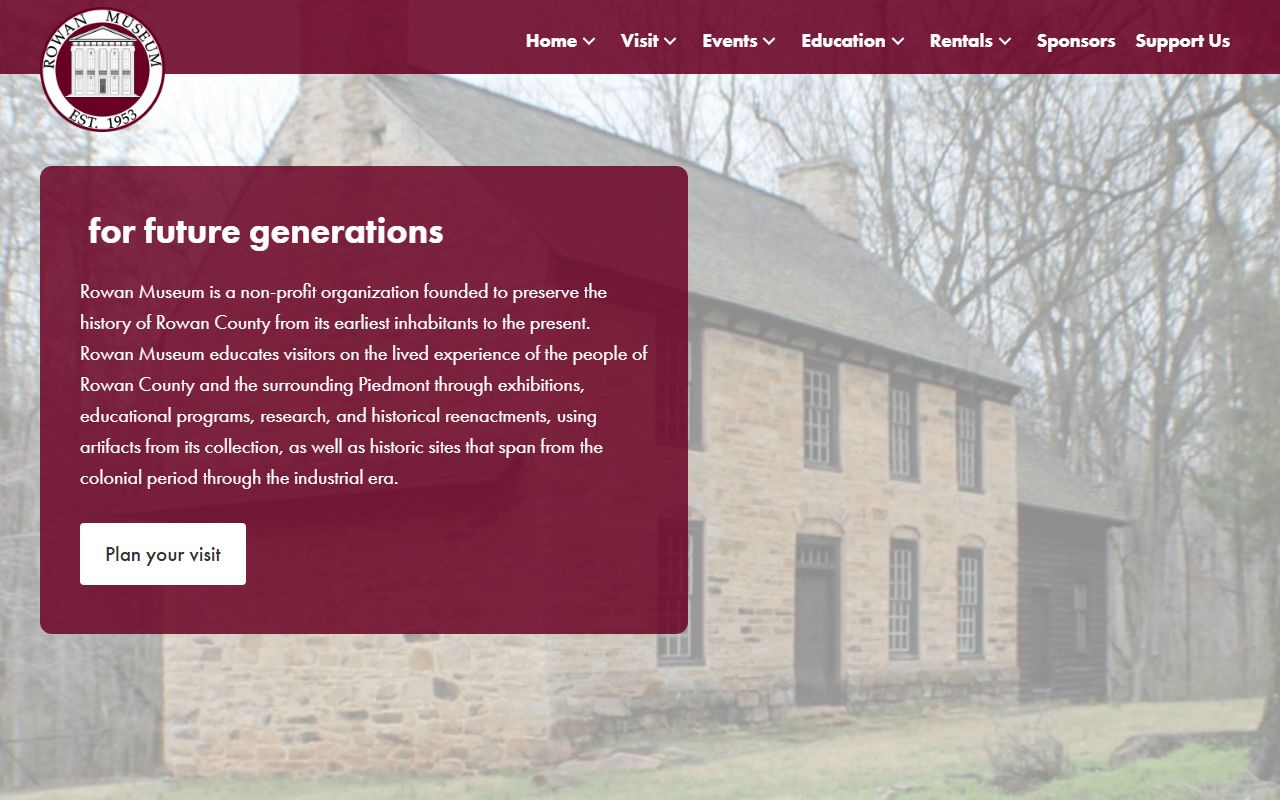
The Rowan Museum operates two historic properties in Salisbury, the Old Stone House and the Utzman-Chambers House, and maintains a research collection focused on Rowan County history and genealogy. The museum's holdings include documents, photographs, maps, and family files that complement the official records at the courthouse. Staff and volunteers can assist researchers with navigating the museum's collection and identifying relevant sources for their family lines.
The Edith M. Clark History Room at the Rowan Public Library is another essential resource for genealogists. This dedicated collection houses local history books, family files, cemetery surveys, newspaper indexes, and transcriptions of early Rowan County records. The History Room is staffed during regular library hours, and the librarians can help visitors locate materials and develop research strategies for Rowan County genealogy.
The NCGenWeb Rowan County page provides free online access to transcribed records, cemetery readings, and a message board for connecting with other researchers. The North Carolina State Archives in Raleigh holds microfilm copies of Rowan County deed books, will books, court minutes, and vital records. FamilySearch.org has digitized a substantial number of Rowan County records, including colonial-era deed books and marriage bonds, making them available for free online research from anywhere in the world.
Counties Neighboring Rowan County
Rowan County is bordered by several counties in the central Piedmont, many of which were originally carved from Rowan's vast colonial territory. Families moved freely across these boundaries, and checking records in neighboring counties can reveal marriages, land transactions, and court cases involving your Rowan County ancestors.