
Iredell County Genealogy Records
Iredell County was formed in 1788 from Rowan County and holds one of the more rich sets of genealogy records in western North Carolina. The county seat is Statesville, where the courthouse and Register of Deeds maintain land, court, and marriage files that date back to the year the county was first set up. Named for James Iredell, a justice on the first United States Supreme Court who was put on the bench by President George Washington, the county has deep roots in both state and national history. Researchers will find a strong mix of church, civil, and court records here that span more than two centuries of settlement and growth.
Iredell County Quick Facts
Iredell County Register of Deeds Records
The Iredell County Register of Deeds is the main source for land grants, marriage bonds, and vital records in the county. Marriage records go back to 1788, which is the year the county was carved out of Rowan. Land records also start in 1788, and the office has kept them in good shape through the years. Birth and death records start in 1913, when the state of North Carolina began to require that all births and deaths be filed with the local register.
Divorce records in Iredell County date from 1820 and are held at the Clerk of Superior Court. These files can shed light on family splits and name shifts that are hard to track through other means. Court records from 1788 round out the civil paper trail and can show land disputes, estate fights, and other legal acts that name family members and their ties to one another. If you plan to visit in person, call the office first to check hours and ask what forms of ID you will need to bring with you.
| Office |
Iredell County Register of Deeds 221 East Water Street Statesville, NC 28677 Phone: (704) 872-7468 |
|---|---|
| Hours | Monday through Friday, 8:00 AM to 5:00 PM |
| Website | iredellcountync.gov/departments/register-of-deeds |
Rowan County Records for Iredell Research
Since Iredell County was cut from Rowan County in 1788, any family that lived in the area prior to that date will have their records in Rowan County. Rowan was formed in 1753, so there are more than three decades of land grants, court minutes, tax lists, and estate files in Rowan that may hold clues about your Iredell ancestors. Many of the first settlers in what is now Iredell came south from Pennsylvania and Virginia through the Great Wagon Road, and their earliest land and court acts were all filed in Rowan.
Tax lists from Rowan County in the 1770s and 1780s can help you pin down where a family lived just before Iredell was formed. Deed books in Rowan also note land sales and grants in the region that would soon split off. If your research in Iredell hits a wall at 1788, the next step is to look at Rowan County records from 1753 to 1788 for the same surnames. This shift from one county to the next is a common step in North Carolina genealogy and one that trips up new researchers who do not know the parent county.
Iredell County Public Library Genealogy Collection
The Iredell County Public Library in Statesville holds one of the best local genealogy collections in the state. The library has 2,098 family files that cover hundreds of surnames tied to the county. These files were built up over the years by local historians, family groups, and the staff at the library. Each file can hold typed or handwritten notes, clippings, charts, and copies of source documents.
In addition to the family files, the library has 2,850 reels of microfilm. These reels hold copies of marriage bonds, death records, birth records, deed books, tax lists, will books, estate papers, church records, and court minutes. The microfilm collection lets you view original documents without the risk of wear on the real thing. The library also has published county histories, compiled genealogies, and cemetery transcription books that cover burial grounds across Iredell County.
Note: The library staff can help you get started but cannot do full research for you. Plan to spend at least a few hours if you visit in person, and bring any notes or charts you have so the staff can point you to the right reels and files.
Iredell County Marriage Bonds and Licenses
Marriage records are among the most used genealogy sources in Iredell County. The earliest bonds date to 1788 and are held both on microfilm at the library and in the original books at the Register of Deeds. A marriage bond was a financial pledge made by the groom and a bondsman to ensure the marriage was lawful. The bond often names the bride, the groom, and a close male relative of the bride, which gives you a direct family link.
After 1868, North Carolina switched from bonds to marriage licenses, and these are also on file for Iredell County. The license records tend to have more detail than bonds, including the ages of the couple, their places of birth, the names of their parents, and the name of the person who performed the ceremony. For any marriage that took place in a church, the church records may have even more detail, such as witnesses and notes about the families. The Iredell County Public Library microfilm collection includes church record reels that can fill in these gaps.
Land Grants and Estate Files in Iredell County
Land records in Iredell County start in 1788 and run through the present day. Early deeds show the transfer of tracts that were first granted by the state of North Carolina to settlers moving into the Piedmont region. These grants often give the watercourse, the names of neighbors, and the number of acres, which helps you place a family on a map. Deed indexes at the Register of Deeds office let you search by grantor or grantee name and find the book and page for each transfer.
Estate records, including wills and administrations, are held at the Clerk of Superior Court. Wills can name a spouse, all living children, and sometimes grandchildren. Administrations are filed when a person dies without a will, and the court appoints someone to handle the estate. The sale of personal property at an estate sale often lists the buyers, who are frequently family members or close neighbors. These small clues add up fast when you are building out a family tree in Iredell County.
Birth and Death Certificates in Iredell County
North Carolina did not require the statewide filing of birth and death records until 1913. For Iredell County, this means that birth and death certificates are on file from 1913 to the present. Some delayed birth certificates exist for people born before 1913 who needed proof of birth for things like Social Security or a passport. These delayed filings were made later in life and can include affidavits from family members, doctors, or midwives.
To get a copy of a birth or death certificate from Iredell County, you can apply at the Register of Deeds office in Statesville or through the North Carolina Vital Records office in Raleigh. The state office has records from 1913 forward and can issue certified copies by mail. You will need to fill out a form and provide identification. Fees are set by the state and may change from year to year. For the most current fee schedule and forms, check the North Carolina Vital Records website.
Note: For births and deaths before 1913, look at church records, family Bibles, cemetery headstones, and newspaper obituaries. The Iredell County Public Library has microfilm and vertical files that can help fill in these gaps.
Iredell County Online Genealogy Resources
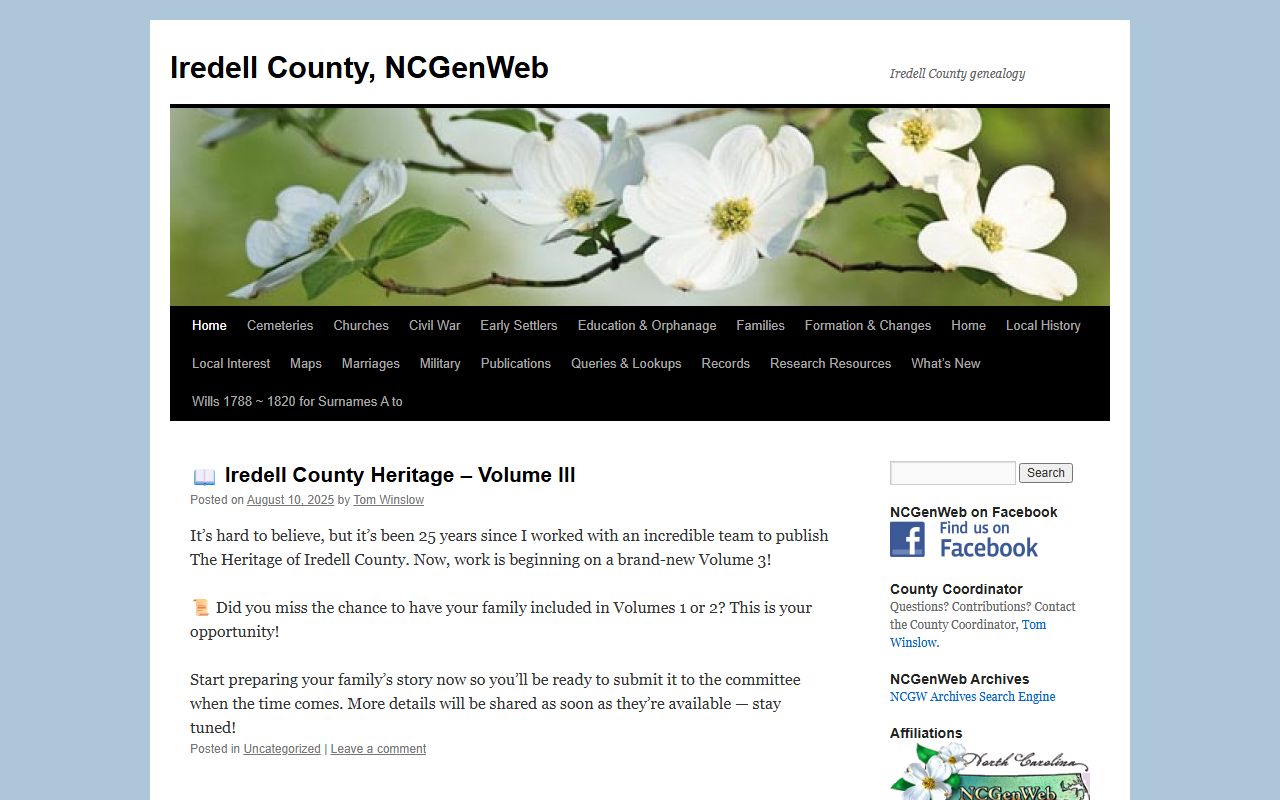
Several websites offer free access to Iredell County genealogy data. The NCGenWeb Iredell County page has lookups, transcriptions, and links to census and military records. Volunteers have typed up cemetery lists, marriage records, and other documents that can save you a trip to the courthouse. The site is part of the larger USGenWeb project and is run by people with a genuine interest in Iredell County history.
The Iredell County Public Library website has information about their genealogy room, hours, and how to request research help by mail or email. The Register of Deeds site lets you search some deed and plat records from your home computer. These online tools are a good first step before you plan a visit to Statesville. They can help you zero in on the records you need and make your time at the courthouse or library much more productive.
Nearby Counties
These counties border Iredell County. If your ancestor lived near a county line, their records may be filed in one of these neighboring counties. Check the formation dates to know which county held the land at the time your ancestor lived there.