
Cabarrus County Concord Genealogy
Cabarrus County holds genealogy records dating back to its founding in 1792. The county was carved from Mecklenburg County and named for Stephen Cabarrus, who served as Speaker of the North Carolina House of Commons. Concord is the county seat. German and Scotch-Irish families settled here in the late 1700s. The Register of Deeds in Concord maintains marriage bonds, land records, and other vital documents useful for tracing family lines in this part of the Carolina Piedmont.
Cabarrus County Quick Facts
Cabarrus County Register of Deeds
The Register of Deeds office in Concord is the main source for Cabarrus County genealogy records. This office holds marriage licenses, land deeds, and birth and death certificates. Staff can help you find old records. The office sits on Union Street South in downtown Concord.
Marriage bonds in Cabarrus County begin in 1793, just one year after the county formed. These early bonds name the groom, the bondsman, and sometimes the bride's father. Land records start in 1792. Birth and death records begin in 1913, when North Carolina started statewide registration. Court records go back to 1795. Probate files also start in 1792 and include wills, estate inventories, and guardian bonds that reveal family ties across generations.
| Office |
Cabarrus County Register of Deeds 77 Union Street South Concord, NC 28025 Phone: (704) 262-5500 |
|---|---|
| Hours | Monday through Friday, 8:00 AM to 5:00 PM |
| Website | cabarruscounty.us/government/register-of-deeds |
Cabarrus County Marriage Genealogy Records
Marriage records are among the most valuable genealogy tools in Cabarrus County. The bonds from 1793 to the mid-1800s provide names and dates that predate most other record types. Each bond required a surety, often a male relative of the bride. This detail helps link families together.
After 1868, North Carolina switched from bonds to marriage licenses. Cabarrus County licenses include the full names of both parties, ages, birthplaces, parents' names, and the name of the person who performed the ceremony. These details make post-1868 licenses especially rich for genealogy work. Many Cabarrus County marriage records have been digitized and can be viewed through the DigitalNC collection or at the Register of Deeds office in Concord.
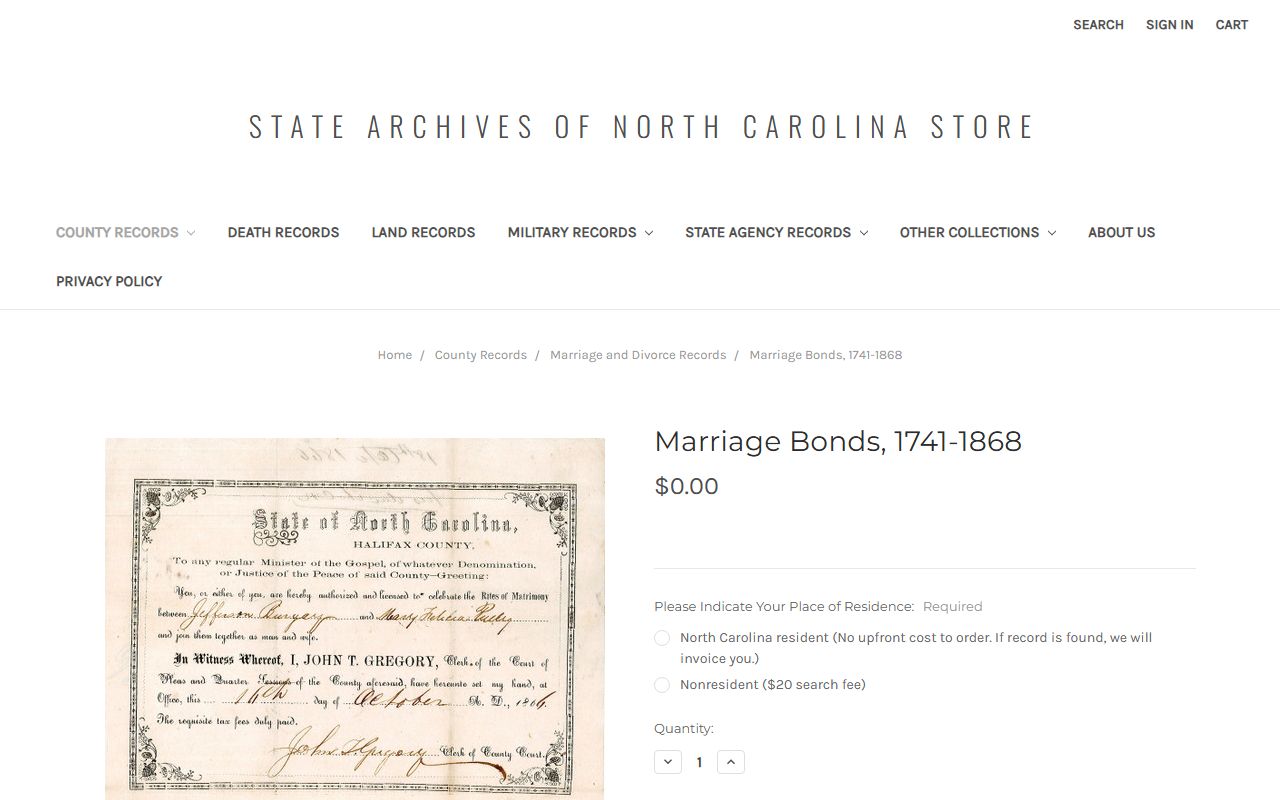
Note: Some early Cabarrus County marriage bonds are fragile. The Register of Deeds may provide microfilm copies rather than allow handling of originals.
Land Records in Cabarrus County
Land grants and deeds in Cabarrus County date from 1792. Early settlers received grants from the state. These grants name the person, the acreage, and the location by creek or landmark. Deeds recorded after the initial grants show how land passed between families through sale or inheritance.
The Register of Deeds indexes land records by grantor and grantee. You can search by surname to find all transactions tied to a family. Chain of title research often reveals family connections that other records miss. A father might sell land to a son. A widow might deed property to her children. These transactions tell stories that census records alone cannot.
Cabarrus County sits in a region shaped by the 1799 gold discovery at Reed Gold Mine. Land near gold deposits changed hands often. Mining claims and related deeds may appear in the record books during the early 1800s. These records place families in specific locations and tie them to the gold rush that put North Carolina on the map.
Cabarrus County Birth and Death Records
Statewide registration of births and deaths began in North Carolina in 1913. Cabarrus County records from that year forward are available through the Register of Deeds or the North Carolina Vital Records office. Earlier births and deaths may appear in church records, family Bibles, or cemetery inscriptions.
To order a birth or death certificate from Cabarrus County, you can visit the Register of Deeds in Concord or request copies through the state. The North Carolina Vital Records office in Raleigh handles mail and online requests for certificates. Visit vitalrecords.nc.gov for ordering details and current fees.
Note: Birth certificates in North Carolina have access restrictions. Only the person named, a parent, or a legal representative can obtain a certified copy.
Cabarrus Probate and Court Genealogy
Probate records in Cabarrus County begin in 1792. Wills name heirs. Estate inventories list personal property. Guardian bonds identify minor children and their appointed guardians. These records are vital for building family trees, especially before census records become reliable.
Court records start in 1795. Early court minutes record land disputes, debt cases, and apprenticeships. Apprenticeship records are useful for genealogy because they name the child, the master, and often the parent. Orphan court records serve a similar purpose. Both types help trace families who left few other written records in Cabarrus County.
German and Scotch-Irish Settlers
Cabarrus County attracted German and Scotch-Irish settlers from Pennsylvania and Virginia. These families moved south along the Great Wagon Road in the mid-1700s. Many settled in what would become Cabarrus County before it split from Mecklenburg in 1792.
German families founded Reformed and Lutheran churches. Church records kept in German script contain baptisms, marriages, and burials that predate civil records. The Scotch-Irish established Presbyterian congregations with similar record-keeping practices. Both groups left deep roots in the county.
Surnames common in early Cabarrus County include Barrier, Boger, Cook, Faggart, Flowe, Furr, Hartsell, Misenheimer, and Winecoff. Researching these families often requires checking records in both Cabarrus and Mecklenburg counties, since the boundary between them shifted over time.
- Reformed and Lutheran church records in German script
- Presbyterian session minutes from Scotch-Irish congregations
- Cemetery records from churches founded in the 1700s
- Land grants tied to Great Wagon Road migration
Genealogy Research Tips for Cabarrus
Start your Cabarrus County research with the DigitalNC collection. This site hosts digitized newspapers, photographs, and historical documents from Cabarrus County. Local newspapers published marriage notices, death notices, and legal advertisements that name family members.
The North Carolina State Archives in Raleigh holds additional Cabarrus County records. These include tax lists, militia rolls, and court papers not available at the county level. Tax lists from the late 1700s and early 1800s name heads of household and can fill gaps between census years.
Census records for Cabarrus County begin with the 1800 federal census. The 1790 census covered North Carolina but did not break results down by the newly formed Cabarrus County. Check the 1790 Mecklenburg County census for families who later appeared in Cabarrus.
Note: The Reed Gold Mine discovery in 1799 brought new settlers to Cabarrus County. Mining records and related land transactions may document their arrival.
Nearby Counties
These counties border Cabarrus County. If your ancestors lived near a county line, check records in neighboring counties as well. Boundaries shifted over time, and families often had ties on both sides.