
McDowell County Mountain Genealogy
McDowell County was established in 1842 from Burke and Rutherford counties in the mountain region of western North Carolina. Named for Colonel Joseph McDowell, a Revolutionary War leader, the county seat is Marion. The county sits where the Piedmont meets the mountains, with the Catawba River flowing through its valleys. Marriage, land, court, and will records all begin in 1842. Settlers came from Piedmont counties to the east and from Virginia, and their diverse origins are reflected in the genealogical records preserved at the Marion courthouse.
McDowell County Quick Facts
McDowell County Register of Deeds in Marion
The McDowell County Register of Deeds in Marion is the official repository for vital records, property documents, and marriage licenses in the county. Birth and death records are maintained from 1913, when the state of North Carolina established mandatory vital registration. Marriage records date to 1842, the year the county was formed, and land records also begin at that point. These records document the families who built their lives in the mountain valleys of McDowell County.
The Register of Deeds office holds indexed volumes of deeds, mortgages, plat maps, and military discharge papers. For genealogists, the marriage registers and deed books are among the most frequently consulted records because they name individuals, describe relationships, and document the transfer of property from one generation to the next. The office is open to the public for in-person research at the McDowell County Courthouse on East Court Street in Marion.
| Office |
McDowell County Register of Deeds 60 E Court Street Marion, NC 28752 Phone: (828) 652-4727 |
|---|---|
| Courthouse |
McDowell County Courthouse 60 E Court Street Marion, NC 28752 Phone: (828) 652-7717 |
| Website | mcdowellgov.com/rod |
McDowell County Marriage Licenses and Bond Records
Marriage records in McDowell County start in 1842 and include both marriage bonds from the earlier period and licenses from later decades. The bonds typically name the groom and a bondsman, who was frequently a relative of the bride. This practice helps genealogists identify the bride's family, which is especially useful when the bride's maiden name might otherwise be lost in the records.
License applications from the later 1800s and 1900s provide additional details including the ages of both parties, their birthplaces, and the names of their parents. These records are maintained at the McDowell County Register of Deeds office in Marion. Researchers can request copies in person or by mail. Before McDowell County was formed in 1842, marriages for families in this area would have been recorded in Burke or Rutherford County, depending on which side of the boundary the family resided.
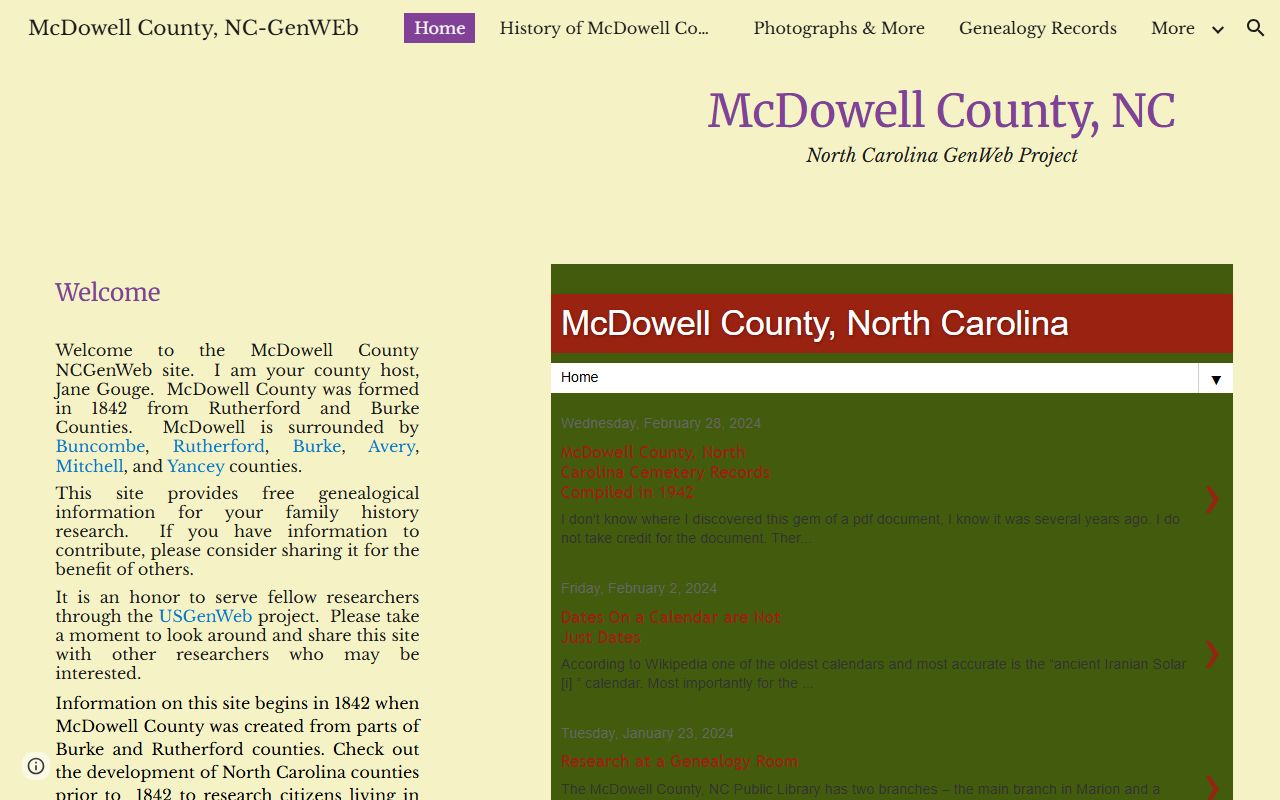
The NCGenWeb McDowell County page provides free access to some transcribed marriage indexes and abstracts that can help researchers identify specific records before making a trip to Marion.
Wills and Court Proceedings in McDowell County
Will records in McDowell County cover the period from 1842 through 1968 in the primary will book collection. Wills from the mountain communities of McDowell County typically describe modest estates consisting of farmland, livestock, tools, and household belongings. Despite their simplicity, these documents are genealogically rich because they name family members and describe the testator's wishes for distributing property among heirs.
Estate records that accompany the wills add further detail. Inventories list every item of value at the time of death. Sale records document who purchased items from the estate, and those buyers were often relatives or close neighbors. Distribution records name each heir and their proportional share of the estate, creating a definitive list of the deceased person's surviving family members at the time the estate was settled.
Court records in McDowell County begin in 1842 and include civil cases, criminal proceedings, guardianship appointments, and land disputes. The Clerk of Superior Court in Marion maintains these records. For genealogists, court records can reveal family conflicts, property disputes between heirs, and legal proceedings that identify relationships not documented elsewhere. Apprenticeship records, which bound orphaned or impoverished children to a master for training, are also found in the court files and can help researchers identify children whose parents died or could not support them.
Mountain Gateway Museum and McDowell County Heritage
The Mountain Gateway Museum in Old Fort is a state-operated facility dedicated to preserving the pioneer and mountain heritage of western North Carolina. Located at the historic crossing point of the Blue Ridge, the museum tells the story of the families who settled in this gateway region, including many McDowell County ancestors. The museum's collections include artifacts, photographs, and documents related to the daily lives of mountain families from the 1700s through the early 1900s.
For genealogists, the Mountain Gateway Museum offers context for understanding the world their ancestors inhabited. Exhibits cover topics such as frontier settlement, Cherokee interactions, the Revolutionary War in the western mountains, and the development of railroads through the Blue Ridge. The town of Old Fort itself was established as a frontier outpost during the Revolutionary War, and families who lived in the area before McDowell County was formed left their mark in the records of Burke and Rutherford counties.
The museum is part of the North Carolina Department of Natural and Cultural Resources, and its staff can direct researchers to additional archival resources at the state level. Visiting the Mountain Gateway Museum alongside the McDowell County courthouse provides a comprehensive research experience for anyone studying mountain family history.
Birth and Death Records in McDowell County
North Carolina began requiring the registration of births and deaths in 1913, and McDowell County records start at that date. For events before 1913, researchers must rely on church registers, cemetery headstones, family Bible records, and newspaper notices from Marion and surrounding communities. Delayed birth certificates, filed by older residents in the 1930s and 1940s for Social Security purposes, can sometimes be found at the Register of Deeds office and often include supporting documentation that provides additional family details.
The North Carolina Vital Records office in Raleigh processes requests for certified copies of birth and death certificates. Birth records are restricted for 100 years from the date of birth, and death records are restricted for 25 years. After those periods, the records become available for genealogical research through the State Archives. Cemetery records are a particularly important alternative source in McDowell County, where small family cemeteries dot the hillsides and valleys throughout the county.
McDowell County Land and Property Records
Land records in McDowell County begin in 1842 and document property ownership from the county's founding year to the present. The earliest deeds record transfers of land that had previously been documented in Burke or Rutherford County. Many of these properties followed the Catawba River and its tributaries, where the best farmland was located. Later records track the expansion of settlement into the higher elevations and more remote hollows of the county.
For genealogists, McDowell County deed records are valuable because they frequently identify family relationships. A deed of gift from a father to a son or daughter confirms a parent-child connection. A deed that references the "heirs of" a deceased person identifies surviving children and their spouses. Mortgage records and trust deeds reveal financial relationships within communities, and plat maps show the physical location of family properties in relation to roads, rivers, and neighboring landowners.
The McDowell County Register of Deeds maintains both grantor and grantee indexes that allow researchers to search efficiently. For land grants issued before the county's formation, the North Carolina State Archives holds records of grants from both the colonial and state periods. These grants document the first titled ownership of land in the area that later became McDowell County.
Genealogy Research Resources for McDowell County
The NCGenWeb McDowell County page is a free online resource offering transcriptions, cemetery surveys, and research links. Volunteers have contributed census indexes, marriage records, and other materials that provide a starting point for McDowell County research. The site also includes a query board where researchers can post questions and connect with others working on the same family lines.
The McDowell County Public Library in Marion maintains a genealogy and local history collection that includes published family histories, county history volumes, and microfilm of local newspapers. The library's staff can assist with research questions and help visitors navigate the available resources. Area churches, particularly Baptist and Methodist congregations that have been active since the mid-1800s, may also hold records of baptisms, marriages, and burials that supplement the county's official records.
The North Carolina State Archives in Raleigh holds microfilm copies of McDowell County deed books, will books, court minutes, and other records. FamilySearch.org has digitized many of these microfilm rolls and made them available for free online viewing. Ancestry.com also hosts digitized census records, military records, and vital record indexes that include McDowell County residents.
Counties Surrounding McDowell County
McDowell County is bordered by several mountain and foothills counties. Before McDowell County was established in 1842, its territory was divided between Burke and Rutherford counties, so researchers should check records in those parent counties for documentation predating 1842. Families living near county boundaries often appear in the records of multiple counties.