
Burke County Foothills Genealogy
Burke County lies in the western foothills of North Carolina, along the Catawba River valley. Formed in 1777 from Rowan County during the American Revolution, it was named for Dr. Thomas Burke, a member of the Continental Congress who later served as governor of North Carolina. The county seat is Morganton. Burke County is notable for the excellent preservation of its historical records, with court and land documents reaching back to 1755, more than two decades before the county was officially created.
Burke County Quick Facts
Burke County Register of Deeds
The Burke County Register of Deeds is at 201 S. Green Street in Morganton. This office handles marriage licenses, land deeds, vital records, and other public documents. The phone number is 828-764-9000. Staff members can help with record searches and provide copies of documents on file.
Marriage records begin in 1851. Land records and court records start earlier, from 1755. These pre-county records were inherited from Rowan County when Burke was formed. Probate records date to 1782. The county has maintained these documents well, and researchers praise the condition and accessibility of the Burke County record collection.
Visit the Burke County Register of Deeds website for details on services, fees, and office hours.
| Office |
Burke County Register of Deeds 201 S. Green Street Morganton, NC 28655 Phone: (828) 764-9000 |
|---|---|
| Hours | Monday through Friday, 8:00 AM to 5:00 PM |
| Website | burkenc.gov/register-of-deeds |
Burke County Genealogy Background
Burke County played a central role in the settlement of western North Carolina. From its original territory, several other counties were carved over the following decades. Buncombe County was formed from Burke in 1791. Yancey followed in 1833, Caldwell in 1841, and McDowell in 1842. If your ancestor lived in what is now one of these counties before its formation date, their records are in Burke County.
The Catawba River valley attracted settlers from Virginia, Pennsylvania, and the eastern parts of the Carolinas. Many were of Scots-Irish and German descent. They came seeking cheap land and found fertile bottomland along the river and its creeks. The early land grants and deeds in Burke County tell the story of these migrations and the communities they built.
Dr. Thomas Burke, the county's namesake, had a dramatic life. He served in the Continental Congress and as governor of North Carolina during the war. British loyalists captured him in 1781 during a raid on Hillsborough. His name on the county reflects the patriotic spirit of the era when Burke County was formed.
Note: Researchers looking for families in present-day Buncombe, Yancey, Caldwell, or McDowell counties before those counties existed should always check Burke County records first.
Burke County Land Genealogy Records
Land records are the oldest genealogy documents in Burke County. The deed books begin in 1755, predating the county by more than twenty years. These early records came from Rowan County and cover land transactions along the upper Catawba River. Settlers received grants from the colonial government and then bought, sold, and traded parcels among themselves.
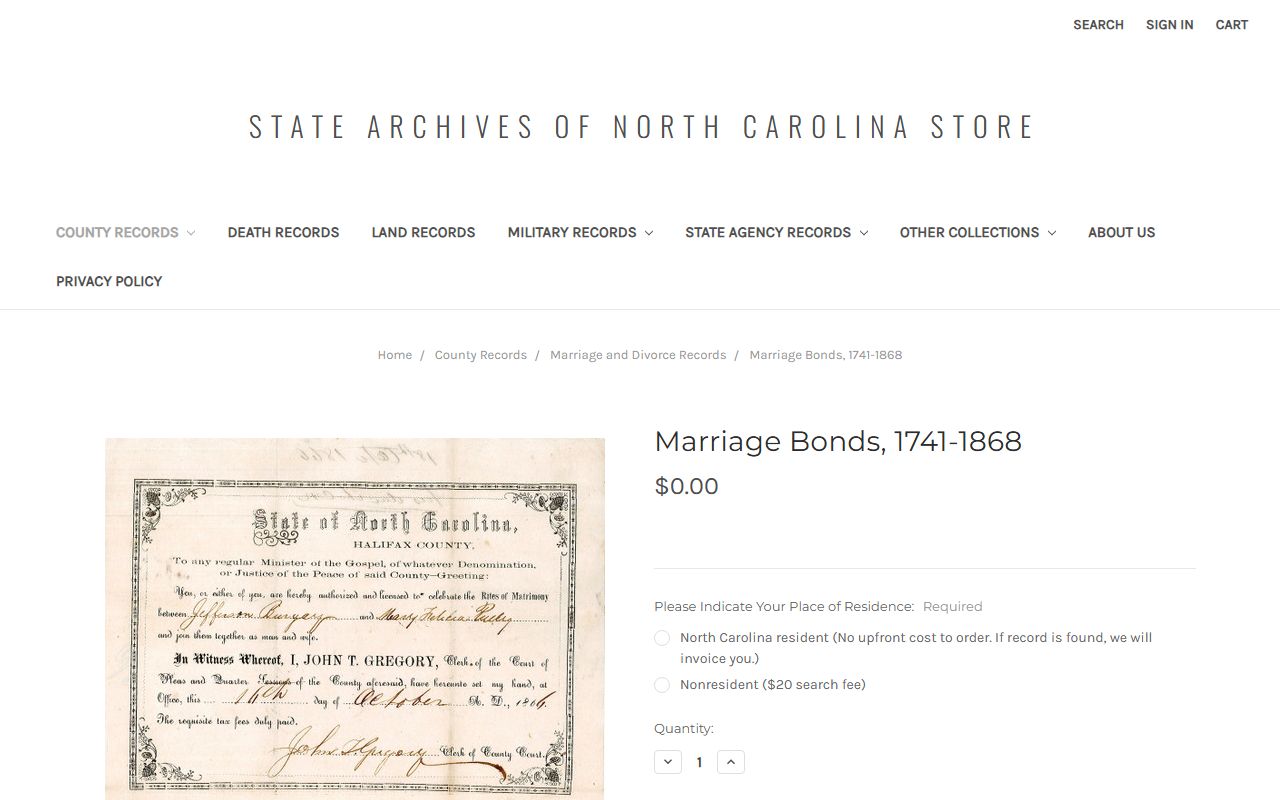
The image below shows NC State Archives resources for ordering marriage and other genealogy records from Burke County and surrounding areas.
Land descriptions in Burke County use the natural features of the foothills landscape. Deeds reference creeks, ridges, marked trees, and rock formations. Neighbor names appear frequently as boundary markers. These names help place families in relation to each other and can reveal social and family networks. A deed that says "corner to John Smith's land" tells you that John Smith owned the next tract over.
Division deeds and plats created when an estate was settled among heirs are especially valuable. They often name all the children of a deceased landowner and show the portion each received. When no will survives, these division records may be the only document that lists all the heirs. The Burke County deed books contain many such divisions from the late 1700s and 1800s.
Court and Probate Genealogy Records
Burke County court records reach back to 1755. The early court minutes cover civil cases, criminal proceedings, road orders, and administrative matters. For genealogy, the most useful entries are often the routine ones. Guardianship appointments name orphaned children and the adults who took charge of them. Apprenticeship bonds record the same information. Jury lists and witness lists name adult men of the community.
Probate records start in 1782 and include wills, inventories, estate accounts, and guardian records. A will names the testator's family members and describes how property should be divided. An inventory lists every item of personal property and its value. Estate accounts track payments made to heirs and creditors over the course of settling the estate. Together, these records can reconstruct an entire family and their material circumstances.
- Court minutes from 1755 include guardianships
- Wills from 1782 name family members
- Estate inventories describe personal property
- Guardian accounts track children's inheritances
- Apprenticeship bonds place orphans with tradesmen
The quality of Burke County's probate records is well known among North Carolina genealogists. The records are largely intact, well indexed, and cover a long period. This makes Burke County a rewarding place to research for anyone with ancestors in the western foothills.
Burke County Vital Genealogy Records
Birth and death records in Burke County begin in 1913. Marriage records start in 1851. For births and deaths before 1913, researchers must rely on church records, cemetery inscriptions, family bibles, and newspaper notices. The NC Vital Records office handles requests for certificates from 1913 forward.
Marriage bonds from the 1850s and 1860s follow the standard North Carolina pattern. They name the groom, bride, and bondsman. In Burke County, the bondsman was typically a relative of the bride, usually her father or an older brother. Identifying the bondsman can open a new line of research and connect the bride to her family of origin.
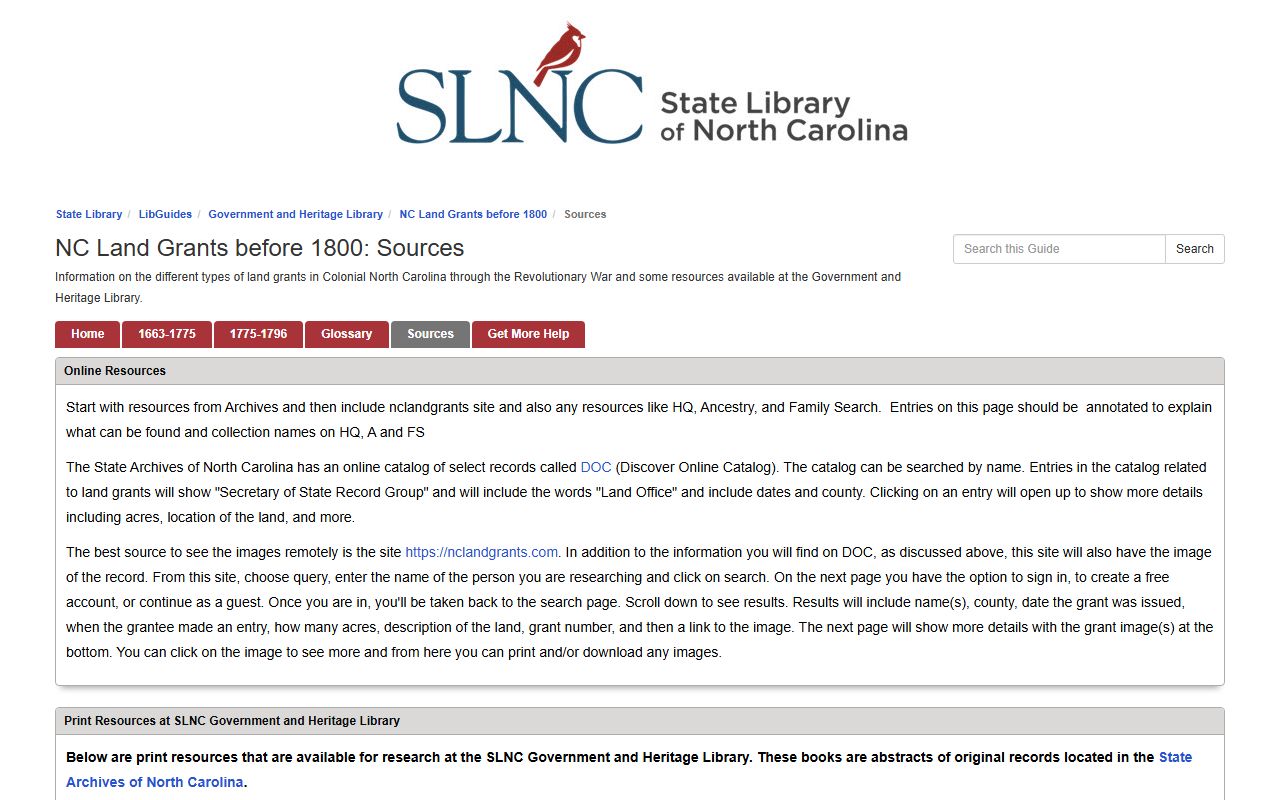
The image below shows State Library resources for North Carolina genealogy, including guides and databases that cover Burke County.
Church records from Burke County are scattered across several denominations. Baptist, Methodist, Presbyterian, and Lutheran churches all had congregations in the county from the late 1700s. Some church registers have been transcribed and are available through genealogy societies or the Western Regional Archives in Asheville. Others remain with the individual congregations.
Note: For marriage records before 1851, check Rowan County records, as Burke was formed from Rowan and some pre-1777 marriages may be recorded there.
Researching Burke County Genealogy
Burke County rewards thorough research. The records are well preserved and span a long period. Start with the most recent generation you can document and work backward. Use deeds and court records to establish where a family lived. Use probate records to identify heirs. Use marriage bonds to connect wives to their families.
The DigitalNC website offers digitized newspapers from Burke County. Local papers carried obituaries, marriage notices, and community news that can supplement official records. Search by surname to find family mentions across multiple years.
Federal census records for Burke County begin with the 1790 count. The earliest censuses name only the head of household, while the 1850 census and later list every person by name, age, and birthplace. Tax records from the late 1700s can fill years between censuses and show when a family arrived in or left the county.
Cemetery records add another layer. Burke County has many old burial grounds, from church cemeteries in Morganton to family plots in the surrounding hills. Headstone inscriptions provide dates, spousal names, and sometimes parents or military service. Local volunteers have surveyed many cemeteries, and their work is available through genealogy societies and online databases.
Military records should not be overlooked. Burke County men served in the Revolutionary War, War of 1812, and Civil War. Pension applications and service records at the National Archives and the NC State Archives often contain family details. The Battle of Kings Mountain in 1780 drew militia from the Burke County area, and records from that campaign name local men.
Nearby Counties
These counties adjoin Burke County. Several were formed from Burke's original territory. Families in the Catawba River valley moved between counties as new ones were created, so checking neighboring records is important for complete genealogy research.