
Caldwell County Mountain Genealogy
Caldwell County was formed in 1841 from Burke and Wilkes counties in the foothills of the Blue Ridge Mountains. It was named for Joseph Caldwell, the first president of the University of North Carolina. Lenoir serves as the county seat. The county later gave up land to form parts of Avery County in 1911 and Watauga County in 1849. Genealogy records at the Register of Deeds in Lenoir include marriage licenses, land deeds, and probate files that document mountain families from the mid-1800s forward.
Caldwell County Quick Facts
Caldwell County Register of Deeds
The Register of Deeds in Lenoir keeps Caldwell County's vital and property records. This office is the first stop for genealogy research in the county. Staff can help you locate marriage, land, and other records on file.
Marriage records begin in 1842. Land deeds start in 1841. Court records also date from 1841. Probate records reach back to 1838, which predates the county itself. Those early probate files were transferred from Burke and Wilkes counties when Caldwell was formed. Birth and death certificates are available from 1913 onward. The office sits on Main Street in downtown Lenoir.
| Office |
Caldwell County Register of Deeds 216 Main Street NW Lenoir, NC 28645 Phone: (828) 726-2200 |
|---|---|
| Hours | Monday through Friday, 8:00 AM to 5:00 PM |
| Website | caldwellcountync.org/register-of-deeds |
Marriage Records in Caldwell County
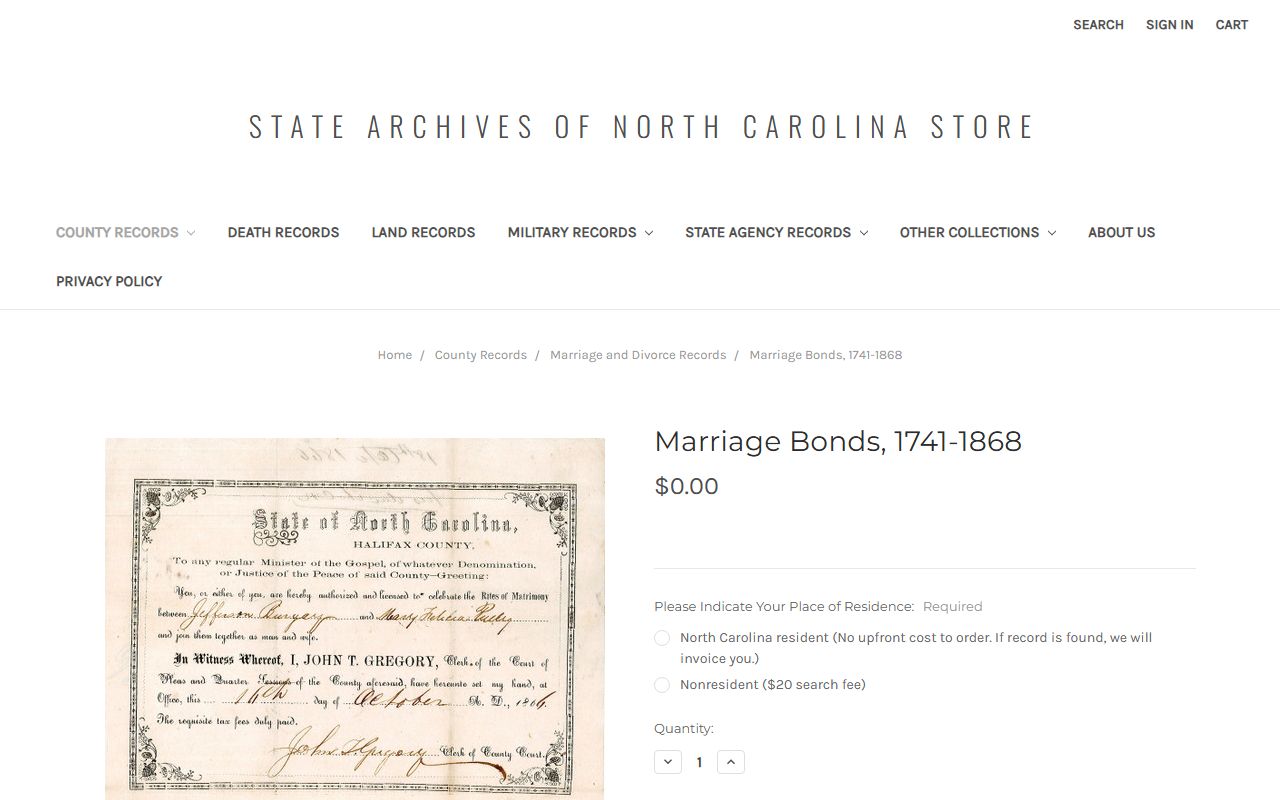
Caldwell County marriage records begin in 1842. Early marriage bonds name the groom, the bondsman, and the amount of the bond. The bondsman was often a relative of the bride. This connection helps researchers link families together.
Later marriage licenses provide more detail. They list the full names of both parties, their ages, birthplaces, and parents' names. The minister or magistrate who performed the ceremony is also named. These records are held at the Register of Deeds office in Lenoir. Some have been microfilmed and are available through the North Carolina State Archives. For ancestors who married before 1841, check the records of Burke County and Wilkes County.
Mountain communities in Caldwell County were tight-knit. Marriages between neighboring families were common. A single set of marriage records can reveal networks of related families across several generations in the foothills.
Caldwell County Land Genealogy
Land records in Caldwell County start in 1841. Deeds, grants, and surveys document who owned property and how it changed hands. Mountain land was often passed within families through deeds of gift or inheritance. These transactions name family members and reveal relationships.
The terrain shaped settlement patterns. Families clustered along creeks and river bottoms where the land was flat enough to farm. Deed descriptions reference natural landmarks like creeks, ridges, and notable trees. Mapping these descriptions can place your ancestors on the land they worked.
Note: Some Caldwell County land was later absorbed into Avery and Watauga counties. If you cannot find a deed in Caldwell, check those counties for records after 1849 and 1911.
Probate Records for Caldwell Families
Caldwell County probate records date from 1838. This makes them the oldest records in the county. Wills filed here name spouses, children, and sometimes grandchildren. They also mention land, livestock, and personal items. Estate inventories list everything a person owned at death.
Administrator bonds were filed when someone died without a will. The court appointed an administrator, often a widow or eldest son. These bonds name the deceased and the appointed party. Guardian bonds identify minor children and their court-appointed guardians. Both record types are valuable for tracing family connections in Caldwell County.
Estate sales, called vendue records, list buyers of personal property. Neighbors and family members often purchased items at these sales. The buyer names can point you toward related families in the area. The Clerk of Superior Court in Lenoir holds the original probate files.
Caldwell County Vital Records
Birth and death records in Caldwell County begin in 1913. Before that year, no civil registration existed in North Carolina. For earlier births and deaths, researchers must turn to church records, family Bibles, and cemetery inscriptions.
Certificates from 1913 onward can be obtained from the Register of Deeds in Lenoir or from the North Carolina Vital Records office in Raleigh. The state office handles mail and online orders. Visit vitalrecords.nc.gov for current fees and forms.
- Birth certificates from 1913 to present
- Death certificates from 1913 to present
- Church baptism records for earlier births
- Cemetery headstones for death dates before 1913
Note: Certified birth certificates have restricted access in North Carolina. Only the named person, a parent, or a legal representative may order one.
Caldwell County Furniture Heritage
Caldwell County became a center of furniture manufacturing in the late 1800s and early 1900s. Lenoir and surrounding towns attracted workers from across the region. This industry drew families into the county from rural mountain communities and neighboring states.
Factory payroll records, company town documents, and local newspapers can supplement official genealogy records. The Caldwell County Heritage Museum and the DigitalNC project preserve some of these materials. If your ancestor worked in furniture, these sources may fill gaps left by standard vital records.
The population growth tied to the furniture industry means more records exist for the late 1800s and early 1900s than for earlier decades. Census records, city directories, and church rolls from this period can help locate families who moved to Caldwell County for work.
Researching Caldwell County Ancestors
Because Caldwell County formed in 1841, records for earlier generations sit in Burke and Wilkes counties. Tax lists, court minutes, and land grants from those parent counties cover the area before 1841. The North Carolina State Archives in Raleigh holds many of these records.
The 1850 federal census is the first to list Caldwell County separately. Earlier census records for this area fall under Burke or Wilkes. The 1850 census is also the first to name every member of a household, making it a key genealogy tool. Pair census data with land and probate records for a fuller picture of Caldwell County families.
Portions of Caldwell County were carved off to create Watauga County in 1849 and Avery County in 1911. Families living in those areas may appear in Caldwell County records for a time, then shift to the new county. Track your family across all three counties to avoid losing the trail.
Nearby Counties
These counties neighbor Caldwell County. Records for your ancestors may span multiple counties, especially before 1841 when this area was part of Burke and Wilkes counties.