
Caswell County Piedmont Genealogy
Caswell County was established in 1777 from Orange County and named for Richard Caswell, the first governor of North Carolina after the Declaration of Independence. Yanceyville is the county seat. The county sits in the northern Piedmont along the Virginia border. Its records date back to the founding year. Caswell County later gave up territory to form Person County in 1791 and parts of Rockingham County in 1786. The courthouse in Yanceyville, a noted example of Federal architecture, has served as the center of county government for generations.
Caswell County Quick Facts
Caswell County Register of Deeds
The Register of Deeds in Yanceyville holds Caswell County's property and vital records. This office is the starting point for genealogy research in the county. Marriage, land, and vital records are all available here.
Marriage records begin in 1778. Land deeds start in 1777. Court records also date from 1777. Probate records begin that same year and include wills, estate files, and guardian bonds. Birth and death certificates are available from 1913 forward. The courthouse sits on West Main Street in Yanceyville.
| Office |
Caswell County Register of Deeds 144 W. Main Street Yanceyville, NC 27379 Phone: (336) 694-4197 |
|---|---|
| Hours | Monday through Friday, 8:30 AM to 5:00 PM |
| Website | caswellcountync.gov/register-of-deeds |
Caswell County Marriage Genealogy
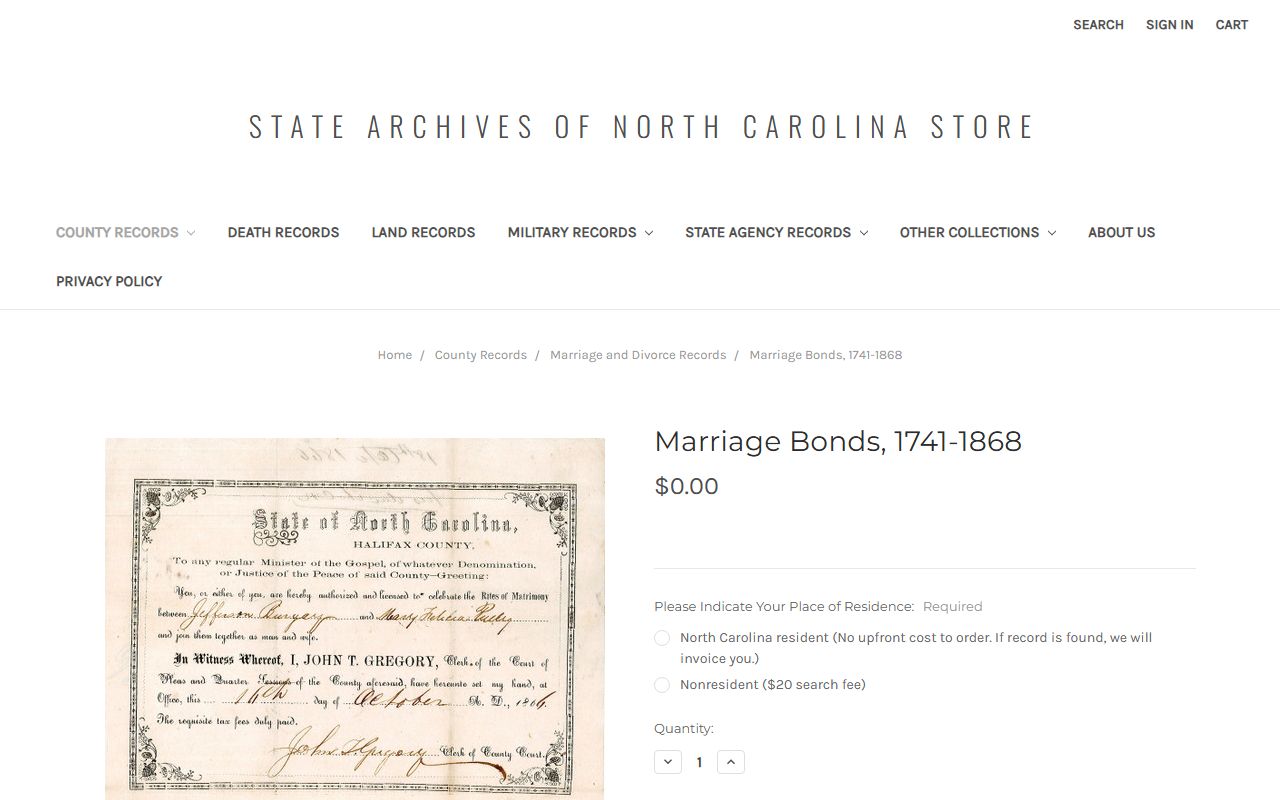
Marriage bonds in Caswell County start in 1778. These early bonds name the groom and the bondsman. The bondsman guaranteed the marriage was lawful and was often a relative of the bride. Bond amounts and witness names add further genealogy clues.
After 1868, licenses replaced bonds. Caswell County licenses list the names of both parties, their ages, birthplaces, parents' names, and the person who performed the ceremony. These records are indexed at the Register of Deeds office. Some have been microfilmed and are available through the North Carolina State Archives in Raleigh.
Caswell County's location on the Virginia border means some families married across state lines. If you cannot find a marriage record in Caswell, check the Virginia counties of Halifax, Pittsylvania, and Henry. Cross-border marriages were common, especially in the 1800s when Virginia had fewer legal requirements.
Land Records in Caswell County
Land deeds in Caswell County begin in 1777. The rolling Piedmont terrain of the county is described in deeds by creek names, neighbor boundaries, and compass bearings. Early grants came from the state of North Carolina. Later deeds record sales, gifts, and divisions of land among heirs.
Land records are indexed by grantor and grantee at the Register of Deeds. A surname search can reveal every transaction involving a family. Deeds of gift from parent to child are especially useful for genealogy. They confirm family relationships that other records may only hint at.
Tobacco farming drove the Caswell County economy. Land suitable for tobacco was valuable and changed hands carefully. Large plantations appear in the deed books alongside smaller family farms. The size and location of a landholding can tell you about a family's standing in the community.
Caswell Probate Genealogy Records
Probate files in Caswell County date from 1777. Wills are the most direct genealogy source. They name the deceased, the spouse, and the heirs. Some wills describe land in detail, helping to locate a family on the map. Others mention personal items passed to specific children, revealing family dynamics.
Estate inventories list everything a person owned. In an agricultural county like Caswell, inventories include tools, livestock, crops, and household goods. The value of each item was recorded by court-appointed appraisers. These inventories give a snapshot of daily life on a Caswell County farm.
Guardian bonds name orphaned children and the adults who cared for them. The court reviewed these bonds regularly. Minutes from guardian reviews show when children came of age or were bound out to learn a trade. These records track families through difficult times and reveal connections between households.
Note: Caswell County gave up land to form Person County in 1791. Families living in the eastern part of Caswell may appear in Person County records after that date.
Caswell County Tobacco Heritage
Tobacco shaped Caswell County from its earliest years. The county became known as a center of bright leaf tobacco production. Families built their lives around the crop. Tax records, agricultural census schedules, and land deeds all reflect this connection to tobacco farming.
The agricultural schedules of the federal census, taken from 1850 to 1880, list each farm's crops, livestock, and acreage. Caswell County schedules show tobacco as the dominant cash crop. These records are available on microfilm at the North Carolina State Archives and through online databases. They add economic detail to the family picture that standard census records provide.
- Agricultural census schedules from 1850 to 1880
- Tax lists showing property and crop values
- Land deeds referencing tobacco barns and curing houses
- Estate inventories listing tobacco harvests
- Warehouse receipts in court records
Caswell County Court Records
Court records in Caswell County begin in 1777. The court of pleas and quarter sessions handled civil matters, road orders, and county business. Minutes from these sessions name jurors, litigants, and witnesses. They also record apprenticeships, tavern licenses, and road maintenance assignments.
Apprenticeship records are particularly useful for genealogy. They name the child, the parent or guardian, and the master craftsman. The trade to be learned was specified. These records often involve orphaned or poor children and can reveal family circumstances that other documents miss.
The famous Caswell County courthouse in Yanceyville has housed these records since it was built in the early 1800s. Its Federal-style architecture makes it a landmark. The building itself is part of the county's heritage, and the records inside connect families across generations of Caswell County history.
Researching Caswell County Ancestors
Begin your Caswell County research with the DigitalNC collection. This site offers digitized newspapers, photographs, and local history materials. Old newspapers published marriage notices, death notices, and legal advertisements that name family members and property.
The North Carolina State Archives in Raleigh holds additional Caswell County materials. Tax lists, militia rolls, and loose court papers provide names and dates not found in the standard record books. Tax lists from the late 1700s and early 1800s name heads of household and their taxable property. These lists can bridge the gaps between census years.
Census records for Caswell County begin with the 1790 federal census. Check all available years. The 1850 census is the first to name every person in each household. Compare census data with land and probate records for the most complete view of a family's history in Caswell County. For ancestors who lived near the Virginia line, check both state records.
Note: Caswell County formed parts of Rockingham County in 1786. If ancestors disappear from Caswell records around that time, look in Rockingham County next.
Nearby Counties
These counties adjoin Caswell County. Check neighboring county records when your ancestors lived near a border. Caswell gave up land to form Person and Rockingham, so those counties are especially important for research.