
Alamance County Genealogy Records
Alamance County holds a wide range of genealogy records for family history research in central North Carolina. The county was created in 1849 from Orange County, and its records stretch back even further through parent county files. Researchers can find birth, marriage, death, land, and probate records through several local offices and libraries. Graham serves as the county seat and is home to the main county offices. Whether you search online or visit in person, Alamance County offers strong resources for tracing your family roots in this part of the state.
Alamance County Quick Facts
Alamance County Register of Deeds
The Alamance County Register of Deeds is the primary office for genealogy records in the county. This office holds birth certificates from 1913 onward, marriage records from 1853, and death certificates from 1913. Land records go back to 1793, which predates the formation of Alamance County itself. These older records were carried over from Orange County when Alamance was created. The office is on Elm Street in downtown Graham and is open during regular business hours on weekdays.
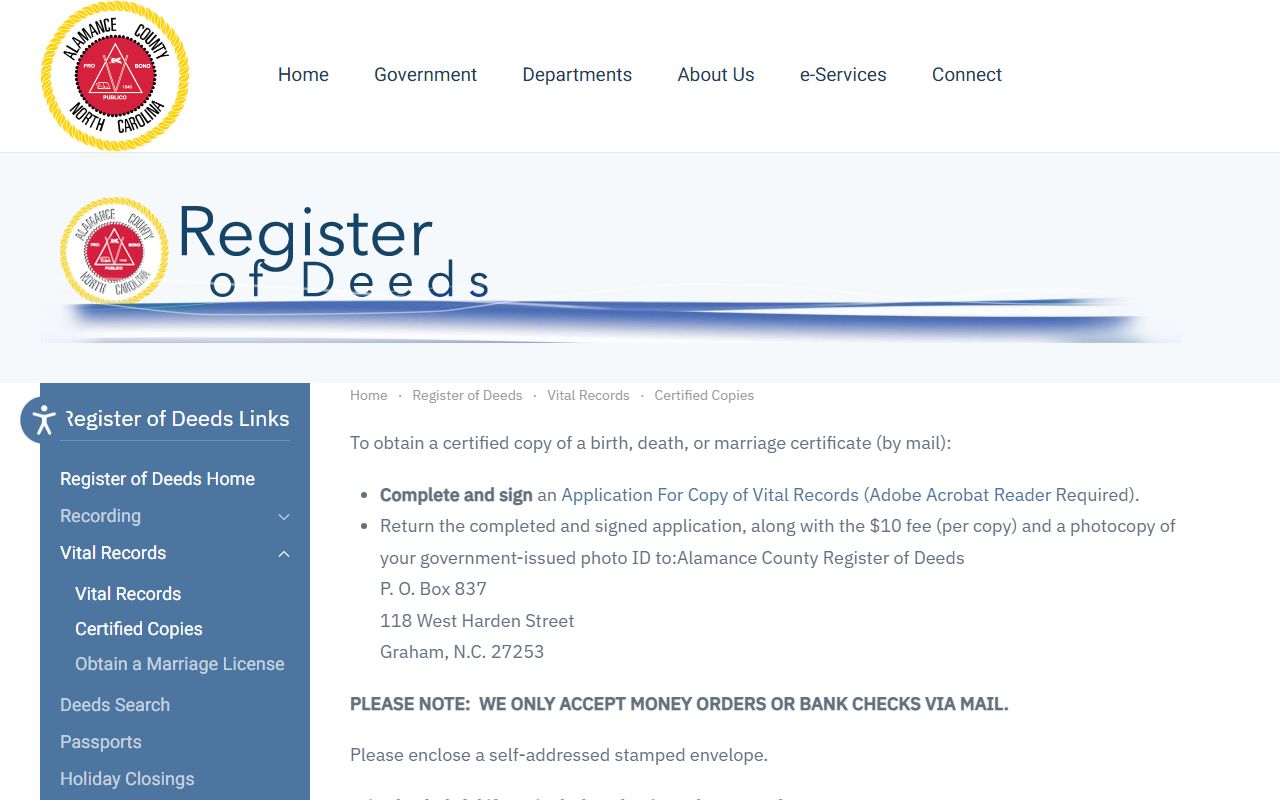
Researchers looking for Alamance County genealogy records can request copies in person or by mail. Birth and death records are kept here along with marriage licenses and land deeds. The staff can help you locate specific documents if you have names and approximate dates. For vital records, you can also visit the Alamance County vital records page for details on how to order copies and what forms you need.
The county name comes from Alamance Creek. It is a Native American word that refers to the blue-colored mud found in the creekbed. This creek played a role in early settlement patterns and appears in many old land grants and deeds that genealogy researchers still study today.
| Office |
Alamance County Register of Deeds 212 West Elm Street Graham, NC 27253 Phone: 336-570-5200 |
|---|---|
| Records | Birth (1913), Marriage (1853), Death (1913), Land (1793) |
| Website | rod.alamancecountync.gov |
Alamance County Court and Probate Records
The Clerk of Superior Court in Alamance County maintains court records from 1849 and probate records from 1832. Probate files are a rich source for genealogy work. They often contain wills, estate inventories, and lists of heirs. These records can reveal family connections that do not appear in other sources. Court records from the same period may also name family members in land disputes, guardianship cases, and other civil matters.
Alamance County did not suffer any known courthouse disasters, so the record collection is largely intact. This is a real advantage for genealogy research. Many North Carolina counties lost records to fires or floods, but Alamance County's records have survived. Probate files from the 1830s and 1840s can help you trace families back to the period before the county was formed from Orange County.
Note: Probate records in Alamance County begin in 1832, which is earlier than the county's own formation date of 1849.
Genealogy Resources at Alamance Libraries
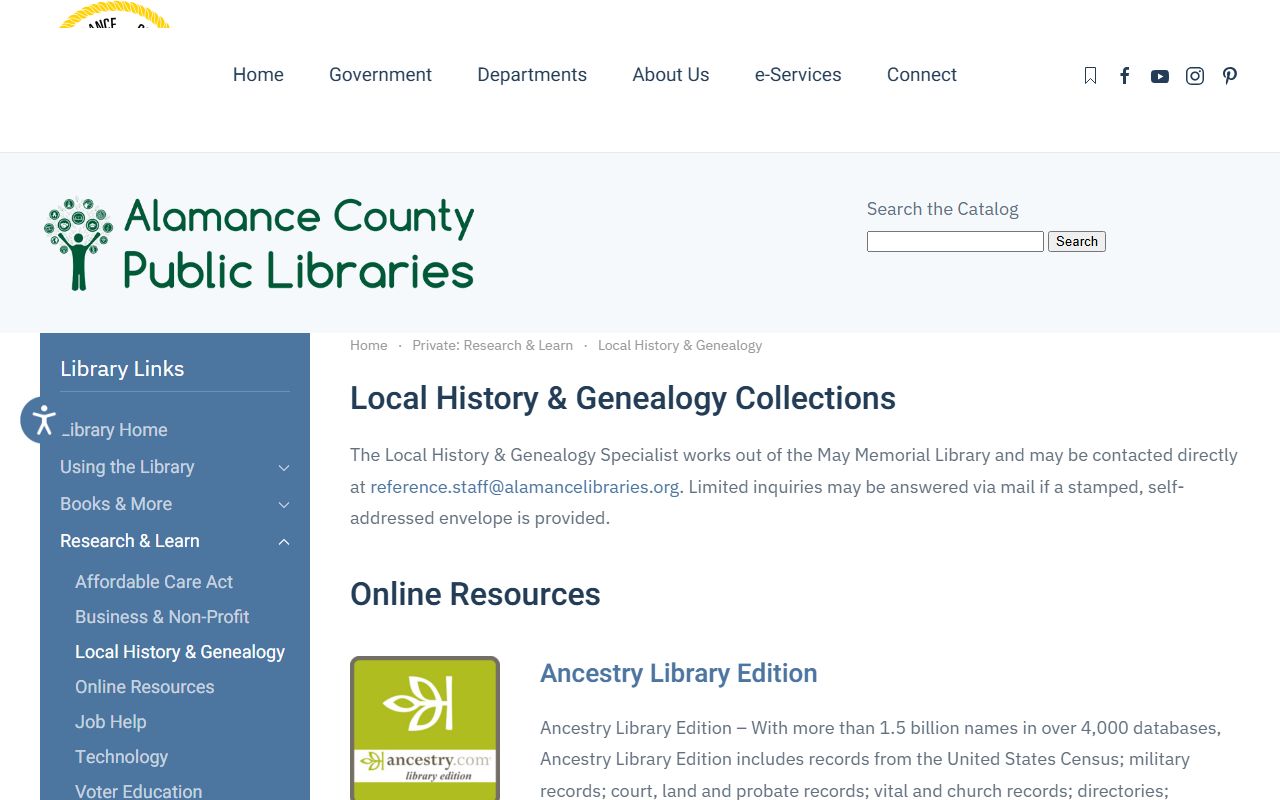
The May Memorial Library in Alamance County has a Local History and Genealogy department with a specialist on staff. This is one of the best free resources for Alamance County genealogy research. The library offers access to Ancestry Library Edition, which contains over 1.5 billion names across more than 4,000 databases. Heritage Quest is also available through the NC LIVE database system. Both tools cover census records, military files, immigration lists, and much more.
One standout resource is the library's collection of digitized local newspapers. The Alamance Gleaner, Alamance News, and Times News are all fully searchable. Old newspapers are gold for genealogy. They carry birth notices, marriage announcements, obituaries, and land sale ads. You can search these from home or at the library. For help getting started, contact the Local History and Genealogy Specialist at reference.staff@alamancelibraries.org.
The library staff can guide you through research steps and suggest sources you might not know about. They handle requests from both local visitors and out-of-state researchers tracing Alamance County roots.
Visit the Alamance County library genealogy page to learn more about available databases and collections.
Alamance County Marriage Records
Marriage records in Alamance County begin in 1853, just four years after the county was formed. These early records include marriage bonds and licenses that list bride, groom, and often a bondsman who was frequently a relative. Marriage bonds can point you to family ties that other documents miss. From 1868 onward, the state required marriage licenses, and these records become more uniform and easier to search.
To get a copy of a marriage record from Alamance County, contact the Register of Deeds. You will need the names of both parties and an approximate date. The office can search their indexes and provide copies. For marriages before 1849, check the Orange County records, since Alamance County did not yet exist. The North Carolina Vital Records office also holds statewide marriage records and can issue copies for events that occurred anywhere in the state.
Note: Marriage records prior to 1849 may be found under Orange County, from which Alamance was formed.
Birth and Death Records in Alamance
Statewide birth and death registration in North Carolina began in October 1913. Alamance County birth and death certificates start from that date. The Register of Deeds holds these records and can issue certified copies. For births or deaths that occurred before 1913, you will need to rely on other sources. Church records, cemetery records, family Bibles, and newspaper notices can fill the gap for Alamance County genealogy.
Delayed birth certificates are another option. Some Alamance County residents filed delayed certificates later in life to document births that were never formally recorded. These delayed records often contain supporting evidence like family Bible entries or affidavits from people who knew the family. They can be very useful for genealogy research in Alamance County.
Online Genealogy Research for Alamance
Several online tools make it possible to search Alamance County genealogy records from anywhere. The NCGenWeb project for Alamance County is coordinated by Cathy von Hassel-Davies. This volunteer site offers free lookups, transcribed records, and links to other resources. Visit the Alamance County NCGenWeb page to see what is available.
The North Carolina State Library genealogy guide is a strong starting point for any county in the state. It lists archives, databases, and tips for researching North Carolina families. For Alamance County, this guide can point you to state-level records that supplement what the county holds.
Census records are another key tool. Federal census records from 1790 to 1950 cover Alamance County residents and are available through sites like Ancestry and FamilySearch. The 1850 census is the first to list Alamance County by name. Earlier census records for this area fall under Orange County. These census lists show names, ages, birthplaces, and occupations, all of which help build a family tree.
Note: For records before 1849, search under Orange County, which was the parent county of Alamance.
Alamance County Land Records
Land records in Alamance County date back to 1793. These include deeds, grants, and plats that show who owned property and when it changed hands. Land records are among the most useful genealogy tools because they often name family members, neighbors, and witnesses. In Alamance County, you can find records of land sales, gifts between relatives, and divisions of estates that tie directly to family history.
The Register of Deeds maintains these land records at the courthouse in Graham. Many early Alamance County land records reference creeks, roads, and other landmarks that help place a family on the map. Some of the oldest grants connect to the colonial period and can lead researchers to earlier records in Orange County or even the colonial land grant office. The Alamance County Register of Deeds website has information about searching and obtaining copies of land records.
Nearby Counties
If your ancestors lived near the Alamance County border, their records may be in a neighboring county. County lines shifted over time, and families often moved short distances. Check these nearby counties for additional genealogy records.