
Martin County Genealogy Research
Martin County was formed in 1774 from Tyrrell and Halifax counties, making it one of the oldest counties in the Coastal Plain of North Carolina. Named for Josiah Martin, the last royal governor, the county seat is Williamston along the Roanoke River. Marriage, land, and court records all date to 1774. The fertile bottomlands attracted planters and farmers, and families who settled during the colonial period often remained for generations. Their records fill the deed books, will books, and court minutes preserved at the Williamston courthouse.
Martin County Quick Facts
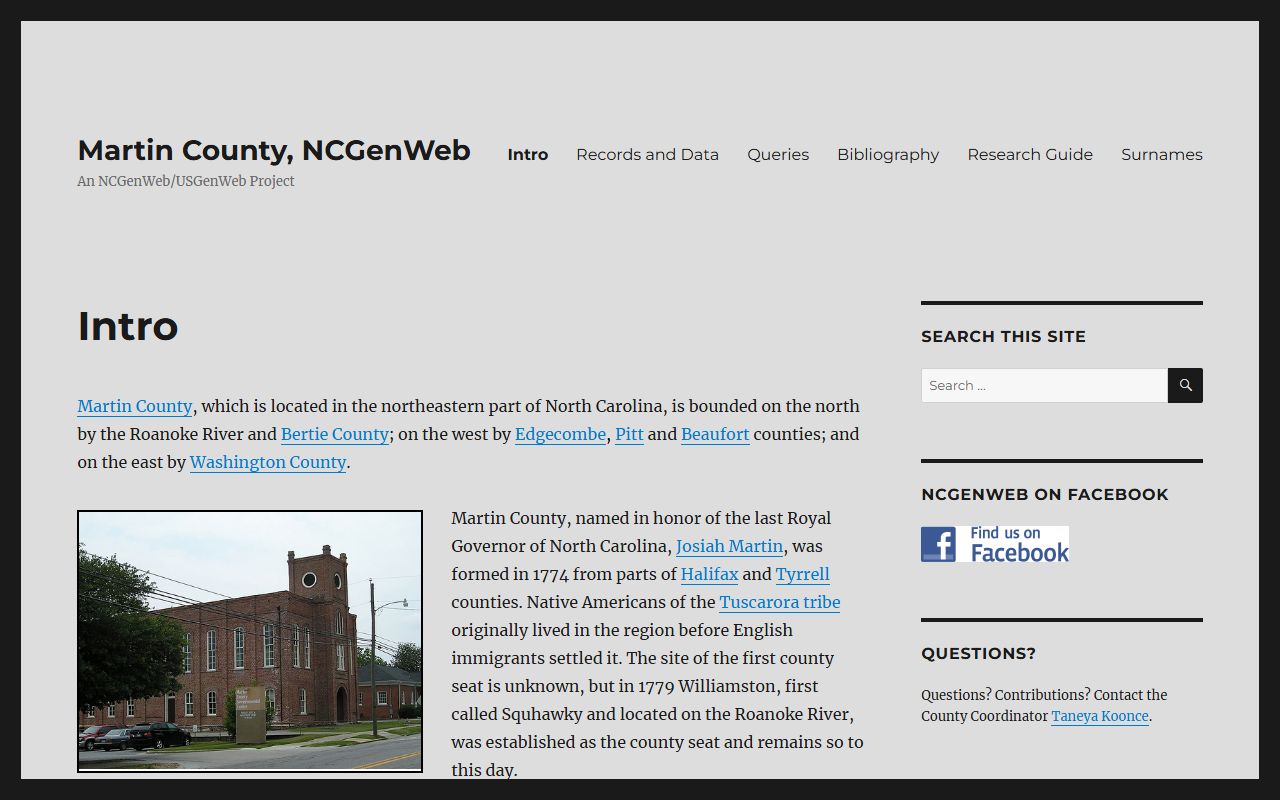
Martin County Register of Deeds in Williamston
The Martin County Register of Deeds office in Williamston is the central location for vital records, land documents, and marriage licenses. Birth and death certificates are available starting in 1913, which is when North Carolina began mandatory registration of vital events. Marriage records in Martin County extend back to 1774, providing a continuous record of family unions from the colonial era through the present day.
Land records at the Martin County Register of Deeds also begin in 1774 and document property ownership along the Roanoke River and throughout the county's farming communities. These early deed books contain transactions that predate American independence, making them valuable for researchers tracing colonial-era families in eastern North Carolina. The office maintains grantor and grantee indexes for efficient searching.
| Office |
Martin County Register of Deeds 305 E Main Street Williamston, NC 27892 Phone: (252) 809-4115 |
|---|---|
| Courthouse |
Martin County Courthouse 305 E Main Street Williamston, NC 27892 Phone: (252) 809-5100 |
| Website | martincountync.gov/rod |
Martin County Marriage Records from the Colonial Period
Marriage records in Martin County date to 1774, the year the county was established. The earliest records take the form of marriage bonds, which were posted before a wedding could take place. The bond required a financial guarantee, usually from the groom and a second party, who was often a relative of the bride. Because these bonds frequently name the bride's father, brother, or other male relative, they serve as a critical source for identifying family connections in the colonial and early national periods.
As the county matured, marriage bonds were replaced by marriage licenses. The license applications recorded additional information, including the full names and ages of both parties, their residences, and the names of their parents. For Martin County researchers, these records are indispensable for building family trees across the generations. The transition from bonds to licenses happened gradually, and both types of records are preserved at the Register of Deeds office in Williamston.
The NCGenWeb Martin County page provides access to some transcribed marriage bond abstracts and indexes. These online resources allow researchers to identify relevant records before traveling to Williamston. Certified copies of marriage records can be obtained in person or by mail from the Martin County Register of Deeds.
Court Records and Wills Filed in Martin County
Court records in Martin County begin in 1774 and cover a broad range of legal proceedings. Civil suits, criminal cases, estate settlements, orphan court records, and apprenticeship indentures are all part of the court archives. The Clerk of Superior Court in Williamston maintains these records, which provide detailed information about the daily lives, disputes, and family structures of Martin County residents from the colonial era forward.
Will records in Martin County span from 1774 through 1968 in the primary will book collection. Wills from the colonial and antebellum periods are especially detailed, as they often describe substantial estates including land, livestock, crops, and enslaved individuals. Each will typically names the testator's spouse and children, and many include bequests to grandchildren, sons-in-law, or daughters-in-law, creating a web of documented family relationships.
Estate files accompanying the wills include inventories, appraisals, sale records, and distribution accounts. An inventory lists every item of value owned by the deceased at the time of death. Sale records show who purchased items at the estate sale, and distribution records name each heir and their share. Together, these documents provide one of the most complete pictures of a family that any single source can offer in Martin County.
Colonial and Revolutionary War Families in Martin County
Martin County was established just two years before the Declaration of Independence, and many of its founding families participated in the Revolutionary War. Soldiers from Martin County served in the North Carolina Continental Line and in local militia units. Their service is documented in military records held at the National Archives and in pension applications that contain valuable biographical details.
Revolutionary War pension applications from Martin County veterans and their widows often include statements about the soldier's age, place of birth, date and place of marriage, and names of children. These applications were filed decades after the war and provide information that bridges the gap between colonial records and the early census returns that began in 1790. For genealogists working on Martin County families, these pension files can be the key to connecting colonial-era ancestors to their descendants.
The families who settled in Martin County during the colonial period came primarily from other parts of eastern North Carolina, Virginia, and the British Isles. Surnames such as Williams, Biggs, Hyman, Hassell, and Roberson appear frequently in the earliest records. Many of these families were interconnected through marriage and business relationships that spanned the entire Roanoke River region.
Birth and Death Certificates in Martin County
Statewide registration of births and deaths in North Carolina began in 1913, and Martin County birth and death records date from that year forward. Before 1913, vital events were not systematically recorded by civil authorities in the county. Researchers seeking birth and death information for the pre-1913 period should consult church records, cemetery records, family Bible entries, and newspaper notices from Williamston and other Martin County communities.
The North Carolina Vital Records office in Raleigh issues certified copies of birth and death certificates for events that occurred in Martin County and throughout the state. Birth records are restricted for 100 years and death records for 25 years under state law. After these restriction periods expire, the records become available for genealogical research through the North Carolina State Archives.
Martin County Land Grants and Deed Records
Land records in Martin County date to 1774 and include colonial land grants, deeds of conveyance, and mortgage records. The earliest grants in the county were issued under royal authority and transferred ownership of unpatented land to individual settlers. After independence, the state of North Carolina continued to issue grants for unclaimed land, and these documents record the earliest property owners in the county.
Deed records in Martin County track the sale, transfer, and division of property through the generations. For genealogists, deeds provide evidence of family relationships that other records may not contain. A father selling land to a son, a widow receiving her dower rights, or heirs dividing inherited property all appear in the deed books. These transactions name the parties involved and often describe the property's location using natural landmarks, roads, and the names of neighboring landowners.
The Martin County Register of Deeds maintains comprehensive indexes that allow researchers to search by grantor or grantee name. For colonial-era grants, the North Carolina State Archives website provides digital images of the original documents. Researchers can also find published abstracts of early Martin County deeds in genealogical journals and compiled volumes available at research libraries.
Genealogy Research Resources for Martin County
The NCGenWeb Martin County page is a free online resource that offers transcriptions, cemetery surveys, and research links for the county. Volunteers have contributed indexes of early records, census transcriptions, and other materials that can help researchers identify relevant documents before visiting Williamston.
The Martin County Library in Williamston maintains a local history collection that includes published family histories, county histories, and microfilm of area newspapers. The library can be a helpful starting point for researchers who are new to Martin County genealogy. Staff may be able to suggest additional resources and direct visitors to specific collections relevant to their family lines.
The North Carolina State Archives in Raleigh holds microfilm copies of Martin County deed books, will books, court minutes, and estate records. FamilySearch.org has digitized many of these collections and offers free online access to the images. Ancestry.com also hosts census records, military records, and other collections that include Martin County residents from the colonial period through the twentieth century.
Counties Bordering Martin County
Martin County shares boundaries with several other counties in the eastern North Carolina Coastal Plain. Families often held land in multiple counties or moved between neighboring areas. Before Martin County was formed in 1774, its territory belonged to Tyrrell and Halifax counties, so earlier records for families in this area can be found in those parent counties.