
Bertie County Colonial Genealogy
Bertie County traces its origins to the Albemarle settlement, one of the earliest areas of English colonization in North Carolina. Established as Bertie Precinct in 1722 from Chowan, the county holds records reaching back to the 1720s. The county seat is Windsor. Named for Lord James Bertie, a cousin of the Lords Proprietors, this Coastal Plain county offers genealogists access to colonial-era land grants, court proceedings, and marriage bonds that few other North Carolina counties can match.
Bertie County Quick Facts
Bertie County Register of Deeds
The Bertie County Register of Deeds handles vital records, property documents, and other public filings at the courthouse in Windsor. This office is located at 108 Dundee Street. You can reach them by phone at 252-794-5300. The staff can help with marriage license searches, deed lookups, and copies of recorded instruments.
Bertie County land records begin in 1721, placing them among the oldest in North Carolina. These early deeds show the transfer of land along the Roanoke and Chowan rivers, where the first families settled. Court records start in 1722, the year the precinct was formed. Probate records begin in 1724 and include wills, inventories, and estate settlements that are crucial for tracing family lines in the Albemarle region.
Visit the Bertie County Register of Deeds website for details on services and office hours.
| Office |
Bertie County Register of Deeds 108 Dundee Street PO Box 530 Windsor, NC 27983 Phone: (252) 794-5300 |
|---|---|
| Hours | Monday through Friday, 8:30 AM to 5:00 PM |
| Website | co.bertie.nc.us/register-of-deeds |
Colonial Genealogy Records in Bertie County
Bertie County's colonial records are among the most extensive in the state. Despite courthouse fires in 1767 and 1865, a remarkable number of early documents survived. The land records from the 1720s include original grants from the Lords Proprietors and the Crown, as well as private sales between settlers. These documents name buyers, sellers, neighbors, and sometimes family members who witnessed the transactions.
Court minutes from the colonial period record a wide range of proceedings. Orphan court cases assigned guardians to children and named their deceased parents. Road orders listed the men who lived along a stretch of road and were required to maintain it. Apprenticeship bonds placed children with tradesmen and named the child's parent or guardian. All of these records are genealogy gold for families with roots in Bertie County.
The NC State Archives holds microfilm copies of many Bertie County colonial records. These can be viewed at the archives in Raleigh or ordered through interlibrary loan. Some have also been transcribed and published in genealogy journals and books focused on the Albemarle region.
Note: The 1767 fire destroyed the earliest court records, so researchers should check Chowan County records for Bertie families before 1722.
Bertie County Vital Records for Genealogy
Birth and death records in Bertie County start in 1913. Marriage records begin in 1762. Earlier marriage information may appear in court records, church registers, or newspaper notices. The state vital records office handles copies of births and deaths from 1913 to the present.
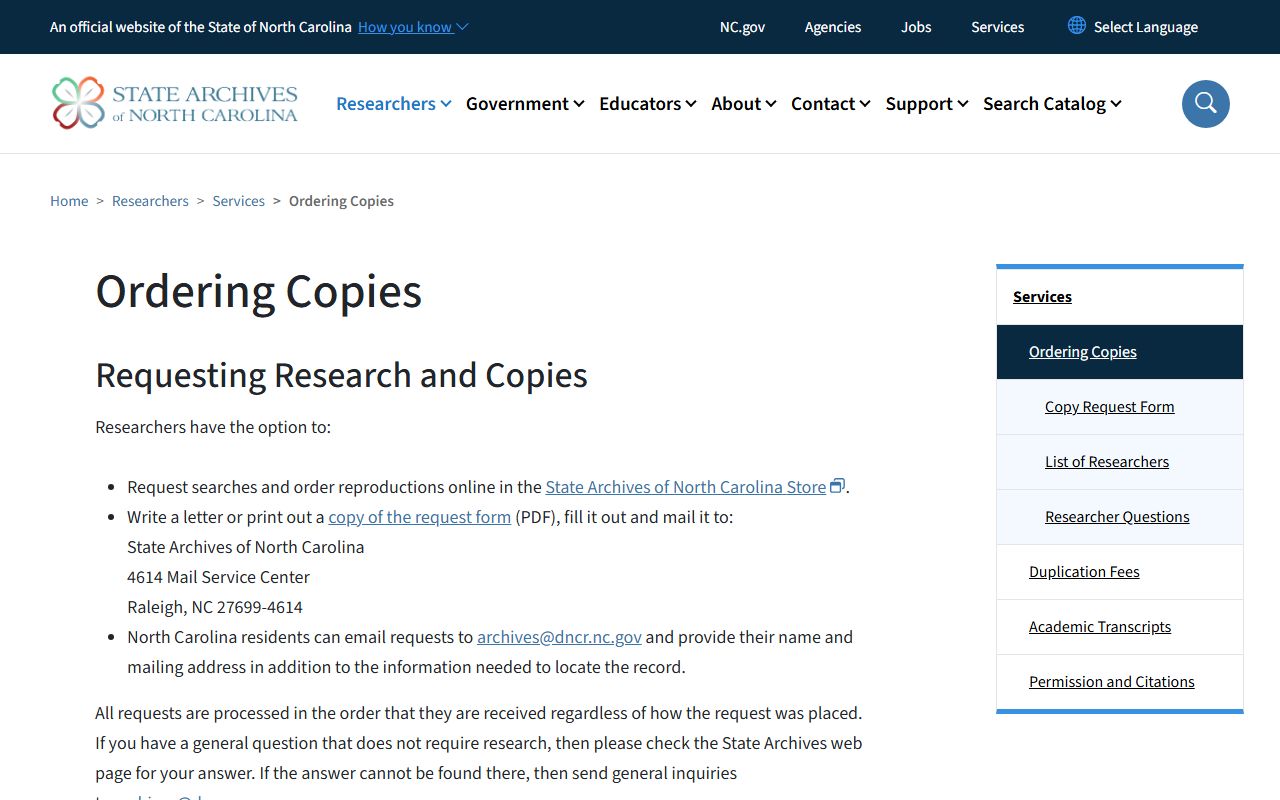
The image below shows the NC State Archives ordering process for copies of historical records, including those from Bertie County.
Marriage bonds are especially useful for genealogy. A bond lists the groom, the bride, and a bondsman who was often a relative of the bride. This third name can reveal family connections not found in any other record. Bertie County marriage bonds from the 1700s and 1800s have been indexed and are available through the NC State Archives and DigitalNC.
For modern vital records, submit requests through the North Carolina Vital Records office. Birth certificates are restricted to qualified applicants. Death and marriage records have fewer restrictions and can often be obtained by researchers with a stated genealogy purpose.
Bertie County Land Genealogy Sources
Land records are the backbone of Bertie County genealogy research. The county's deeds from 1721 forward document three centuries of property transfers. In the colonial period, land grants from the Lords Proprietors drew settlers to the fertile lands along the Roanoke River. These grants name the grantee, the acreage, and the location by natural landmarks such as creeks, swamps, and marked trees.
As families grew, land was divided among heirs. Division deeds and plats from the 1700s and 1800s often list all the children of a deceased landowner. When no will exists, these land divisions may be the only record that names all the heirs. This makes the Bertie County deed books a critical source for building family trees in this area.
- Land grants from 1721 name early settlers
- Deed books record sales and gifts between family members
- Division plats list heirs of deceased landowners
- Mortgage records show financial relationships
- Powers of attorney reveal relatives in other states
Powers of attorney recorded in Bertie County are worth special attention. When an heir moved away but still owned land, they would appoint someone to sell it. The power of attorney names both parties and states the relationship. This can trace a family member who left Bertie County for Tennessee, Georgia, or another state.
Researching Bertie County Genealogy
Begin with the most recent generation and work backward. This is the standard approach, but it matters even more in Bertie County because the record base is so deep. A methodical approach keeps you from skipping generations or confusing people with the same name, which was common in colonial families who reused names often.
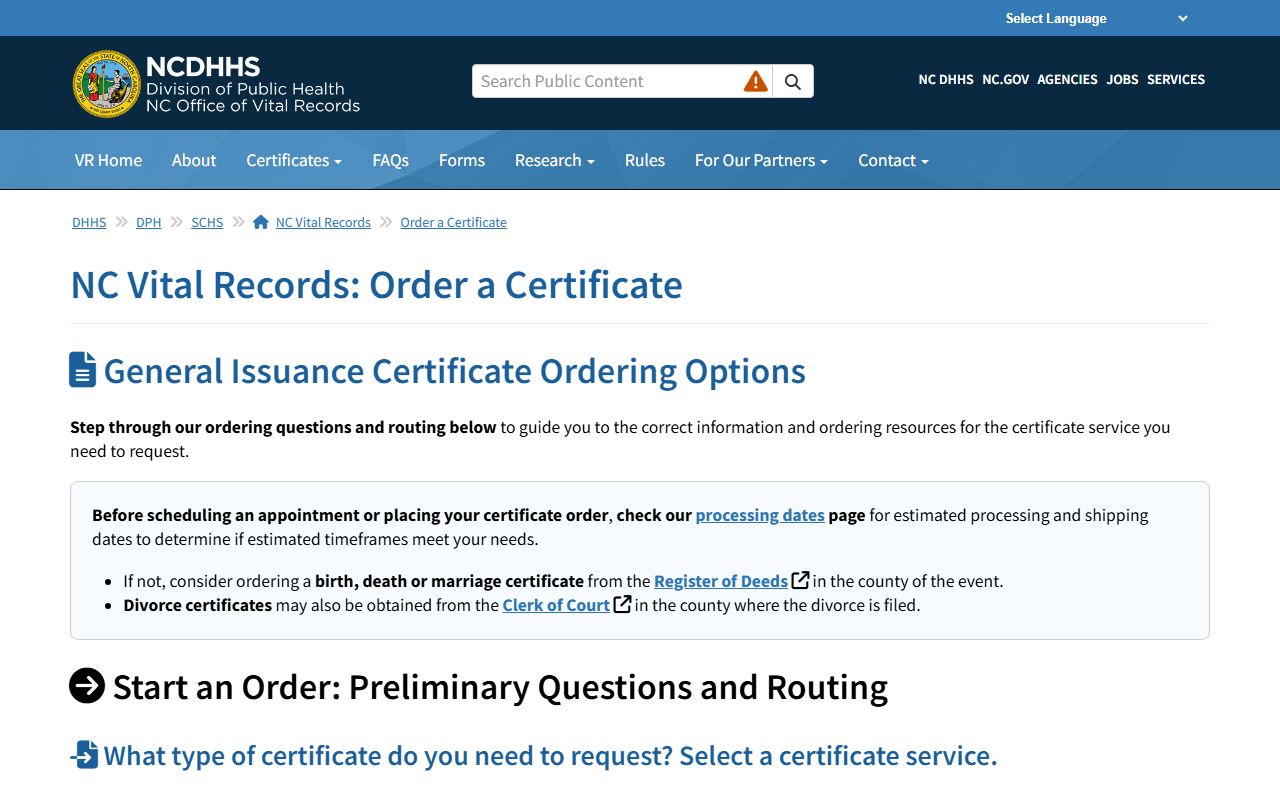
The image below shows the NC vital records ordering page, which handles requests for Bertie County birth, death, and marriage certificates.
Tax lists are a useful supplement to deed and court records. Bertie County tax lists from the late 1700s and 1800s name heads of household, their land acreage, and the number of people in the household. These lists can place a family in the county during years when no other record exists. They also show when a person arrived in or left the county.
Census records for Bertie County begin with the 1790 federal census. The 1790 through 1840 censuses name only the head of household but tally household members by age and sex. The 1850 census and later list all members by name. State census records from 1784 to 1787 also survive for parts of Bertie County and predate the federal census.
Note: Researchers should also check records from Chowan, Halifax, and Hertford counties, as Bertie County families frequently had connections across these neighboring areas.
Bertie County Cemetery Records
Cemetery records fill gaps in Bertie County genealogy research. The county has many old burial grounds, from churchyard cemeteries to isolated family plots on private land. Some of these date to the mid-1700s. Headstone inscriptions provide birth and death dates, spousal names, and sometimes parents or military service.
Several volunteers and organizations have surveyed Bertie County cemeteries over the years. Their work has been published in local genealogy society newsletters and is available in some online databases. The Bertie County Historical Association has information about local cemeteries and can direct researchers to specific sites.
Nearby Counties
These counties border Bertie County. Early Albemarle families often held land in more than one county. Checking neighboring county records can uncover additional genealogy details about your Bertie County ancestors.