
Madison County Appalachian Genealogy
Madison County occupies a stretch of the Appalachian Mountains in western North Carolina, bordered by the French Broad River and the Tennessee state line. Created in 1851 from Buncombe and Yancey counties, it was named for President James Madison. The county seat is Marshall. Marriage, court, and land records all start in 1851. Families who settled these mountain hollows developed a distinctive culture, and many stayed for over a century, creating dense networks of kinship well documented in the county's public records.
Madison County Quick Facts
Madison County Register of Deeds in Marshall
The Madison County Register of Deeds office in Marshall serves as the primary repository for vital records, real estate documents, and marriage licenses. Birth and death records are available from 1913 onward, following the start of statewide vital registration in North Carolina. Marriage records begin in 1851, the year the county was established, and land records also date to 1851 when the first deeds were recorded in the new county's books.
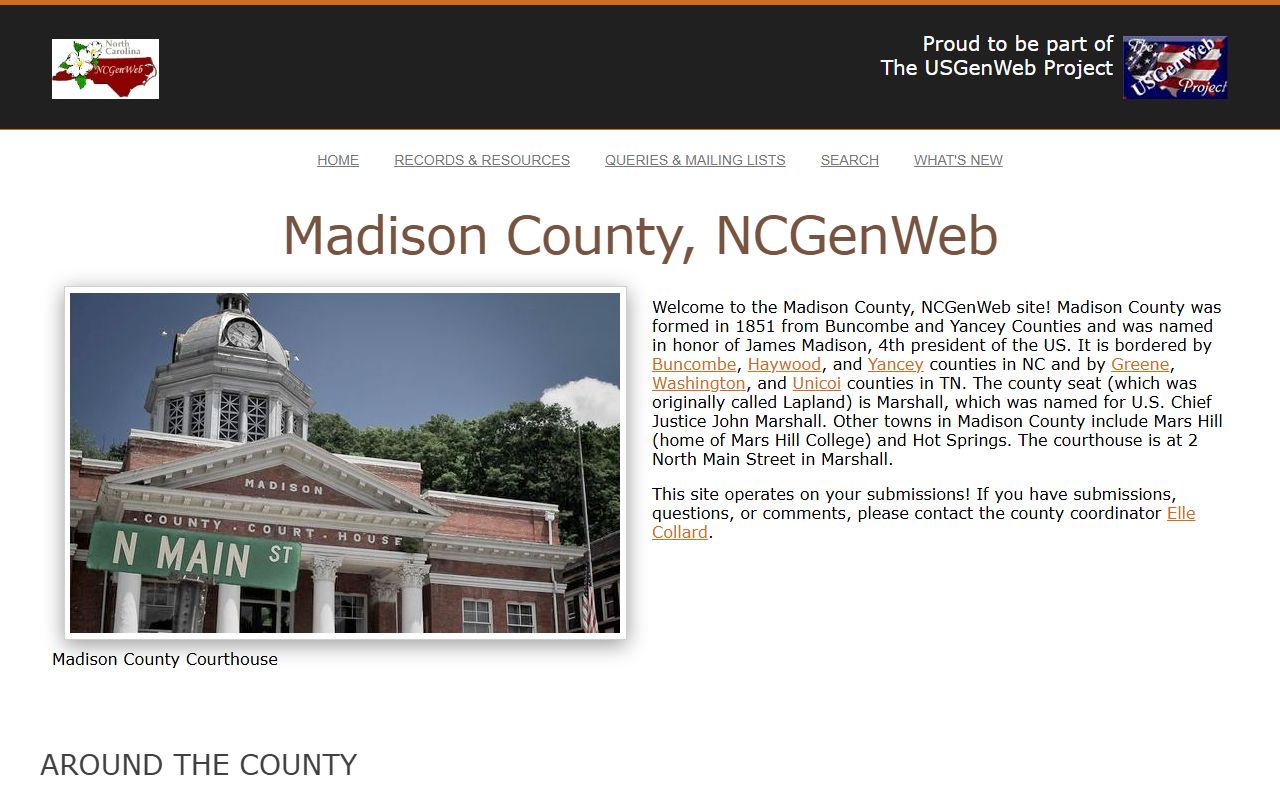
The Register of Deeds maintains indexed collections of deeds, mortgages, plat maps, and other property-related documents. For genealogists, the marriage register and deed books are usually the first records consulted because they document family relationships and property transfers across multiple generations. The office is located at the Madison County Courthouse on North Main Street in Marshall and welcomes in-person research visits during regular business hours.
| Office |
Madison County Register of Deeds 2 N Main Street Marshall, NC 28753 Phone: (828) 649-3131 |
|---|---|
| Courthouse |
Madison County Courthouse 2 N Main Street Marshall, NC 28753 Phone: (828) 649-2531 |
| Website | madisoncountync.gov/rod |
Madison County Marriage Bonds and License Records
Marriage records in Madison County begin in 1851 and include both marriage bonds from the earlier period and marriage licenses from later years. The bonds typically name the groom, the bride, and the bondsman, who was often a male relative of the bride. This practice provides researchers with an additional name that can help identify the bride's family, a critical piece of information when working with common Appalachian surnames.
Marriage license applications from the later 1800s and into the 1900s provide more detailed information, including the ages of both parties, their places of birth, and the names of their parents. In the close-knit mountain communities of Madison County, marriages often took place between families who had been neighbors for decades. Tracking these patterns of intermarriage can help researchers build a complete picture of their family's social network in the county.
The Madison County Register of Deeds can provide copies of marriage records upon request. Researchers can also find early marriage bond abstracts and indexes through the NCGenWeb Madison County page and through published compilations available at area libraries.
Wills and Estate Records in Madison County
Will records in Madison County cover the period from 1851 through 1968, with later wills maintained by the Clerk of Superior Court. Wills from the mountain communities of Madison County often reflect the modest but self-sufficient lives of Appalachian families. A typical will might bequeath a farm, livestock, household furnishings, and farming tools, providing a window into the material culture of the period along with the names of family members.
Estate records, which include inventories, accounts of sale, and final distributions, supplement the wills and sometimes contain even more genealogical information. An inventory lists everything a person owned at death, while accounts of sale record who purchased specific items, often relatives and neighbors. Distribution records name the heirs and their shares of the estate, effectively documenting the deceased person's surviving family members.
Court records in Madison County also begin in 1851 and encompass a variety of proceedings beyond estate matters. Civil suits, land disputes, apprenticeship records, and bastardy bonds all appear in the court minutes and case files. These records are held by the Clerk of Superior Court in Marshall and are available for public research.
Madison County During the Civil War Period
The Civil War divided Madison County deeply. Located in the mountains where slaveholding was uncommon, many residents held Unionist sympathies while others supported the Confederacy. This division led to significant internal conflict, and the most tragic episode was the Shelton Laurel Massacre of January 1863, in which thirteen men and boys suspected of Union loyalty were executed without trial by Confederate soldiers. The event left lasting scars on the community and is documented in both military records and local accounts.
For genealogists, the Civil War period in Madison County created a range of records. Military service records for both Confederate and Union soldiers from the county can be found at the National Archives. Pension applications, filed by veterans or their widows, often contain detailed biographical information including birth dates, marriage dates, and names of family members. Court records from this era may reflect property seizures, loyalty oaths, and other proceedings related to the conflict.
The Madison County Genealogical Society has compiled research materials related to Civil War service in the county. Their collections include transcriptions of service records, pension applications, and cemetery surveys of family and community graveyards where veterans were buried.
Birth and Death Records for Madison County Families
Birth and death records in Madison County begin with the 1913 statewide registration mandate. In the remote mountain communities of the county, compliance with registration was gradual, and some events from the earliest years may have gone unrecorded. Researchers should check multiple sources when looking for vital events before and immediately after 1913, including church records, cemetery inscriptions, and newspaper notices from the Marshall area.
The North Carolina Vital Records office handles requests for certified copies of birth and death certificates. Birth records are restricted for 100 years and death records for 25 years. Delayed birth certificates filed during the 1930s and 1940s can be especially helpful for Madison County research because they often include affidavits from family members or neighbors who witnessed the birth, providing names and relationships that supplement other records.
Madison County Land and Property Transactions
Land records in Madison County begin in 1851 and document property ownership in the mountain valleys and ridges of the county. The terrain of Madison County meant that farmland was concentrated along rivers and creeks, with forested hillsides used for hunting and gathering. Deeds from the 1800s describe property boundaries using natural landmarks such as rocks, trees, and creek crossings, painting a vivid picture of the landscape as it existed at the time.
For genealogists, Madison County deed records provide evidence of family relationships that other documents may not capture. Deeds of gift from parents to children confirm family connections. Boundary disputes resolved in court name neighbors and adjacent landowners. Mortgage records show financial relationships between community members. The Register of Deeds in Marshall maintains grantor and grantee indexes that allow researchers to trace a family's land holdings across the decades.
State land grants, which conveyed public lands to private owners, are also relevant for early Madison County research. These grants were issued by the state of North Carolina and are recorded at the Secretary of State's office. Digital copies of many grants are available through the North Carolina State Archives website.
Genealogy Research Resources for Madison County
The Madison County Genealogical Society is an active organization that supports family history research in the county. They maintain collections of family files, cemetery records, and transcribed documents. The society also hosts meetings and events where researchers can share information and connect with others studying Madison County families.
The NCGenWeb Madison County page offers free online access to transcribed records, lookup requests, and research guides. Volunteers have contributed census transcriptions, marriage indexes, and cemetery surveys that provide a foundation for Madison County research. The site also includes historical information about the county's communities and townships that can help researchers understand where their ancestors lived.
The North Carolina State Archives in Raleigh holds microfilm copies of many Madison County records, including deed books, will books, and court minutes. FamilySearch.org has digitized portions of these microfilm collections and made them available for free viewing online. Ancestry.com also hosts digitized census records, military records, and some county records that include Madison County residents.
Counties Adjacent to Madison County
Madison County borders several other mountain counties, and family connections across county lines were common. Before Madison County was created in 1851, its territory was part of Buncombe and Yancey counties, so researchers tracing families before that date should check records in those parent counties for earlier documentation.