
Granville County Genealogy Records
Granville County was established on June 15, 1746 from Edgecombe County and named for John Carteret, the 2nd Earl Granville, who inherited one-eighth of the Carolina Province in 1729. The county seat is Oxford. Granville County is one of the oldest counties in North Carolina, and it served as the parent county for many Piedmont counties that were carved from it over the following decades. Court records, land deeds, and probate files date from 1746, making this county a cornerstone for genealogy research in the northern Piedmont region.
Granville County Quick Facts
Granville County Register of Deeds
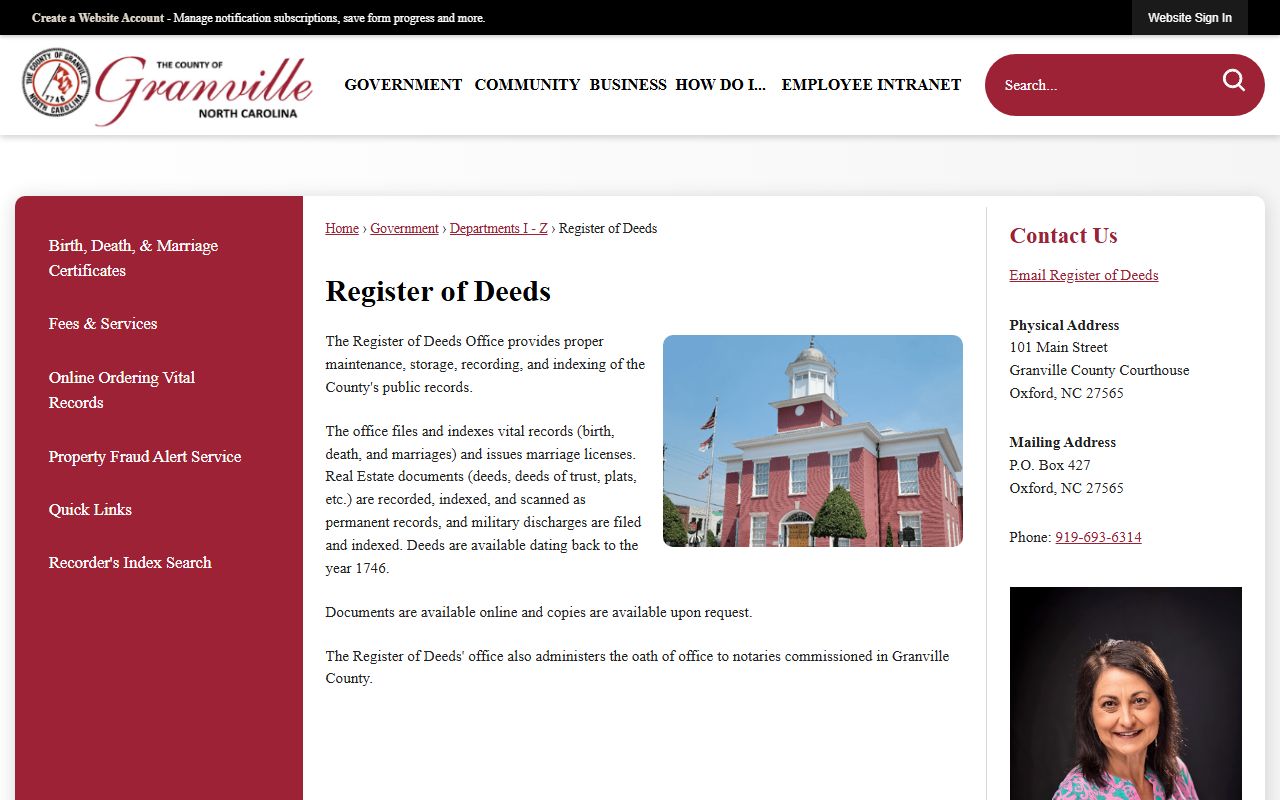
The Granville County Register of Deeds is at 101 Main Street in Oxford. This office maintains marriage records from 1758, land deeds from 1746, and vital records from 1913. The office also holds military discharge records and various other instruments recorded over nearly three centuries of county history.
Granville County has one of the longest continuous record sets in the state. Marriage records begin in 1758, making them among the earliest in North Carolina. Land deeds stretch back to 1746, the year the county was created. These records have survived in good condition, giving researchers an unbroken chain of documents from the colonial period through the present. The Register of Deeds staff can assist with index searches and provide certified or uncertified copies of documents on file.
| Office |
Granville County Register of Deeds 101 Main Street PO Box 906 Oxford, NC 27565 Phone: (919) 693-6314 |
|---|---|
| Courthouse |
101 Main Street Oxford, NC 27565 |
| Website | granvillecounty.org/register-of-deeds |
Granville District Land Grants
The Granville District is one of the most important genealogy topics for researchers working in this part of North Carolina. From 1748 to 1763, Lord Granville's agents issued approximately 4,000 proprietary land grants in the northern half of the colony. These grants are distinct from the royal grants issued by the colonial governor because they came from a private landowner. The Granville District covered a vast area stretching from the Virginia border southward across the Piedmont.
Researchers tracing early families in Granville County and surrounding areas should search the Granville District records at the North Carolina State Archives. The grant files include the name of the grantee, the acreage, and a description of the land. Many settlers who received Granville grants went on to appear in the county court records, deed books, and tax lists. Connecting a land grant to a deed or will can establish when a family arrived and where they settled within the county.
After Lord Granville's land office closed in 1763, the colony resumed issuing grants. The transition created some confusion over titles, and disputes appear in the court records of Granville County and its daughter counties for years afterward.
Note: Granville District grants are separate from Granville County records. The district covered many counties, not just Granville County itself.
Granville County Marriage Records
Marriage records in Granville County begin in 1758. These early records include marriage bonds that name the groom, the bondsman, and sometimes the bride. The bonds are among the oldest in the state and are a primary source for colonial-era genealogy. Researchers can find them at the North Carolina State Archives and on microfilm through FamilySearch.
After the Civil War, marriage registers became more detailed. They include both names, ages, birthplaces, parents' names, and the officiant. African American marriages were recorded separately in some periods. Copies can be obtained from the Register of Deeds in Oxford or through NC Vital Records for more recent marriages.
Probate Records in Granville County
Probate records in Granville County date from 1746, the year of the county's formation. These include wills, inventories, estate accounts, and guardianship papers. The earliest wills are among the most valuable genealogy documents in the county because they name heirs, describe landholdings, and sometimes reveal family relationships that appear nowhere else.
Inventories list every item in the deceased person's estate, from cookware and bedding to cattle and enslaved persons. Sale records show who purchased each item, often revealing neighbors and relatives. Guardianship records name minor children and the adults appointed to care for them, which can establish parent-child connections when no will exists. The Clerk of Superior Court in Oxford holds original probate files. Many have been microfilmed and are accessible through the State Archives.
Historical Society and Libraries
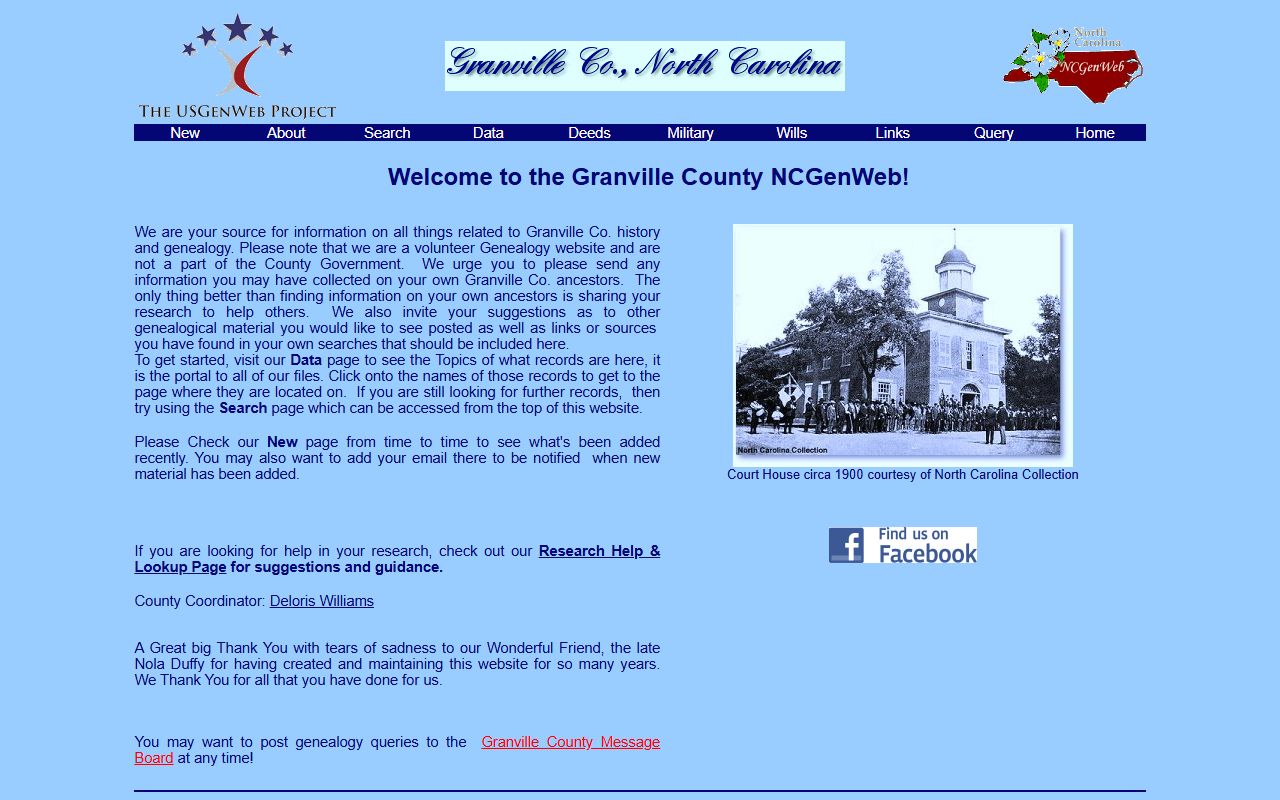
The Granville County Historical Society is based in Oxford and supports genealogy research through its collections and programs. The society holds family files, photographs, and published county histories. It also sponsors events that bring together researchers working on Granville County families.
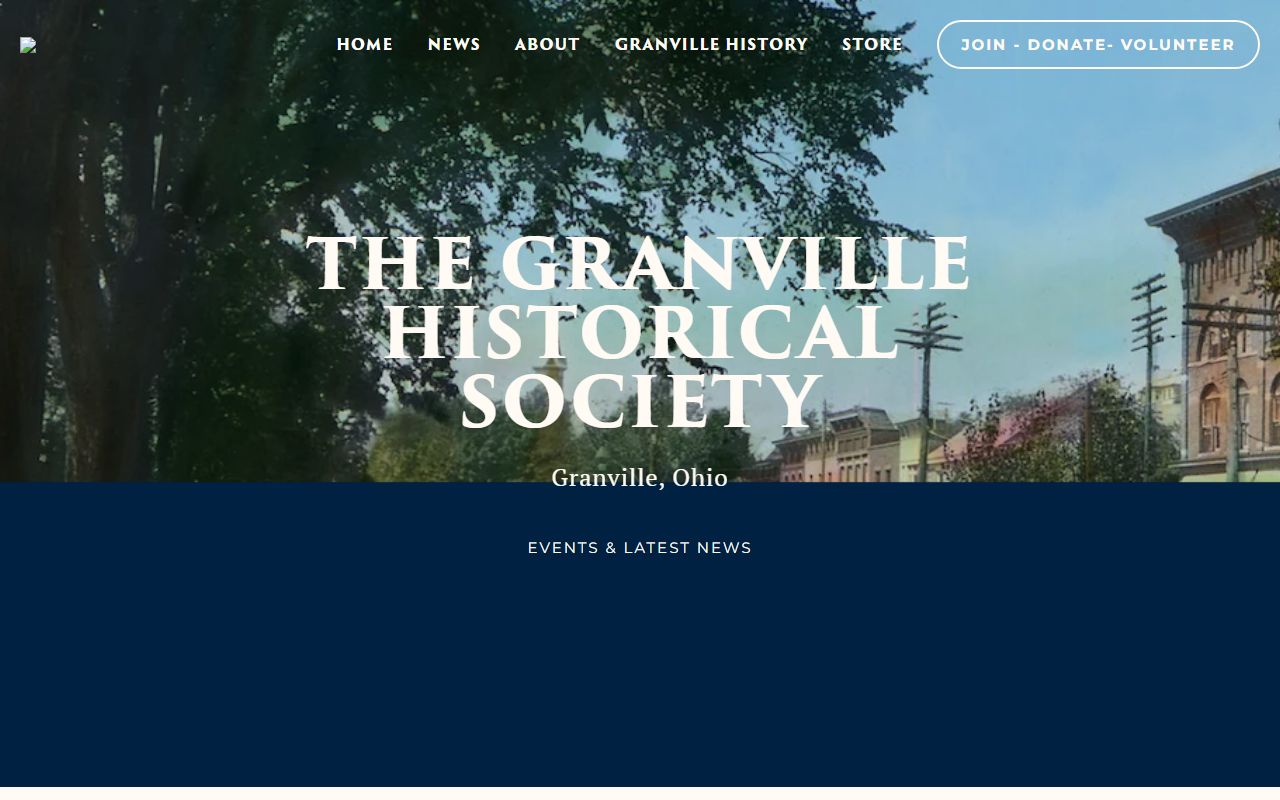
The NCGenWeb Granville County page is a useful online starting point. It offers transcriptions, cemetery records, and links to other repositories. Volunteer contributors have indexed many of the county's older records and made them searchable online. The Thornton Library in Oxford may also hold local history materials relevant to genealogy research in Granville County.
Genealogy Research Guidance
Granville County served as the parent for several other counties. Bute County was carved from it in 1764. Orange County was formed from portions of Granville in 1752. Researchers tracing families who lived in the Granville County area must account for these boundary changes. A family might appear in Granville records in one decade and in a daughter county's records the next, without having moved at all.
Census records for Granville County begin with the 1790 enumeration. Tax lists from the 1740s and 1750s provide earlier coverage. These lists name heads of household and describe taxable property, including land, polls, and livestock. Court records from 1746 also contain genealogy details. Civil suits, criminal cases, and administrative actions all name individuals and place them in the county at specific dates.
- Search Granville District land grants for colonial-era settlers
- Check parent county Edgecombe for pre-1746 records
- Review daughter county records for families after boundary changes
- Use tax lists and court minutes for pre-census coverage
- Consult the Historical Society for family files and photographs
Nearby Counties
These counties border Granville County. Many were formed from Granville or its daughter counties, so their records are closely connected to genealogy research in the Granville County area.