
Wilson County Genealogy Records
Wilson County was created in 1855 from portions of Edgecombe, Johnston, Nash, and Wayne counties. The county seat of Wilson was incorporated in 1849, several years before the county itself was formed. Named for Louis D. Wilson, a North Carolina state legislator and Mexican War veteran who died of fever during the conflict, Wilson County sits in the heart of the eastern North Carolina Coastal Plain. The county became a center of bright leaf tobacco production in the late nineteenth century, and that agricultural heritage shaped the families and communities whose records are preserved at the courthouse today. Researchers can access marriage, court, and land records from 1855 forward, along with birth and death records from 1913.
Wilson County Quick Facts
Wilson County Formation and Tobacco Heritage
Wilson County was carved from four different parent counties in 1855, which makes pre-formation research more involved than in counties with a single parent. The four parent counties were Edgecombe, Johnston, Nash, and Wayne. Researchers tracing Wilson County families before 1855 must determine which parent county their ancestor's land fell within and search the records of that specific county. Tax lists and land grants from the parent counties can help pinpoint which jurisdiction held the records for a particular family.
The town of Wilson grew rapidly after the county was formed, becoming a major tobacco market by the 1870s. Wilson County was part of what became known as the "Black Belt" tobacco region, where bright leaf tobacco was the dominant crop. This agricultural economy attracted workers and merchants from across the region. Tobacco warehouses, banks, and railroad connections all generated records that are useful for genealogical research. The prosperity of the tobacco industry also meant that Wilson County maintained its records carefully, and no major courthouse fire or disaster has destroyed the county's historical documents.
The arrival of the railroad in Wilson during the 1840s transformed the area from a small farming community into a thriving commercial center. Families who arrived during this boom period left traces in deed books, court records, and business licenses. The combination of agricultural wealth and transportation access made Wilson County a place where detailed records were kept from the very beginning of the county's existence.
Wilson County Register of Deeds Records
The Wilson County Register of Deeds maintains vital records, land transactions, and marriage documentation for the county. Marriage records begin in 1855, the year Wilson County was formed. Birth and death records are available from 1913 forward. Land deeds also date to 1855 and provide a continuous record of property ownership across generations of Wilson County families.
The office is located at 115 East Nash Street in downtown Wilson. Staff can assist with record searches and provide both plain and certified copies of documents. Certified copies of vital records are required for most legal purposes, while plain copies are sufficient for genealogical research. The Register of Deeds office also handles military discharge recordings and notary commissions.
| Office |
Wilson County Register of Deeds 115 E. Nash Street Wilson, NC 27893 Phone: (252) 265-5000 |
|---|---|
| Hours | Monday through Friday, 8:00 AM to 5:00 PM |
| Website | wilson-co.com - Register of Deeds |
Wilson County Marriage Records Research
Marriage records in Wilson County begin in 1855 and form an unbroken chain to the present day. The earliest records are marriage bonds, which required the groom or a bondsman to post a financial guarantee that no legal barrier to the marriage existed. These bonds frequently name the bride's father or guardian, providing family connections that might not appear in any other document. After 1868, North Carolina shifted to a marriage license system that typically recorded more details, including ages, birthplaces, and parents' names for both parties.
Researchers looking for marriages that took place in the Wilson County area before 1855 should check the records of the four parent counties. A marriage in the northern part of what became Wilson County would likely appear in Nash or Edgecombe County records. A marriage in the southern portion would be found in Johnston or Wayne County records. Understanding which parent county governed the specific area where your ancestors lived is key to locating pre-1855 marriage records.
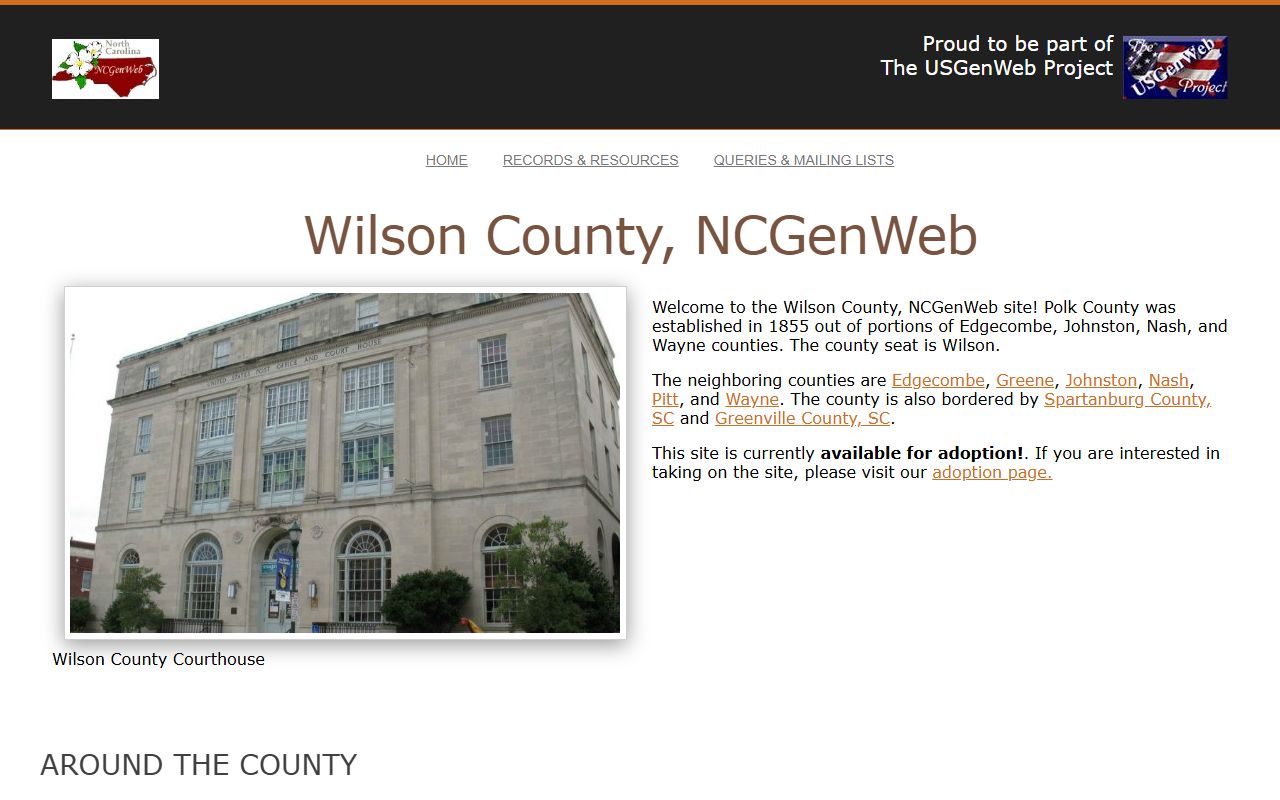
The NCGenWeb Wilson County project provides volunteer-compiled indexes and transcriptions of some Wilson County marriage records. These free online resources can help you identify the records you need before making a trip to the courthouse or submitting a request by mail.
Wilson County Land and Property Records
Land records in Wilson County begin in 1855 and document every recorded property transfer since the county was formed. Deeds of sale, deeds of gift, mortgages, and plats are all filed in the Register of Deeds office. A deed of gift from a parent to a child makes the family relationship explicit. Mortgages name the property owner and the lender, and sometimes describe the property in detail, including acreage and boundaries.
Because tobacco farming dominated the Wilson County economy, land records often reflect the agricultural patterns of the region. Farms were divided among heirs, consolidated through purchase, and sometimes lost through debt. Following a family's land transactions across several decades can reveal births, deaths, marriages, and migrations that are not recorded elsewhere. Property records also name neighbors, which helps researchers identify the broader community surrounding their ancestors.
Wilson County Court and Estate Records
Court records in Wilson County date to 1855 and include civil cases, criminal proceedings, estate files, and guardianship records. The Clerk of Superior Court in Wilson maintains these records at the courthouse. Wills filed in Wilson County name heirs and describe the distribution of property. Estate inventories list personal belongings and provide a snapshot of a family's material circumstances at the time of death.
Guardianship records are especially valuable for researching families with orphaned children. When a parent died, the court appointed a guardian for minor children. These records name the child, the guardian, and usually the deceased parent. Apprenticeship bonds from the nineteenth century serve a similar function, recording the names of children placed with tradesmen for training. Both types of records are found in the court files at the Wilson County courthouse.
For ancestors who lived in the Wilson area before 1855, court and estate records will be held by whichever parent county had jurisdiction. Edgecombe, Johnston, Nash, and Wayne counties all have their own court records that may contain information about families who later became Wilson County residents.
Wilson County Birth and Death Records
North Carolina began statewide registration of births and deaths in 1913. Wilson County birth and death certificates from that year forward are available at the Register of Deeds office and through the North Carolina Vital Records office in Raleigh. Birth records older than 100 years are open to the public. More recent birth certificates have access restrictions intended to prevent identity fraud.
Before 1913, researchers investigating births and deaths in Wilson County must rely on alternative sources. Church registers from the many congregations in the county document baptisms, confirmations, and burials. Cemetery records have been transcribed for many Wilson County burial grounds, and these transcriptions are available through the NCGenWeb project and the Wilson County Historical Association. Family Bibles remain one of the best sources for pre-1913 vital information, as many families carefully recorded births, marriages, and deaths on the pages provided for that purpose.
Wilson County Historical Association and Local Resources
The Wilson County Historical Association supports genealogical research through its collections and programs. The association operates the Oliver Nestus Freeman Round House Museum, which preserves African American history in Wilson County. This museum is an important resource for researchers tracing African American families in the tobacco region of eastern North Carolina.
The association maintains files on local families, photographs, and publications related to Wilson County history. Their work helps preserve the stories of communities that might otherwise be lost. Researchers interested in African American genealogy in Wilson County should also consult the Freedmen's Bureau records, which document formerly enslaved people in the years immediately following the Civil War. These federal records are available through FamilySearch and the National Archives.
Federal census records for Wilson County begin in 1860, which is the first census after the county was formed. For census records before 1860, check the four parent counties. The 1850 census, which was the first to name all household members, would list Wilson County residents under Edgecombe, Johnston, Nash, or Wayne County depending on their location. Census records are free to search through FamilySearch and are also available through subscription services such as Ancestry.
Genealogy Research Strategies for Wilson County
The most important factor in Wilson County research is understanding the four-county origin. Before 1855, the land that became Wilson County was divided among Edgecombe, Johnston, Nash, and Wayne counties. Each of those counties kept its own records, and each has its own Register of Deeds and Clerk of Court. Determining which parent county governed your ancestor's specific location is the first step in tracing a Wilson County family back before the county's formation.
For ancestors after 1855, the Wilson County courthouse in Wilson holds all original records. The North Carolina State Archives in Raleigh has microfilm copies of many Wilson County records, including deed books, marriage records, and court minutes. Some of these microfilm collections can be borrowed through interlibrary loan. The NCGenWeb Wilson County page provides free access to volunteer-transcribed records and indexes that can guide your research before you visit the courthouse or archives.
Nearby Counties
These counties border Wilson County or contributed territory to its formation. Families in eastern North Carolina frequently had ties across county lines through marriage, commerce, and church membership. Check neighboring county records if your ancestors lived near a boundary.