
Swain County Genealogy Records
Swain County sits in the heart of the Great Smoky Mountains in western North Carolina and offers a distinctive genealogy research experience shaped by its mountain geography and cultural heritage. Created in 1871 from parts of Jackson and Macon counties, Swain County was named for David Lowry Swain, who served as both governor of North Carolina and president of the University of North Carolina. The county seat is Bryson City, originally known as Charleston. A defining event in the county's history occurred in 1933 when a significant portion of Swain County land was ceded to create the Great Smoky Mountains National Park, displacing many families whose records and stories are central to local genealogy research.
Swain County Quick Facts
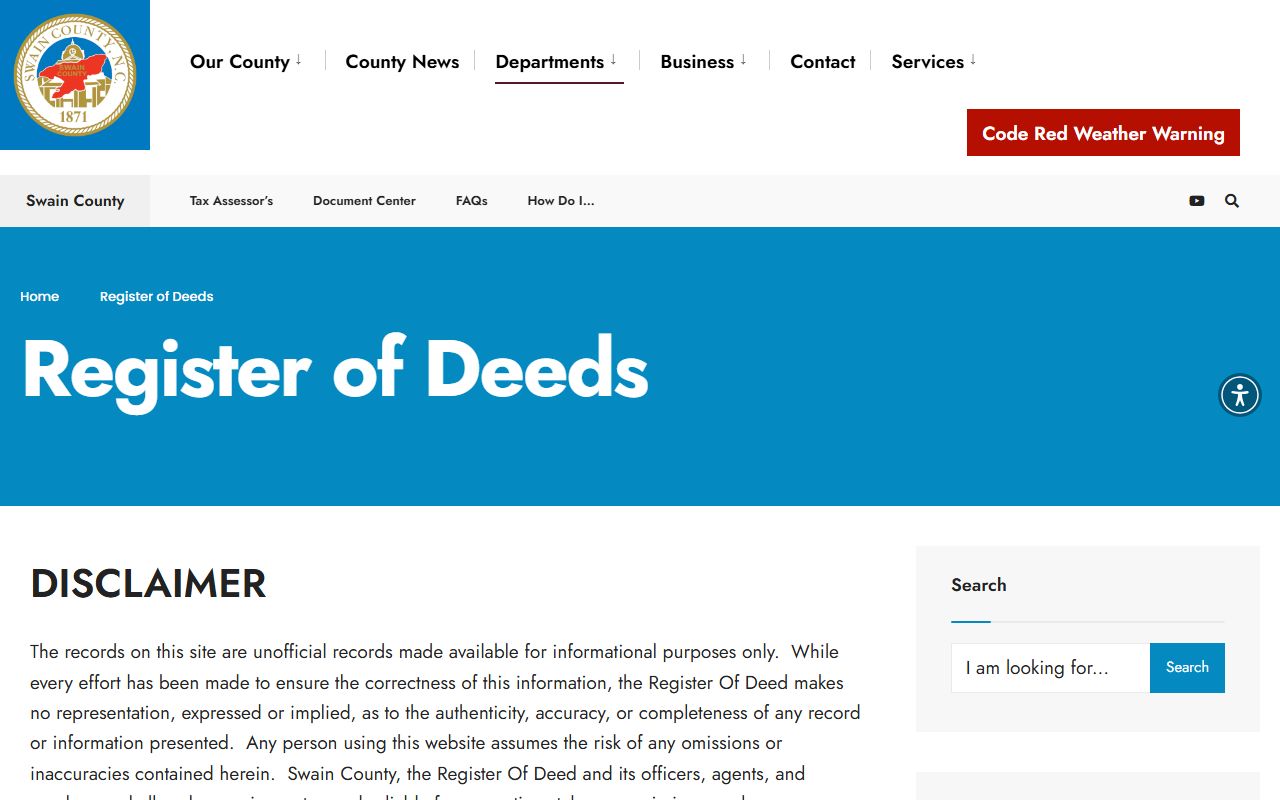
Swain County Register of Deeds
The Swain County Register of Deeds in Bryson City holds the core genealogy records for the county. Birth certificates are available from 1913, marriage records from 1871, and death certificates from 1913. Land and court records also begin in 1871 when the county was first organized. The office is located at the courthouse on Mitchell Street and serves researchers who visit in person or submit requests by mail. Staff members are familiar with the local record collection and can help locate documents when you provide names and approximate dates.
Because Swain County was formed from Jackson and Macon counties, researchers tracing families before 1871 should check the records of those parent counties. Many Swain County families appear in Jackson or Macon County deed books, court minutes, and marriage registers from the 1830s through 1870. The transition of records was not always clean, so searching both the parent and daughter county records is a wise approach for the boundary period.
| Office |
Swain County Register of Deeds 101 Mitchell Street Bryson City, NC 28713 Phone: 828-488-9273 |
|---|---|
| Records | Birth (1913), Marriage (1871), Death (1913), Land (1871), Court (1871) |
| Website | swaincountync.gov/departments/register-of-deeds |
Great Smoky Mountains National Park and Family History
The creation of the Great Smoky Mountains National Park in 1933 profoundly affected Swain County families and their genealogy records. Entire communities were displaced when the federal government acquired land for the park. Families that had lived in mountain hollows for generations were forced to relocate, and some communities vanished entirely. Proctor, Forney Creek, Hazel Creek, and other settlements along the north shore of Fontana Lake were among those lost. Genealogy researchers tracing these displaced families must often piece together records from multiple sources, including county records, National Park Service archives, and oral histories.
The controversy around the "Road to Nowhere" is directly connected to this displacement. The federal government promised Swain County a road to replace one flooded by the creation of Fontana Lake, which covered cemeteries and homesteads. Many families still maintain connections to ancestral burial grounds now accessible only by boat. Cemetery records from these remote sites have been documented by local historians and the Swain County Genealogical and Historical Society, providing vital information for descendants of families who once called those mountain coves home.
Land condemnation records from the 1930s are another important genealogy resource. These federal documents list property owners, property descriptions, and compensation amounts. They effectively serve as a census of families living in the park area at the time of acquisition. The National Archives holds many of these files, and some have been transcribed by local researchers.
Swain County Court and Probate Records
The Clerk of Superior Court in Swain County maintains court and probate records from 1871. Probate files include wills, estate settlements, and guardianship records that are deeply useful for genealogy. In a mountain county like Swain, where many families held land for generations, estate records often reveal how property was divided among children and provide a clear picture of family structure. Guardianship files name orphaned children and their appointed caretakers, frequently relatives who took responsibility for the children's welfare and inheritance.
Civil court records from Swain County also contain genealogical information. Land disputes between neighbors, boundary disagreements, and timber rights cases all name individuals and describe property in detail. These records place families on the landscape and show how they interacted with their community. Criminal court records, while less commonly used in genealogy, can also provide names, ages, and family details that supplement other sources.
Cherokee Heritage and Swain County Genealogy
Swain County shares its borders with the Qualla Boundary, the principal land base of the Eastern Band of Cherokee Indians. Cherokee heritage runs deep in this area, and many Swain County families have Cherokee ancestry. Researching Cherokee genealogy requires different record sets than typical county records. The Baker Roll of 1924, the Churchill Roll, and the earlier Hester Roll all enumerate Cherokee individuals and families in western North Carolina. These rolls are available through the National Archives and through online databases at FamilySearch.
Intermarriage between Cherokee and European settler families was common in the Swain County area during the 1800s. Church records from Baptist and Methodist congregations sometimes document these mixed-heritage families. The Museum of the Cherokee Indian in nearby Cherokee, North Carolina, holds archival materials that can supplement county records. Researchers with Cherokee ancestry in Swain County should also consult the records of the Bureau of Indian Affairs, which maintained files on tribal members and their descendants well into the twentieth century.
Online Genealogy Research for Swain County
The Swain County Genealogical and Historical Society is an essential resource for anyone researching family roots in this part of western North Carolina. The society maintains collections of family histories, photographs, and transcribed records. They also respond to research inquiries and can point you toward resources specific to your family lines. Their work has been instrumental in preserving the stories of families displaced by the national park and Fontana Dam.
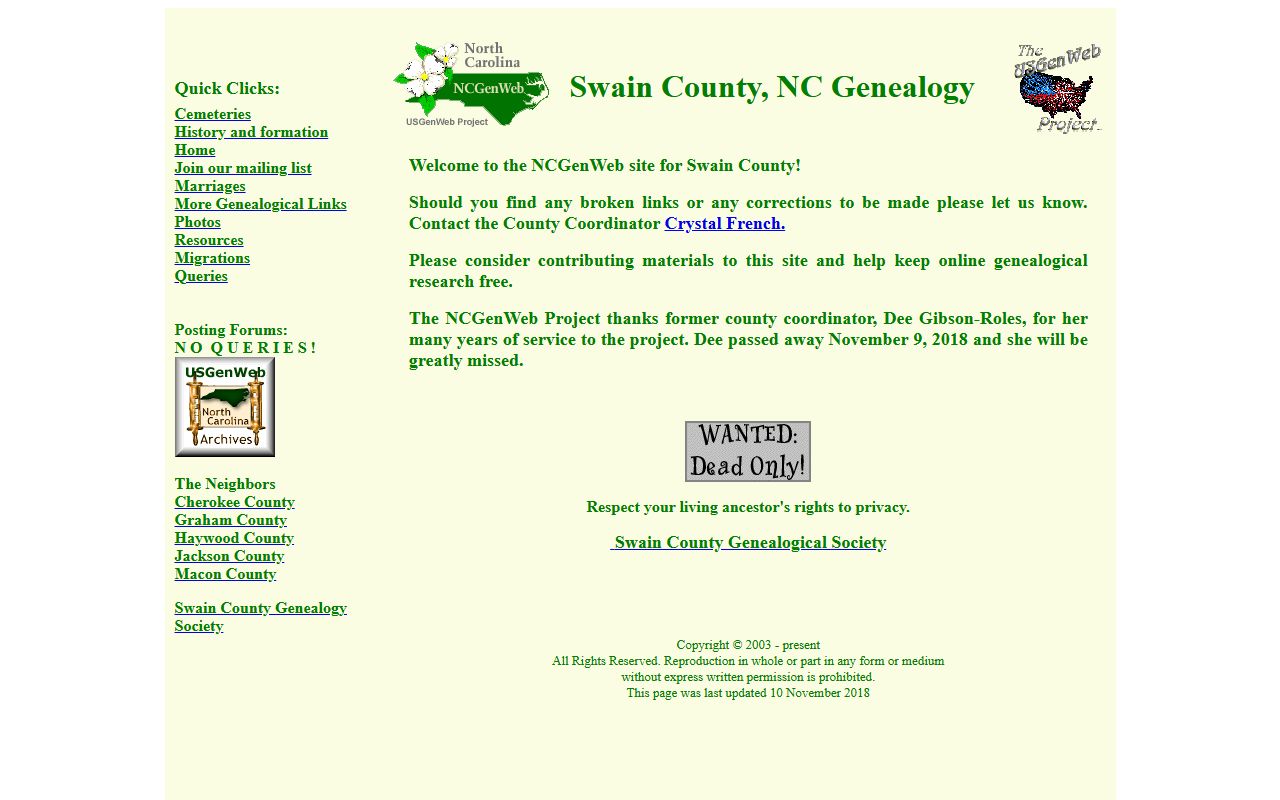
The NCGenWeb project for Swain County provides free online access to transcribed records, cemetery listings, and census indexes. Volunteers contribute lookups and data that help researchers from anywhere in the world connect with Swain County ancestry. Federal census records from 1880 through 1950 include Swain County households and are available through Ancestry and FamilySearch. The 1880 census is the first to list Swain County separately, since the county was not created until 1871.
For vital records, the North Carolina Vital Records office can provide certified copies of birth, death, and marriage certificates for events recorded anywhere in the state. This is often the fastest way to obtain certified copies if you cannot visit the Swain County Register of Deeds in person.
Swain County Land Records
Land records in Swain County begin in 1871 and reflect the rugged mountain geography that defined life in this part of North Carolina. Deeds describe properties using natural features like creek branches, ridge lines, and marked trees. For genealogy researchers, these descriptions paint a vivid picture of where ancestors lived and farmed. Land often passed within families through inheritance or gift deeds, and tracking these transfers can reveal parent-child relationships and sibling groups that other records miss.
Timber and mineral rights transactions are especially common in Swain County records from the late 1800s and early 1900s. Logging companies purchased rights from local landowners during this period, and the resulting deeds name individuals who might not appear in other county records. Tax records from the same era list property owners and the assessed value of their holdings. Together with deed books, these records create a detailed picture of landownership patterns across the county. The Register of Deeds office in Bryson City maintains the complete collection and can provide copies for research purposes.
Nearby Counties
Swain County was formed from Jackson and Macon counties. If your ancestors lived in this area before 1871, their records will be found in those parent counties. Neighboring counties may also hold relevant records for families near the borders.