
Clay County Genealogy Research
Clay County is one of the smallest counties in North Carolina by population, but its genealogy records tell a full story of mountain life. The county was carved from Cherokee County in 1861, just as the Civil War began. Named for the statesman Henry Clay, the county seat is Hayesville. Marriage, land, and court records in Clay County start in 1870. Clay County borders Georgia to the south. Its tight-knit communities kept strong family ties, and many of those connections can be traced through the records held at the courthouse in Hayesville.
Clay County Quick Facts
Clay County Register of Deeds
The Clay County Register of Deeds in Hayesville is where genealogy records are kept. This office holds marriage licenses, land deeds, birth certificates, and death certificates. The staff can help with searches and copies.
Clay County records begin in 1870. Marriage bonds and licenses from that year onward are on file. Land deeds, court records, and probate files also start in 1870. Birth and death records begin in 1913 when North Carolina started statewide vital registration. For Clay County genealogy research before 1870, you need to check Cherokee County records, since Clay was formed from Cherokee in 1861. Some early records may have stayed with the parent county. The Civil War also caused disruptions in record keeping across western North Carolina, which affects Clay County genealogy research.
Visit the Clay County Register of Deeds website for office hours and contact details.
| Office |
Clay County Register of Deeds 261 Courthouse Drive Hayesville, NC 28904 Phone: (828) 389-6307 |
|---|---|
| Records | Marriage 1870, Land 1870, Court 1870, Probate 1870, Birth 1913, Death 1913 |
Clay County Settlement History
The land that became Clay County was home to Cherokee Indians until the late 1830s. After the Cherokee removal, settlers from older parts of North Carolina and neighboring states moved into the valleys. By 1861, enough people lived in the western part of Cherokee County to form a new county. Clay County was born during a time of great upheaval. The Civil War split mountain communities. Some Clay County men fought for the Union. Others joined the Confederacy. These divisions ran through families and are reflected in military records, court cases, and land disputes found in Clay County genealogy files.
After the war, Clay County settled into a pattern of small farms and close communities. Families grew large. Neighbors married neighbors. By 1900, a handful of surnames dominated Clay County tax rolls and census lists. Tracing genealogy here often means connecting the same family names across multiple generations in Clay County.
Note: Civil War service records for Clay County soldiers can be found at the National Archives and through the North Carolina State Archives in Raleigh.
Clay County Land and Deed Records
Land records are central to Clay County genealogy. Deeds show who owned what and when. In a small mountain county like Clay, land stayed in families for a long time. A deed might show a father selling land to a son. Another might show heirs dividing a farm after a death. These records build a map of family connections in Clay County.
Clay County land records start in 1870. The Register of Deeds holds deed books, indexes, and plat maps. You can search these in person at the courthouse in Hayesville. For earlier land records tied to this area, check Cherokee County. Some state land grants may also exist in the records of the Secretary of State.
Mountain land in Clay County was often described by natural markers. A deed might reference a big rock, a creek fork, or a ridge line. These descriptions can help place a family on the landscape. Modern topographic maps and old survey records can help you match old Clay County deeds to current locations.
Clay County Vital Records
Birth and death records in Clay County begin in 1913. Before that date, there are no official vital records for the county. Church records, cemetery headstones, and family Bibles are the main sources for earlier dates in Clay County.
The North Carolina vital records office provides copies of birth and death certificates for Clay County. The image below shows the state contact page for vital records requests.
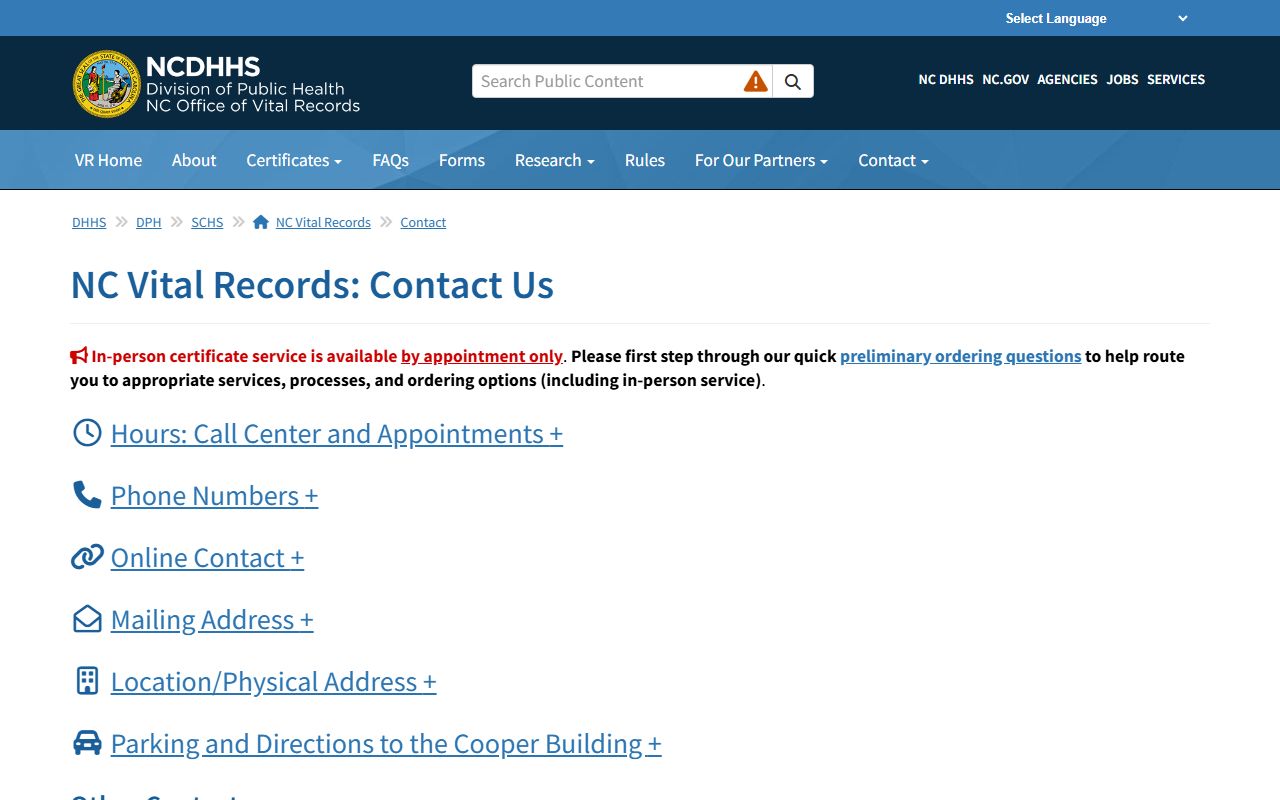
Use the state vital records portal for Clay County certificate orders.
You can also get copies from the Clay County Register of Deeds in Hayesville. The NC Vital Records website has instructions for mail and online orders. Death certificates are especially helpful for Clay County genealogy because they include parents' names and birthplaces.
Clay County Probate Records
Probate records in Clay County date from 1870. Wills, estate inventories, and guardianship files are held at the Clerk of Superior Court in Hayesville. These records are open to the public.
A will filed in Clay County names the person who wrote it, their spouse, and their heirs. It often describes property in detail. Estate inventories list personal goods, livestock, tools, and crops. In a farming county like Clay, these lists show what daily life looked like. They also confirm family ties when other records are sparse. Guardianship records name orphans and the adults who took care of them. For Clay County genealogy, these records fill in gaps left by the lack of vital records before 1913.
The State Archives in Raleigh holds microfilm copies of some Clay County court and probate records. The DigitalNC Clay County page may also include digitized local history materials.
Note: Some Clay County probate records from the 1870s through 1890s are in fragile condition. The Clerk of Court may need extra time to locate these older files.
Clay County Census and Church Records
Federal census records for Clay County start in 1870. The county did not exist before 1861, so earlier census records for this area fall under Cherokee County. The 1870 census is the first to list all Clay County residents by name. Later census years provide more detail, including birthplace of parents, year of immigration, and literacy status.
The image below shows resources from the State Library for North Carolina vital records research.
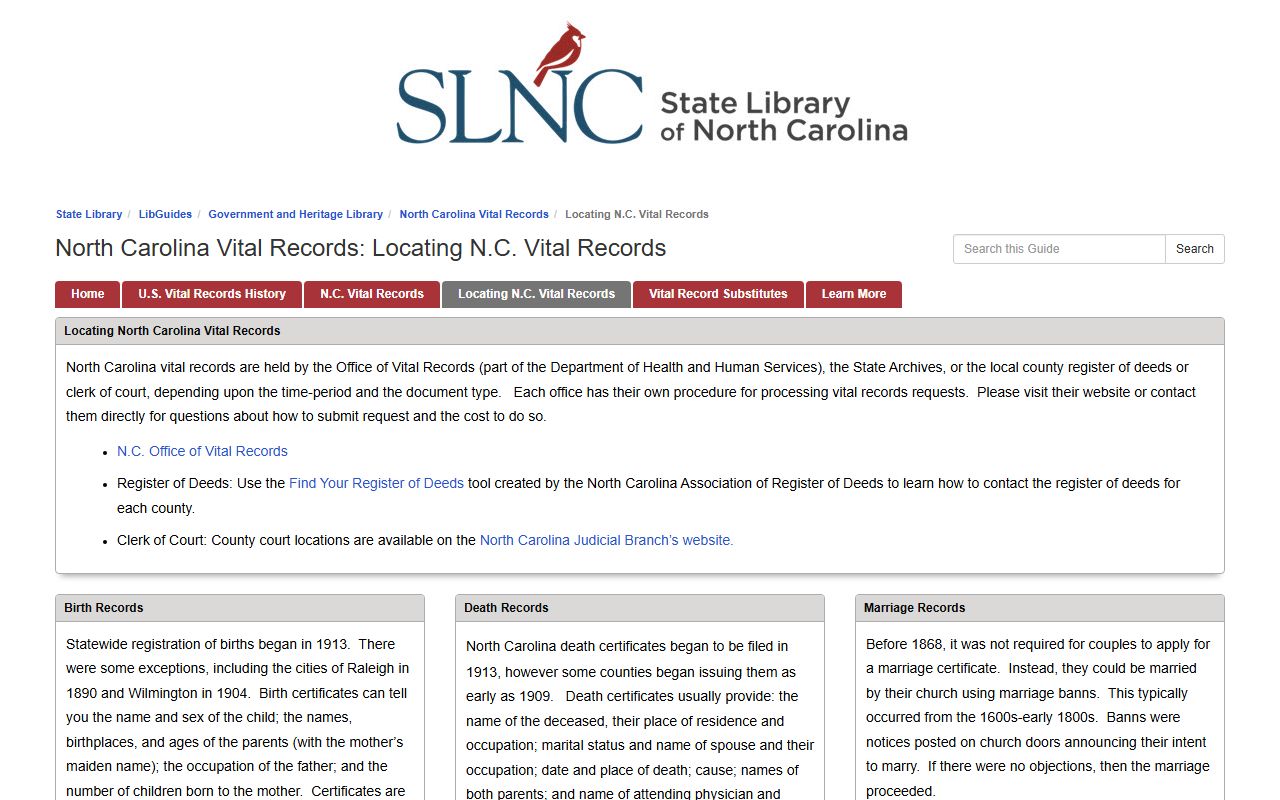
State Library guides cover vital records access across all North Carolina counties including Clay County.
Church records are another key source for Clay County genealogy. Baptist and Methodist congregations were the most common in the mountains. Church rolls list members by name. Some churches kept birth, marriage, and death records for their congregations. These records can predate official Clay County records and fill in missing information.
- Federal census records from 1870 to 1950
- Cherokee County census records for pre-1861 area
- Baptist and Methodist church membership rolls
- Cemetery records from Clay County graveyards
- Civil War military service and pension records
Nearby Counties
These counties border Clay County. Family ties in the mountains crossed county lines often. If you cannot locate a Clay County record, check the parent county and its neighbors.