
Anson County Ancestry Records
Anson County is one of the oldest counties in North Carolina and a treasure for genealogy researchers. Formed in 1749 from Bladen County, Anson once stretched all the way to the Mississippi River. Over time it was cut down in size five times to create many of the western North Carolina counties that exist today. The county seat is Wadesboro, where the main record offices are located. Researchers will find land records from 1749, court records from 1770, and probate records from 1750, making Anson County a deep well for family history.
Anson County Quick Facts
Anson County History and Genealogy
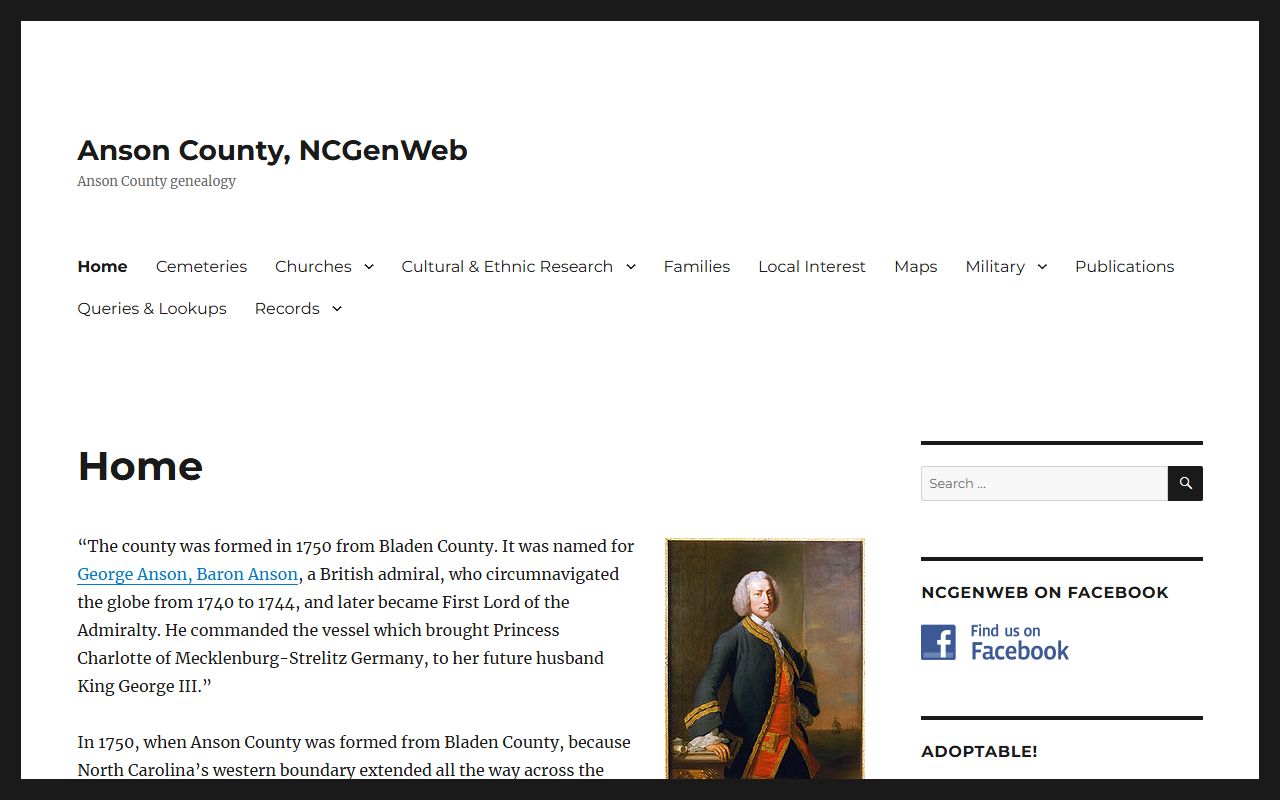
Anson County was named for George Anson, 1st Baron Anson. He was a British Admiral who sailed around the world between 1740 and 1744. When the county was formed on March 17, 1749, it covered a vast area that reached westward to the Mississippi River. As settlers moved into the region, the county was divided again and again. Anson County is the parent county of many western North Carolina counties, so its early records matter to researchers well beyond its current borders.
The first courthouse stood on the north bank of the Pee Dee River at a place called Mount Pleasant. In 1782, the county seat moved to New Town, which later became Wadesboro. This move is important for genealogy researchers because early court records reference Mount Pleasant as the seat of government. If you see that name in old Anson County documents, it refers to the original courthouse location.
A courthouse fire in 1868 destroyed most of the marriage records. However, all deed records survived the fires. The first deed recorded in Anson County is dated March 25, 1749. That unbroken chain of land records spanning nearly three centuries makes Anson County a standout resource for genealogy in North Carolina.
Anson County Register of Deeds
The Anson County Register of Deeds is at 101 S. Greene Street, Suite 131, Wadesboro, NC 28170. You can call 704-994-3209 for questions. This office holds birth records from 1913, marriage records from 1869, and death records from 1921. Land records go back to 1749, the year the county was formed.
The office can search records by name and provide copies for genealogy research. Birth and death certificates require specific information like the full name and date of the event. Marriage records are indexed by the names of both parties. Land records can be searched through grantor and grantee indexes that cover the entire history of the county.
| Office |
Anson County Register of Deeds 101 S. Greene Street, Suite 131 Wadesboro, NC 28170 Phone: 704-994-3209 |
|---|---|
| Records | Birth (1913), Marriage (1869), Death (1921), Land (1749) |
| Courthouse |
N Green Street PO Box 352 Wadesboro, NC 28170 Phone: 704-994-3201 |
Anson County Land Records
Land records are the crown jewel of Anson County genealogy. The first deed was recorded on March 25, 1749, and the chain of records has never been broken. Despite courthouse fires, the deed books survived intact. This gives researchers access to nearly 280 years of continuous land records in one county.
Early Anson County land grants cover an enormous area. When the county stretched to the Mississippi, land records here documented settlements across what would later become dozens of other counties. If your ancestors were among the early settlers of western North Carolina, their first land records may well be in Anson County. These grants and deeds name the landowner, describe the property by natural features, and often list neighbors and witnesses.
The Pee Dee River runs through Anson County and appears in many early deeds. Other landmarks include Brown Creek, Rocky River, and various old roads that served as boundary markers. Knowing the geography of Anson County helps researchers understand where their ancestors lived and who their neighbors were.
Note: All Anson County deed records survived courthouse fires, providing an unbroken chain from 1749 to the present.
Marriage Records for Anson County
Marriage records in Anson County start from 1869. The courthouse fire of 1868 destroyed earlier marriage records. This is a significant gap for genealogy researchers. If your ancestors married in Anson County before 1868, you will need alternate sources to document the marriage.
Church records can fill some of this gap. Many Anson County churches kept their own marriage registers. Family Bibles also recorded marriages along with births and deaths. Census records sometimes show the year of marriage in later enumerations. The state archives in Raleigh may hold copies of some Anson County marriage records that were reported to the state before the fire.
From 1869 onward, the Register of Deeds has marriage licenses and records. These documents name both parties and often give ages, parents, and the name of the person who performed the ceremony. The Anson County government website has contact information for all county offices that handle genealogy records.

Probate Records in Anson County
Probate records in Anson County begin in 1750, just one year after the county was formed. These records include wills, estate inventories, guardianship appointments, and land divisions. They are kept at the courthouse in Wadesboro. Probate records are among the best sources for genealogy because they often name every member of a family.
A will from the 1700s or 1800s in Anson County might name a wife, all children, and sometimes grandchildren. It may describe specific items left to each person. Estate inventories list every piece of personal property, from farm tools to bed linens. These details help researchers understand daily life and family structure in early Anson County.
Court records begin in 1770 and include civil cases, criminal matters, and other proceedings. Land disputes, debt cases, and guardianship hearings all appear in the court records. These files frequently name family members and reveal relationships. The Anson County NCGenWeb page offers transcriptions and indexes of some court and probate records.
Anson County Communities
Anson County has several communities where your ancestors may have lived. Wadesboro is the county seat and largest town. Other communities include Ansonville, Burnsville, Lilesville, Morven, Peachland, and Polkton. Each of these areas had its own churches, schools, and gathering places that appear in genealogy records.
Knowing which community your family called home can help narrow your search. Church records, cemetery records, and school records are often organized by community rather than by the county as a whole. Local newspapers also covered events by community, so an obituary or wedding notice might specify the town or neighborhood where the family lived in Anson County.
Note: Anson County once extended to the Mississippi River, so early records here may cover ancestors who later moved westward.
Online Research for Anson County
The NCGenWeb Anson County page is a free volunteer-run resource. It offers transcribed records, cemetery listings, family histories, and links to other sites with Anson County genealogy data. This is a strong starting point for anyone researching Anson County families.
The North Carolina State Library genealogy guide covers statewide resources that apply to Anson County. It lists archives, databases, and research strategies. Census records for Anson County are available from 1790 to 1950 through FamilySearch and Ancestry. These show household members with names, ages, and birthplaces. The North Carolina Vital Records office can also issue copies of birth, death, and marriage records for events recorded at the state level.
Because Anson County is the parent of so many other counties, researchers often find that their Anson County search leads them to related records in places like Mecklenburg, Richmond, Stanly, and Union Counties. Each of these was carved from Anson at some point, and the early records overlap.
Nearby Counties
These counties border Anson County or were formed from it. Families moved across county lines throughout the 1700s and 1800s. Checking neighboring counties can reveal records that are missing from Anson County due to the 1868 courthouse fire.