
Concord Genealogy and Ancestry
Concord genealogy records are kept by the Cabarrus County Register of Deeds at 77 Union Street South. As the county seat of Cabarrus County, Concord has served as the center of local government since the county was formed in 1792. With a current population of approximately 105,000, the city has grown significantly while retaining deep ties to its German and Scotch-Irish settler heritage. Genealogists researching Concord families work through Cabarrus County offices, which hold marriage records, property deeds, wills, and estate papers spanning over 230 years of continuous record-keeping.
Concord Quick Facts
Cabarrus County Register of Deeds
The Cabarrus County Register of Deeds in Concord is the primary office for obtaining genealogical documents related to families in the county. This office records and preserves marriage licenses, land deeds, maps, military discharge papers, and other official documents. The register has operated continuously since Cabarrus County was carved from Mecklenburg County in 1792.
| Office | Cabarrus County Register of Deeds |
|---|---|
| Address | 77 Union Street South Concord, NC 28025 |
| Phone | (704) 262-5500 |
| Website | cabarruscounty.us/departments/register-deeds |
The office provides certified and uncertified copies of records. Certified copies bear the official seal and are suitable for legal use, while uncertified copies are adequate for genealogy research purposes. Staff can assist with searches when you provide names and approximate dates. Call (704) 262-5500 before visiting to confirm hours and ask about any records you need for your Concord family research.
German and Scotch-Irish Settler Heritage
The Concord area was settled primarily by German and Scotch-Irish immigrants who migrated south from Pennsylvania along the Great Wagon Road during the mid-1700s. These families brought distinct cultural traditions, including particular approaches to farming, religion, and community organization that left lasting marks on the county's records. Understanding this heritage is essential for genealogists tracing Concord families back to their origins.
German settlers in the Cabarrus County area often belonged to Reformed or Lutheran congregations. Church records from these denominations are among the most detailed genealogical sources available for the region. Baptismal registers, confirmation records, and burial lists document family relationships across multiple generations. Many of these church records have been preserved by the congregations themselves or deposited in archives. St. James Lutheran Church and First Presbyterian Church in Concord are among the oldest congregations with surviving records.
The Scotch-Irish families who settled near Concord were predominantly Presbyterian. Their church records, combined with the county's civil records, create overlapping documentation that helps researchers verify family connections. Rocky River Presbyterian Church, located east of Concord, has records dating to the colonial period and serves as an important source for families in the eastern part of Cabarrus County.
Spelling variations in names are common in Concord's early records. German surnames were often anglicized or spelled phonetically by English-speaking clerks. The name Bost might appear as Baust or Boust, for example, and Misenheimer could be rendered several different ways within the same document. Researchers should search for multiple spelling variants when looking through the Cabarrus County records.
Reed Gold Mine and Early Prosperity
The discovery of gold at Reed Gold Mine in 1799 placed Cabarrus County at the center of the first gold rush in the United States. John Reed, a Hessian soldier who settled in the area after the American Revolution, found a large gold nugget on his property. This discovery attracted prospectors and miners to the Concord area and generated wealth that shaped the county's development for decades.
The gold mining era produced records that genealogists can use to track families who came to the area seeking their fortune. Mining claims, land purchases, and court records from this period reveal the names of individuals who participated in the gold industry. Some families grew wealthy from mining and left extensive estate records, including wills that distribute mining properties among heirs.
The economic boom from gold mining also meant that Concord attracted new residents from other parts of North Carolina and from other states. If your ancestor appeared in Cabarrus County during the early 1800s without an obvious connection to the original settler families, the gold industry may explain their migration. Check land records at the Cabarrus County Register of Deeds for mining-related property transactions during this period.
Concord Marriage Records
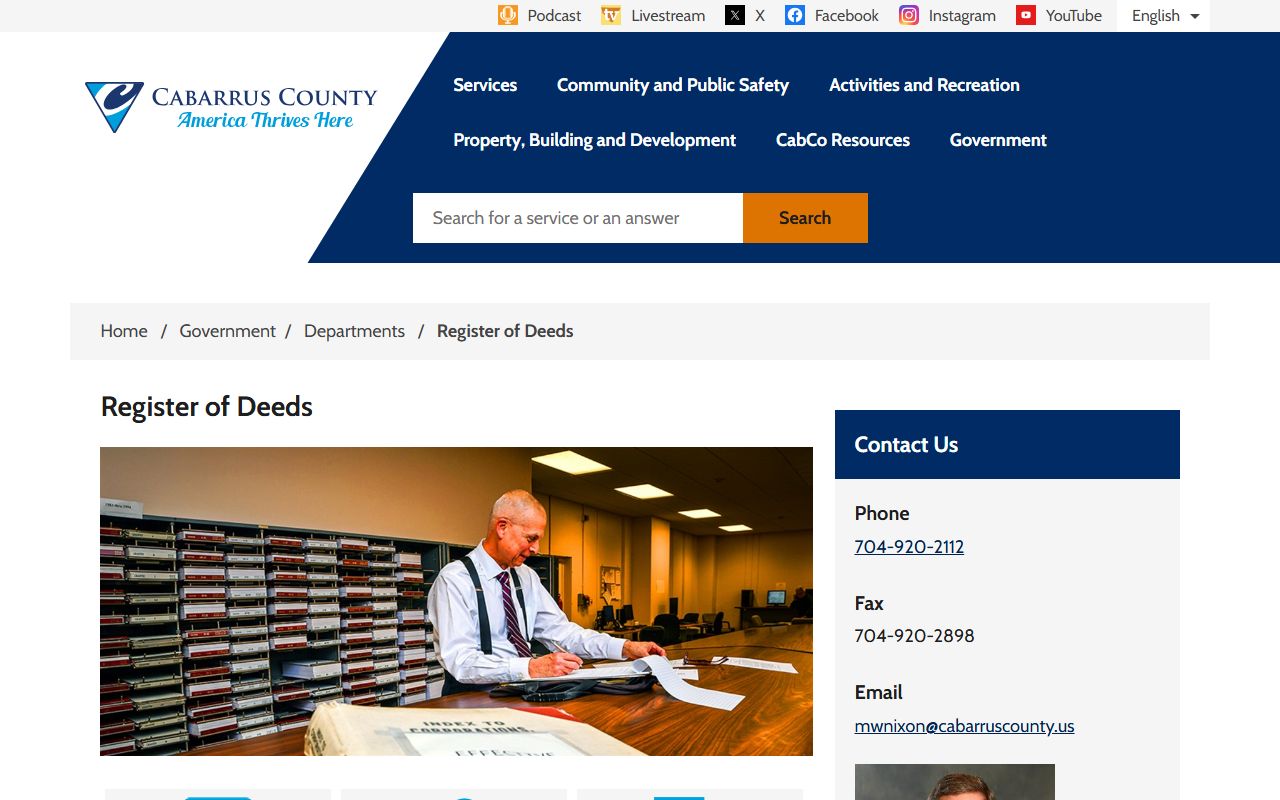
Marriage records for Concord are maintained at the Cabarrus County Register of Deeds. The county has marriage bonds dating from the 1790s and marriage licenses from 1868 onward. These documents are among the most frequently requested records for genealogy research because they link two families together and provide identifying details about both parties.
Cabarrus County marriage bonds from the late 1700s and early 1800s typically name the groom and the person who posted the bond, often the bride's father. After 1868, marriage licenses became more detailed, recording the ages, birthplaces, occupations, and parents' names of both the bride and the groom. For Concord genealogy, these post-Civil War licenses are particularly helpful because many families had disrupted records during the war years.
Note: Some early Concord families married in church ceremonies that were recorded only in the congregation's register and not in the county records. If you cannot find a marriage record at the Register of Deeds, check the records of local churches, especially Lutheran, Reformed, and Presbyterian congregations in the Concord area.
Land Records and Property Deeds
Property records in Cabarrus County date from 1792 and are housed at the Register of Deeds in Concord. Land deeds track property ownership across generations and frequently reveal family relationships that do not appear in any other record type. A deed transferring land from father to son, or a partition deed dividing an estate among heirs, can outline an entire family structure.
Early land grants in the Concord area were issued by the state of North Carolina to settlers who claimed unoccupied land. These grants are indexed and available through the North Carolina State Archives. Once granted, subsequent sales and inheritances were recorded in the Cabarrus County deed books. Researchers can follow a single parcel of land through multiple generations of the same family by tracing the chain of title in these books.
The Register of Deeds also holds plat maps that show the boundaries and locations of properties in and around Concord. Older plats can help genealogists identify where their ancestors lived and who their neighbors were. Neighboring families in rural areas often intermarried, so identifying the surrounding landowners can lead to discovering additional family connections.
Vital Records for Concord Families
Birth and death certificates for Concord residents from 1913 to the present are available from the North Carolina Vital Records office. North Carolina did not require statewide registration of vital events until that year, so earlier births and deaths must be documented through alternative sources.
For births before 1913 in the Concord area, church baptismal records are often the best substitute. German Lutheran and Reformed churches in Cabarrus County kept particularly thorough baptismal registers that include the child's name, date of birth, date of baptism, parents' names, and the names of sponsors or godparents. These sponsors were frequently relatives, adding another layer of family information to the record.
Death information for the pre-1913 period can be found in cemetery records, newspaper obituaries, and church burial registers. The Oakwood Cemetery in Concord and numerous church cemeteries throughout Cabarrus County contain headstones with genealogically significant inscriptions. Local historical societies have transcribed many of these cemeteries, and the transcriptions are accessible at the City of Concord library and through online genealogy databases.
Civil War Era Records
Cabarrus County sent soldiers to serve in the Confederate army, and their service records, pension applications, and related documents are valuable genealogical sources for Concord families. North Carolina Confederate pension records are held at the state archives and list the soldier's name, unit, residence, and sometimes family details. These pension files can contain affidavits from neighbors and family members that provide information not found elsewhere.
The war disrupted civilian life in Concord as well, and researchers may notice gaps in the county's civil records during the 1860s. Court proceedings slowed, property transactions declined, and some records were lost or damaged. After the war, Reconstruction-era records document the reorganization of local government and the establishment of civil rights for formerly enslaved people in Cabarrus County.
Tips for Researching Concord Ancestors
Genealogy research in Concord benefits from the overlapping record systems that exist at the county, state, and federal levels. Begin at the Cabarrus County Register of Deeds for marriage and land records, then expand to census schedules, church records, and military files. Federal census records for Cabarrus County are available from 1800 forward and provide household listings that help identify family groups.
The proximity of Concord to Charlotte means that some Concord-area families had connections to Mecklenburg County as well. Before 1792, the Concord area was part of Mecklenburg County, so earlier records for the same geographic area may be filed under the parent county. Check Mecklenburg County records when Cabarrus County records do not go back far enough for your research.
Local resources in Concord include the Cabarrus County Public Library, which maintains a genealogy collection with family files, cemetery indexes, and published histories of the county. The library staff can help orient new researchers and suggest sources specific to their family lines. Visiting this library is a good first step before diving into the official records at the Register of Deeds.
Cabarrus County Genealogy Records
Concord is the county seat of Cabarrus County, and all genealogical records for Concord residents are filed through county offices. The county was formed in 1792 from Mecklenburg County and holds records spanning over two centuries of local history. For complete details on county offices, record availability, fees, and additional genealogy resources, visit the Cabarrus County page.