
Hyde County Coastal Genealogy
Hyde County is one of the oldest counties in North Carolina and presents unique challenges and rewards for genealogy researchers. Created in 1712 from Wickham Precinct of Bath County, it was named for Edward Hyde, the colonial governor who died that same year. The county seat is Swan Quarter. Marriage records begin in 1735, land records date to 1717, and court records start in 1736. The county includes Lake Mattamuskeet and Ocracoke Island. Two courthouse fires in 1789 and 1825 destroyed some early records, making surviving documents all the more valuable.
Hyde County Quick Facts
Hyde County Register of Deeds
The Hyde County Register of Deeds holds vital records, marriage licenses, and land deeds for the county. Birth and death certificates begin in 1913. Marriage records survive from 1735, and land records date to 1717. These are among the oldest county-level records in the state. The office is at 30 Oyster Creek Rd., Room 112, in Swan Quarter. You can call 252-926-4182 for information about records and copies.
The surviving records are remarkable given the courthouse fires of 1789 and 1825. Some early documents were reconstructed from copies held by private individuals or recorded in other offices. Land records from 1717 predate the county's formal creation and trace to the colonial precinct system. These oldest deeds describe property along waterways and sounds that defined life on the coastal plain.
Note: The courthouse fires destroyed an unknown portion of records from the 1700s. Researchers should use multiple sources to fill gaps.
| Office |
Hyde County Register of Deeds 30 Oyster Creek Rd., Room 112 Swan Quarter, NC 27885 Phone: 252-926-4182 |
|---|---|
| Records | Birth (1913), Marriage (1735), Death (1913), Land (1717) |
| Website | hydecounty.org/government/register-of-deeds |
Courthouse Fires and Record Losses
Hyde County suffered courthouse fires in both 1789 and 1825. These fires destroyed portions of the early court and land records. The exact extent of the losses is difficult to measure, but researchers should be aware that gaps exist in the record collection. Some records were saved because private copies or duplicate filings existed elsewhere. Colonial-era documents that survived are housed at the North Carolina State Archives in Raleigh.
Researchers working on Hyde County families from the 1700s should cast a wide net. Colonial council journals, legislative petitions, and records from neighboring precincts can help fill gaps left by the fires. The Secretary of State's office in the colonial era maintained copies of some land grants and court actions that were separate from the county records. These state-level records sometimes preserve information that was lost at the local level.
After the 1825 fire, the county began rebuilding its records. Landowners were encouraged to re-record their deeds, and some court orders were reconstructed from memory and testimony. These re-recorded documents sometimes carry notes explaining their origin, which can help researchers assess their reliability.
Hyde County Probate Genealogy Records
Probate records in Hyde County begin in 1735. Wills, estate inventories, and settlement accounts survive from the colonial period despite the courthouse fires. These records name heirs, list property, and describe how estates were divided. For a county as old as Hyde, probate files are among the most important genealogy sources. A single will can name a spouse, children, grandchildren, and even enslaved individuals.
Estate inventories from the 1700s and 1800s describe the personal property of the deceased in great detail. They list livestock, boats, fishing nets, farm tools, and household items. In a coastal county like Hyde, the presence of boats and nets suggests a family connected to the fishing or maritime trades. These details add texture to the family story beyond just names and dates.
Ocracoke Island and Lake Mattamuskeet Records
Hyde County includes two of the most distinctive geographic features in North Carolina. Ocracoke Island is part of the Outer Banks barrier island chain. Lake Mattamuskeet is the largest natural lake in the state. Both areas attracted settlers whose records are part of the Hyde County collection. Ocracoke families were often connected to maritime trades, piloting, and lifesaving stations. Mattamuskeet-area families were typically farmers and fishermen who worked the fertile land around the lake.
Ocracoke Island has a distinct history. The island was isolated for much of its existence, and families there intermarried over many generations. Surnames like Howard, Garrish, and O'Neal appear repeatedly in the records. Researchers tracing Ocracoke ancestry should look at deed books, estate files, and census records to sort out the complex family connections that developed over centuries of island life.
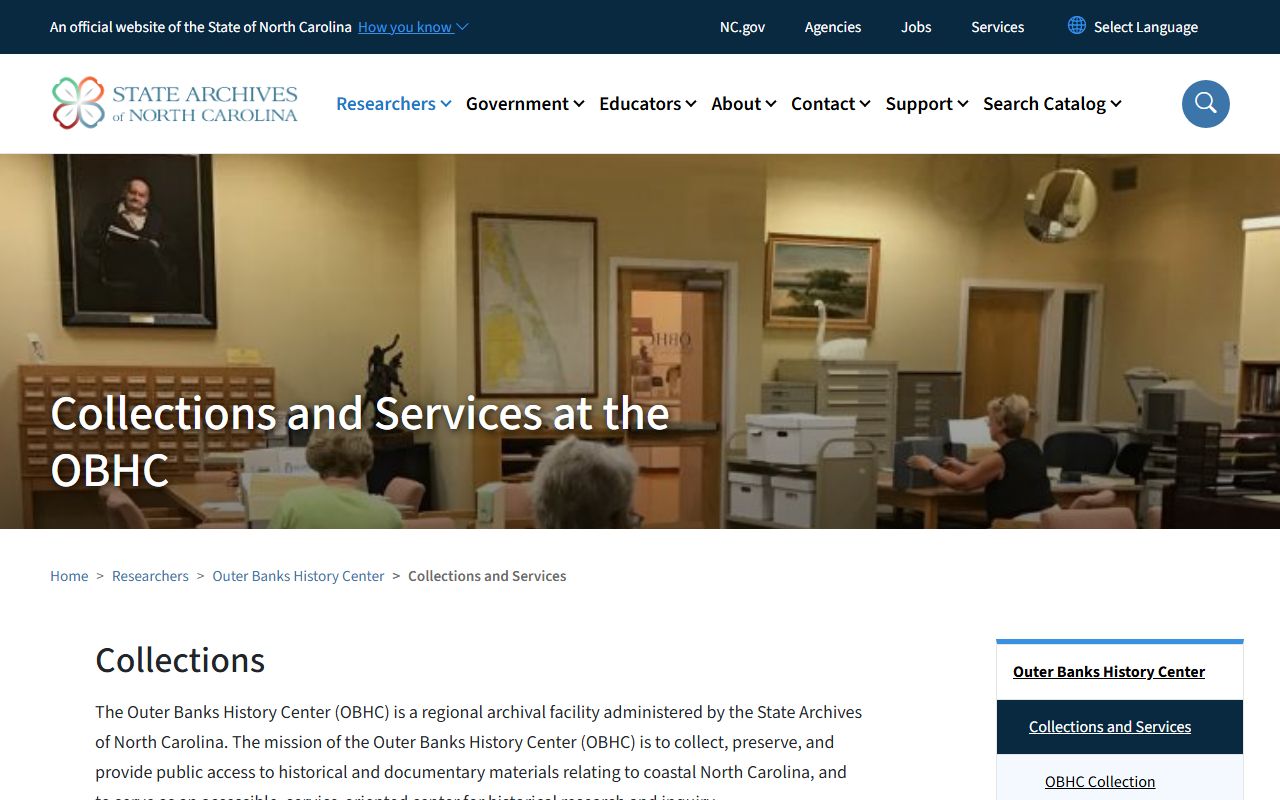
The Outer Banks History Center in Manteo collects materials related to coastal North Carolina, including Hyde County. Their holdings include photographs, maps, oral histories, and manuscript collections that document life on Ocracoke and along the sounds. Visit the Outer Banks History Center website for details on their collections and research services.
Land Records in Hyde County
Land records in Hyde County date to 1717. Early grants from the Lords Proprietors describe property along the Pamlico Sound and its tributaries. These colonial-era deeds use waterways, marshes, and pocosin boundaries to define property lines. The coastal landscape shaped how land was valued and used. Waterfront property commanded higher value because of access to fishing grounds and shipping routes.
After the colonial period, land continued to change hands through sale, gift, and inheritance. Hyde County deed books record all of these transfers. Because the county is sparsely populated, tracing land ownership across generations is sometimes easier here than in more densely settled counties. Fewer families means fewer overlapping names and clearer chains of title.
State land grants for Hyde County are indexed at the North Carolina State Archives. Some of the earliest grants date to the Proprietary period before 1729. These records connect to the broader colonial history of the Albemarle and Bath regions.
Marriage Genealogy Records in Hyde
Marriage records in Hyde County begin in 1735. These early records include bonds and licenses from the colonial period. Marriage bonds name the groom, bride, and a bondsman who was often related to the bride. The bond system continued until 1868, when formal licenses became the standard. Later marriage records include more detail, such as ages, birthplaces, and parents' names.
For researchers, the colonial marriage bonds are a key tool for connecting families. The bondsman's identity can reveal the bride's father, brother, or uncle. When combined with land records and probate files from the same period, these bonds help build a fuller picture of Hyde County family networks in the 1700s.
Online Research Tools for Hyde
The NCGenWeb Hyde County page offers free genealogy resources including transcribed records, cemetery surveys, and volunteer lookups. FamilySearch has cataloged microfilmed Hyde County records, and their online catalog lists available films. Census records from 1790 through 1950 cover Hyde County and are available on Ancestry and FamilySearch.
Hyde County appears in the earliest federal census of 1790. The population has always been small, which makes census records easier to search. Later census years reveal occupational patterns tied to the coast. Fishermen, sailors, and farmers appear alongside one another in the census lists. Military records from the Revolutionary War through the World Wars can also document Hyde County residents who served.
The North Carolina Vital Records office maintains statewide indexes for birth, death, and marriage records. For Hyde County specifically, the Register of Deeds is the local source. The State Archives holds the oldest surviving colonial records and should be consulted for any research reaching back before 1800.
Nearby Counties
Hyde County is located on the coastal plain of eastern North Carolina. Its neighbors share a similar geography of sounds, rivers, and low-lying land. Families in this region often moved between counties, so check nearby records for additional genealogy information.