
Gaston County Genealogy Records
Gaston County was created on December 21, 1846 from Lincoln County and named for William Gaston, a U.S. Congressman and North Carolina Supreme Court justice. The county seat is Gastonia. Genealogy records in Gaston County begin in 1847, the year the county started keeping its own books. Researchers benefit from a strong set of deeds, wills, and court records that have been preserved without major loss. The Gaston County Public Library also holds genealogy collections that complement the official records.
Gaston County Quick Facts
Gaston County Register of Deeds
The Gaston County Register of Deeds office is located in the courthouse at 325 North Marietta Street in Gastonia. This office maintains birth and death certificates from 1913, marriage licenses from 1848, and land records from 1847. Staff assist with record searches and can issue certified copies of documents on file.
Deeds from 1847 through 1963 are available online through the county website. This digital collection lets researchers search deed indexes and view scanned images from home. Wills from the same period, 1847 to 1963, have also been preserved and can be accessed through the courthouse or on microfilm. These online deed records are a major asset for Gaston County genealogy research because they cover more than a century of property transfers, family connections, and community growth in the Piedmont region.
| Office |
Gaston County Register of Deeds 325 North Marietta St. Gastonia, NC 28052 |
|---|---|
| Website | gastongov.com/Register-of-Deeds |
Gaston County Vital Records
Birth and death certificates in Gaston County begin in 1913. Before that year, no centralized vital records system existed in North Carolina. For births and deaths prior to 1913, researchers should consult church registers, cemetery records, and newspaper notices.
Marriage records in Gaston County date from 1848, just two years after the county was formed. These early marriage registers are especially valuable because they capture the founding generation of Gaston County families. The records typically include the names of both parties, the date, and the name of the person who performed the ceremony. Bond records may also survive for some early marriages. Later marriage licenses add more detail, including ages, birthplaces, and parents' names. Copies of marriage records can be obtained from the Register of Deeds in Gastonia or through NC Vital Records.
Note: Death certificates less than 25 years old are restricted in North Carolina. Access is limited to family members and those with a direct legal interest.
Gaston County Court Records
Court records in Gaston County begin in 1847. The Court of Pleas and Quarter Sessions operated from 1847 to 1860. These early court minutes document a range of civil and criminal matters, including road orders, apprenticeships, bastardy bonds, and guardianship appointments. They are rich in genealogy detail because they name individuals and describe their circumstances.
After 1868, the Superior Court replaced the older court system. Superior Court records include civil suits, criminal cases, and divorce files. Gaston County court records have survived in good condition. The Clerk of Superior Court in Gastonia holds the original files. Microfilmed copies of many older records are available through the North Carolina State Archives and FamilySearch.
Probate records from 1847 forward include wills, inventories, and estate settlements. Wills from 1847 to 1963 have been indexed and are accessible to researchers. Estate files often name heirs, list debts, and describe personal property in detail.
Land and Deed Records
Land records in Gaston County start in 1847 and run without gaps to the present. The Register of Deeds keeps all deed books, which record the sale, gift, or transfer of land within the county. Each deed names the parties, describes the property, and states the price paid. These records are fundamental to genealogy research in Gaston County.
The online deed collection covering 1847 to 1963 is a major resource. Researchers can browse deed indexes to find transactions involving a specific family name. The scanned deed images show the full text of each document, including signatures and witness names. Before 1846, land records for the Gaston County area are found in Lincoln County, the parent county. Tracing a family's land ownership across the county split requires checking both sets of records.
Note: Early Gaston County deeds may reference landmarks like creeks, trees, and roads that no longer exist. A local history guide or topographic map can help identify these locations.
Library Genealogy Collections
The Gaston County Public Library maintains a genealogy and local history collection. This includes family files, cemetery surveys, church histories, and published genealogies related to Gaston County. The library also provides access to genealogy databases and microfilm readers for viewing older records.
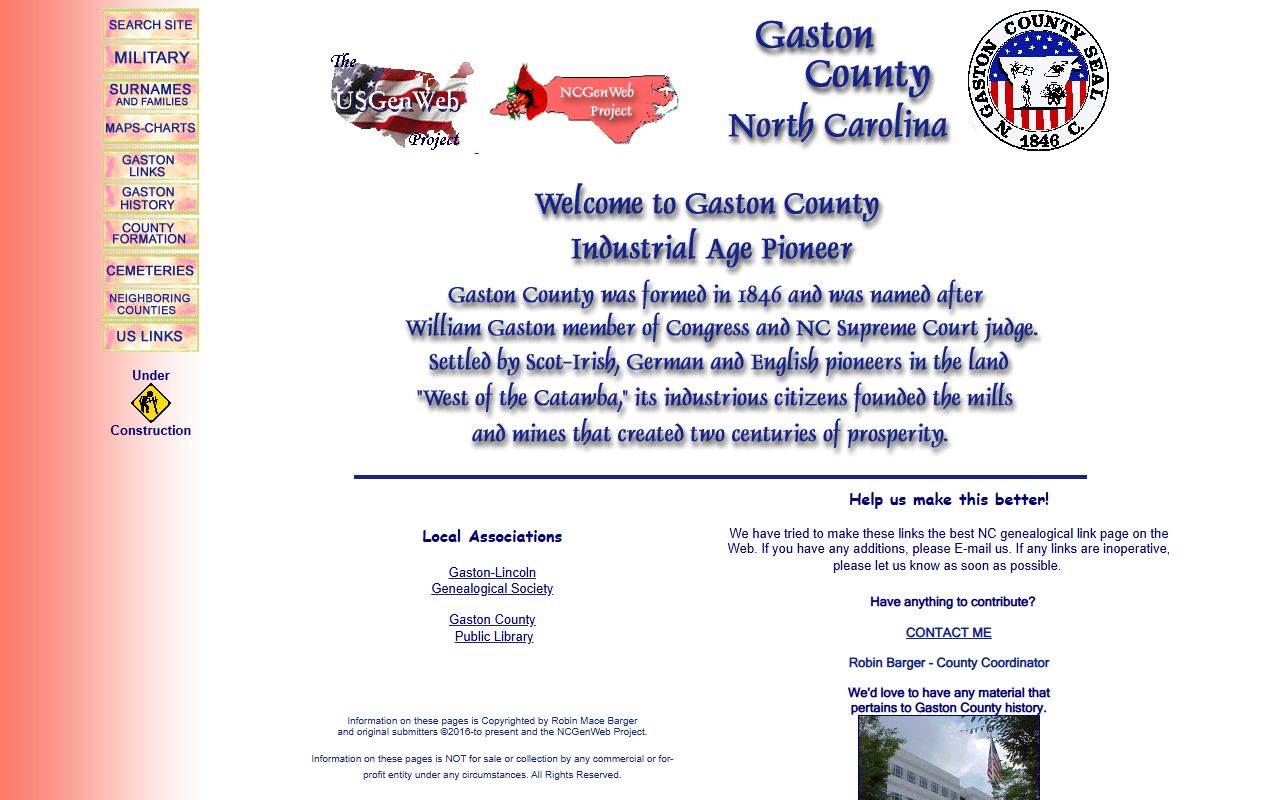
The library's North Carolina Room holds materials specific to the Piedmont region. Staff can assist with research and direct visitors to the most relevant collections. The NCGenWeb Gaston County page is another starting point for online research. It links to transcriptions, lookups, and volunteer resources contributed by genealogists working on Gaston County families.
- Family files and surname folders at the Gaston County Public Library
- Cemetery transcriptions for Gaston County burial grounds
- Published histories of local churches and communities
- Microfilm of census, tax, and court records
Research Guidance
Gaston County was formed from Lincoln County. For records before 1847, researchers must check Lincoln County files. Lincoln County itself was formed from Tryon County in 1779, and Tryon was abolished that same year. This chain of parent counties matters when tracing early Piedmont families.
The textile industry shaped Gaston County from the late 1800s through the mid-1900s. Mill village records, company payrolls, and church registers from textile communities can supplement official genealogy records. Many families moved to Gastonia and surrounding towns to work in cotton mills. City directories and industrial surveys from this period list workers by name and address, making them useful genealogy tools for tracing Gaston County ancestors.
Nearby Counties
These counties border Gaston County. Families in the Piedmont region often crossed county lines, so checking adjacent counties is a good practice for thorough genealogy research.