
Alleghany County Genealogy
Alleghany County sits in the Blue Ridge Mountains of northwestern North Carolina and holds genealogy records from 1859 onward. The county was carved from Ashe County that year, with Sparta as the county seat. Researchers can find marriage records from 1859 and birth and death records from 1913 at the Register of Deeds. For earlier records, the Ashe County office may hold what you need. The small size of Alleghany County means that families were closely connected, and records often reveal ties across the community.
Alleghany County Quick Facts
Alleghany County Register of Deeds
Miranda Roupe serves as the Registrar for Alleghany County. The office is in the Administration Building in Sparta and is open from 8 a.m. to 5 p.m. on weekdays. This is the main office for genealogy records in the county. The Register of Deeds handles marriage records, birth and death certificates, land deeds, and other public documents that are vital to family history research.
Marriage records in Alleghany County begin in 1859, the year the county was formed. Birth and death certificates start from 1913 when North Carolina began statewide vital registration. All of these records are public, with one exception. Military discharge records are not available to the general public. Everything else in the office can be viewed or copied by anyone who asks.
Deed copies cost five cents per page when you visit in person. Certified copies of vital records cost ten dollars each. The office can also issue birth certificates from other North Carolina counties for births from 1971 to the present, though the fee for those is higher. Visit the Alleghany County Register of Deeds page for full details on services and hours.
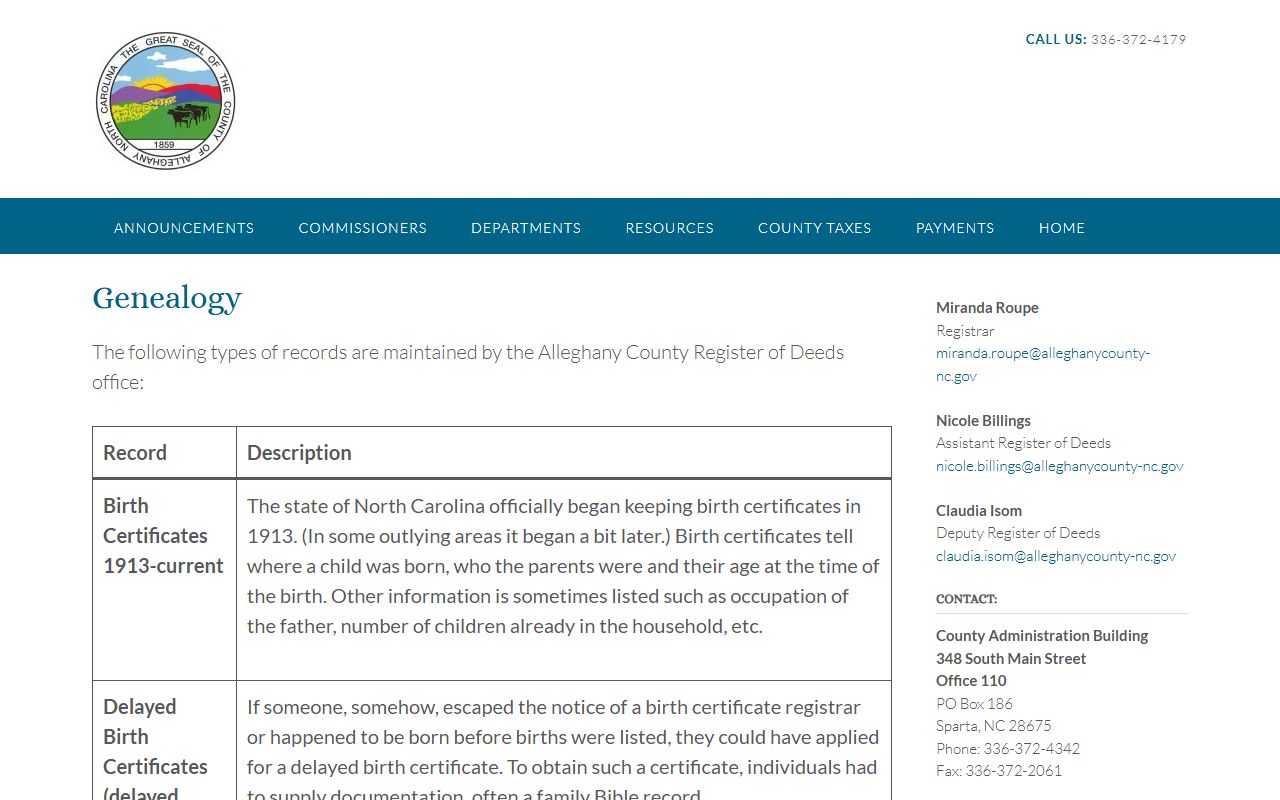
| Office |
Alleghany County Register of Deeds Administration Building Sparta, NC Registrar: Miranda Roupe |
|---|---|
| Hours | Monday through Friday, 8:00 AM to 5:00 PM |
| Website | alleghanycounty-nc.gov/register-of-deeds |
Records Before 1859 in Ashe County
Alleghany County was formed from Ashe County in 1859. Any genealogy records for this area before that date are held by the Ashe County Register of Deeds. This includes land records, marriage bonds, and court records for families who lived in what is now Alleghany County. The Ashe County office can be reached at 336-846-5580.
This is a common pattern in North Carolina genealogy. When a new county was created, the parent county kept its existing records. Researchers tracing Alleghany County families back to the 1840s or 1850s should search Ashe County records for that period. Land grants, tax lists, and census records from before 1859 will all list Ashe County rather than Alleghany.
Going back even further, Ashe County was formed from Wilkes County in 1799. So families in the Alleghany area before 1799 appear in Wilkes County records. Each step back in time requires looking at the parent county. This chain of parent counties is the backbone of North Carolina genealogy research.
Note: Land and marriage records for the Alleghany County area before 1859 are in the Ashe County Register of Deeds office.
Alleghany County Vital Records
The Alleghany County vital records page explains how to get copies of birth, death, and marriage records. Birth and death certificates from 1913 onward are available at the Register of Deeds. Marriage records go back to 1859. You can request copies in person or by mail.
For vital records, bring a valid ID and know the full name and approximate date of the event. The staff will search their records and provide copies. Certified copies are ten dollars each. If you need a birth certificate from another North Carolina county for a birth after 1971, the Alleghany County office can issue one for twenty-four dollars.
The North Carolina Vital Records office is another option for obtaining copies. They hold statewide records and can issue certified copies by mail. This is helpful if you cannot visit Alleghany County in person. Vital records are some of the most important documents in genealogy research because they confirm dates and family connections.
Genealogy Research in Alleghany
Alleghany County has a dedicated genealogy page on its government website. The Alleghany County genealogy page provides tips and resources for family history research. It covers how to search the county's records, what is available, and where to look for additional information. This page is a good starting point for anyone new to Alleghany County research.
The county's FAQ page for the Register of Deeds answers common questions about record access, fees, and procedures. It explains what records are public, how to order copies, and what to expect when you visit. These two pages together cover most of what a genealogy researcher needs to know about working with Alleghany County records.
Mountain counties like Alleghany often have strong oral history traditions. Families passed down stories about their ancestors for generations. While oral history is not a substitute for official records, it can guide your research and help you find the right records. Local churches in Alleghany County also kept records of baptisms, marriages, and burials that predate government record-keeping.
Alleghany County Marriage Licenses
Marriage licenses in Alleghany County cost sixty dollars. The license is valid for sixty days after it is issued. Both parties must appear in person at the Register of Deeds to apply. No appointment is needed. The Registrar can also administer the oath for notary services for a ten-dollar fee.
For genealogy purposes, older marriage records are more useful. Marriage records from 1859 to the late 1800s often include bonds and applications that name parents and witnesses. These extra details are valuable for building family trees. The Register of Deeds can search their marriage indexes by the name of either the bride or the groom.
Note: Marriage records from 1859 to the present are available at the Alleghany County Register of Deeds in Sparta.
Wills and Estate Records
Wills and estate records for Alleghany County are maintained by the Clerk of Court. You can reach that office at 336-372-3900. These records include wills, estate inventories, and guardianship papers. Probate records are rich sources for genealogy because they name heirs and describe family property.
When a person died without a will in Alleghany County, the court appointed an administrator to handle the estate. Administration records name the deceased, the administrator, and often the heirs. Estate sales list every item of personal property, from livestock to kitchen tools. These records paint a vivid picture of daily life in Alleghany County and help researchers understand how their ancestors lived in the mountains of North Carolina.
Census records for Alleghany County are available from 1860 onward. The 1860 census is the first to list the county by name. Earlier census records for this area fall under Ashe County. Federal census records from 1790 to 1950 are free to search on FamilySearch and are also available through Ancestry and other subscription services. These records show household members, ages, birthplaces, and occupations for Alleghany County families.
Nearby Counties
Alleghany County borders several other mountain counties. Families in this region often had ties across county lines. If your ancestors lived near the edge of Alleghany County, check these neighboring counties for more genealogy records.