
Jacksonville Family History Records
Jacksonville genealogy records are kept by the Onslow County Register of Deeds at 109 N Old Bridge Street. As the county seat of Onslow County in coastal North Carolina, Jacksonville has a population of roughly 75,000 and a unique identity shaped by both colonial settlement and the presence of Camp Lejeune Marine Corps Base. Onslow County records date to 1734, providing genealogists with nearly three centuries of documentation. Researchers tracing Jacksonville ancestors work through county offices that hold marriage records, land deeds, wills, and estate papers covering the full span of the county's history.
Jacksonville Quick Facts
Onslow County Register of Deeds
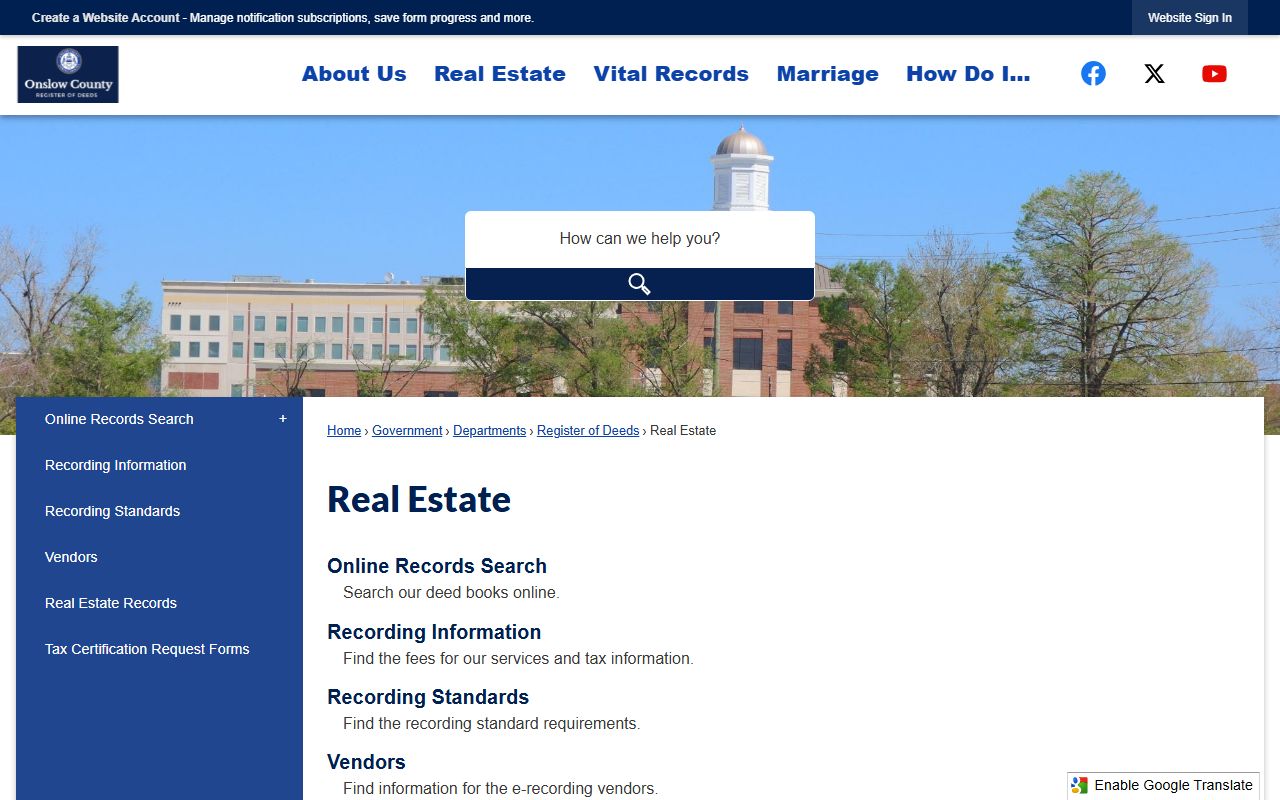
The Onslow County Register of Deeds serves as the primary office for genealogical records in Jacksonville and throughout the county. This office maintains marriage licenses, property deeds, military discharge papers, and related documents dating from the earliest years of the county. Onslow County was formed in 1734 from New Hanover County, making it one of the older counties in North Carolina.
| Office | Onslow County Register of Deeds |
|---|---|
| Address | 109 N Old Bridge Street Jacksonville, NC 28540 |
| Phone | (910) 347-3451 |
| Website | onslowcountync.gov/rod |
The Register of Deeds offers both certified and uncertified copies of records. For genealogy research, uncertified copies are generally adequate and cost less. When visiting, bring the full names of the individuals you are researching along with approximate dates. Staff can assist with searches through indexes and direct you to the appropriate record volumes. Call (910) 347-3451 ahead of your visit to confirm hours and ask about specific records.
Colonial Settlement of Onslow County
The area around Jacksonville was settled during the early 1700s by English colonists who established farms and plantations along the New River and its tributaries. Onslow County was one of the original precincts of the Bath County division and became a county in its own right in 1734. The colonial-era records that survive in Onslow County are among the oldest in North Carolina and provide a foundation for genealogical research stretching back to the earliest days of European settlement.
Colonial families in the Jacksonville area were engaged primarily in agriculture, producing tobacco, corn, and naval stores such as pitch, tar, and turpentine from the abundant longleaf pine forests. The naval stores industry connected Onslow County to broader trade networks and brought new settlers into the region. Court records from the colonial period, including wills, estate inventories, and land grants, document these early families and their economic activities.
The colonial court records for Onslow County are held at the county courthouse and at the North Carolina State Archives in Raleigh. Wills from this period are especially valuable because they typically name the deceased person's spouse, children, and sometimes grandchildren. Estate inventories list personal property in detail, providing insight into how families lived during the colonial era near Jacksonville.
Note: Some early Onslow County records were damaged or lost over the centuries. Fires and natural disasters affected courthouses throughout North Carolina during the colonial and early national periods. When county records are incomplete, researchers should consult colonial court records at the state archives and look for references in the records of neighboring counties such as New Hanover and Carteret.
Jacksonville Marriage Records
Marriage records for Jacksonville families are maintained at the Onslow County Register of Deeds. The county holds marriage bonds from the colonial period and marriage licenses from 1868 onward. These records are essential for genealogists because they connect two families through the union of their members and often contain details about parents and witnesses.
Onslow County marriage bonds from the 1700s and early 1800s name the groom and a bondsman who guaranteed that no legal impediment to the marriage existed. The bondsman was typically the bride's father, brother, or another close relative. After 1868, the state adopted a license system that recorded more information, including ages, birthplaces, occupations, and the names of both parents.
Researchers can search for Jacksonville marriage records online through the Onslow County Register of Deeds website or visit the office at 109 N Old Bridge Street. If the marriage you are looking for took place during the colonial period, the record may be in a bond book that requires an in-person visit to examine.
Land and Property Records
Property deeds in Onslow County date from the 1730s and are recorded at the Register of Deeds in Jacksonville. Land records document the transfer of property through sale, gift, and inheritance, and they frequently reveal family relationships. A deed from a father to a son, or a partition deed dividing an estate among heirs, provides direct evidence of family connections.
Colonial land grants in the Jacksonville area were issued by the Lords Proprietors and later by the Crown. These grants brought settlers to the New River valley and established the initial pattern of land ownership in Onslow County. The original grants are indexed through the North Carolina State Archives, and subsequent transactions appear in the county deed books.
The geography of Jacksonville and Onslow County influenced how land was used and recorded. Properties along the New River and its tributaries were valued for their water access, and deed descriptions reference these waterways as boundary markers. Understanding the local geography helps researchers interpret deed descriptions and locate the specific parcels where their ancestors lived and worked.
Military History and Records
The establishment of Camp Lejeune in 1941 transformed Jacksonville from a small county seat into a military-connected city. The Marine Corps base brought thousands of service members and their families to the area, many of whom settled permanently in Jacksonville after their service ended. This military migration created a population with diverse geographic origins, making Jacksonville genealogy research unique among North Carolina cities.
For families who arrived in Jacksonville through military service, records at the National Personnel Records Center in St. Louis can provide service dates, duty stations, and other information. Military discharge papers (DD-214 forms) are often recorded at the Onslow County Register of Deeds, providing a local copy that genealogists can access. These discharge records confirm that an individual served in the military and can help establish their presence in the Jacksonville area.
Before Camp Lejeune, Onslow County had its own military history stretching back to the American Revolution. County residents served in the Continental Army and state militia during the war for independence. Confederate service records document Onslow County men who fought in the Civil War, and their pension files may contain family information useful for genealogy. These military records are available through the North Carolina State Archives and the National Archives.
Vital Records for Jacksonville Families
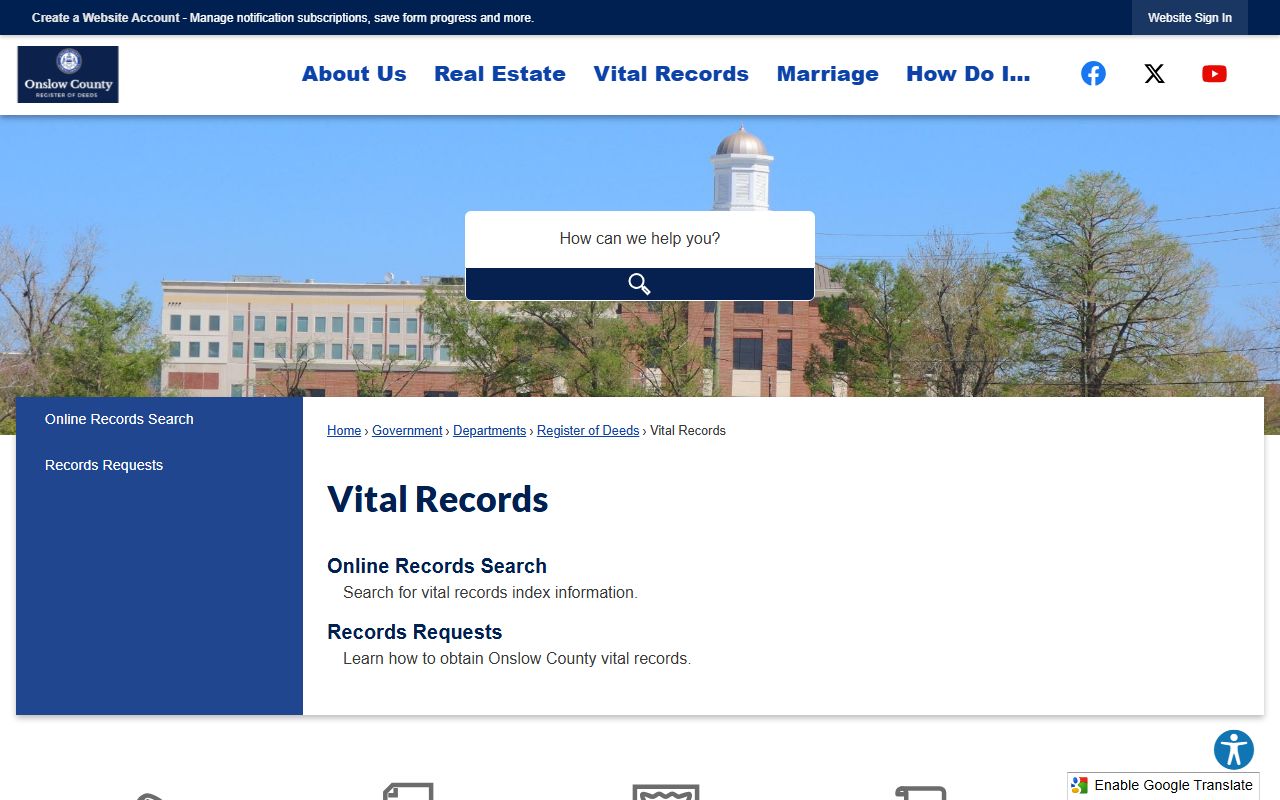
Birth and death certificates for Jacksonville residents from 1913 forward are available from the North Carolina Vital Records office. The state began requiring registration of all births and deaths that year. Requests can be submitted by mail, online, or in person at the state office in Raleigh.
For vital events before 1913, genealogists must rely on alternative sources. Church records from Jacksonville's oldest congregations provide baptismal dates that serve as birth record substitutes. Cemetery headstones record death dates and sometimes birth dates, along with family relationships. The Onslow County Public Library holds cemetery transcriptions and other materials that help fill gaps in the official record.
Obituaries published in local newspapers are another valuable source of vital information. The Jacksonville Daily News and its predecessors published death notices that often include the names of parents, birthplaces, and lists of surviving relatives. These newspaper records are available on microfilm at the Onslow County Public Library.
Local History Resources
The Onslow County Museum preserves the material culture and documentary history of the Jacksonville area. While the museum focuses on local history rather than individual genealogy, its collections include photographs, maps, and documents that provide context for family research. Understanding the community where your ancestors lived can suggest new record sources and help you interpret the documents you find.
The Onslow County Public Library maintains genealogy materials including family files, county histories, and compiled indexes. The library's local history collection is a good starting point for researchers who are new to Jacksonville genealogy. Staff members can suggest sources and strategies specific to Onslow County families.
The City of Jacksonville website provides information about local government services and community resources. While the city itself does not maintain genealogical records, its website can help researchers plan visits and learn about the modern community that grew from the families they are studying.
Research Strategies
Genealogy research in Jacksonville requires attention to the dual nature of the city's population. Long-established Onslow County families have records stretching back to the colonial era, while families who arrived through Camp Lejeune may have only a generation or two of local documentation. Identifying which category your family falls into will shape your research approach.
For families with deep roots in Onslow County, begin with the county Register of Deeds for marriage and land records, then move to court records for wills and estates. Federal census records for Onslow County are available from 1790 forward and provide household listings every ten years. The 1850 and later censuses name every household member, making them essential for identifying family groups.
For military-connected families, start with service records and discharge papers, then look for local records such as property purchases, marriage licenses, and children's birth certificates that establish when the family settled in Jacksonville. City directories and school records can also help document a family's presence in the community during the twentieth century.
Note: Onslow County was formed from New Hanover County in 1734. If your Jacksonville-area ancestors lived in the region before that date, search New Hanover County records for earlier documentation.
Onslow County Genealogy Records
Jacksonville is the county seat of Onslow County, and all genealogical records for Jacksonville residents are filed through county offices. Onslow County was formed in 1734 and maintains one of the older record collections in North Carolina, spanning nearly three centuries. For comprehensive information on county offices, record availability, fees, and additional research resources, visit the Onslow County genealogy page.